


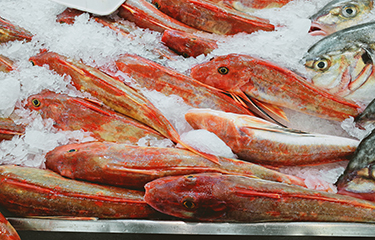
The U.S. Court of International Trade has ordered an import ban via preliminary injunction for nine seafood species from New Zealand, citing concerns regarding protections for the critically endangered Maui dolphin.
In the ruling, the court placed an import ban on nine species of seafood – snapper, terakihi, spotted dogfish, trevally, warehou, hoki, barracouta, mullet, and gurnard derived from New Zealand’s West Coast North Island multi-species set-net and trawl fisheries. The court issued a preliminary injunction pending final resolution, finding evidence that New Zealand has potentially not matched U.S. standards under the Marine Mammal Protection Act when protecting the Maui dolphin, which has between 48 and 64 individuals remaining in the wild.
The plaintiffs in the case, Sea Shepherd New Zealand and the Sea Shepherd Conservation Society, alleged that several New Zealand gillnet and trawl fisheries are “killing Maui dolphins in excess of U.S. standards,” the court ruling states.
NOAA originally granted comparability findings to New Zealand – essentially saying that the country’s environmental standards were equivalent enough to U.S. standards that they qualified under the Marine Mammal Protection Act. However, the court found that NOAA’s findings may have been inaccurate.
NOAA and the government of New Zealand assert that there have been no documented Maui dolphin mortalities associated with commercial fishing since 2012. However, according to the court, there is enough doubt about the rules that the injunction banning imports is necessary.
“At this phase in the proceedings – the preliminary injunction phase – the court need not resolve each and every point of contention surrounding NOAA’s determination, but need only assess whether Plaintiffs have raised at least some challenge sufficient to undermine the legal sufficiency of the agency’s deliberation,” the court wrote.
The court found that NOAA failed at a number of points when reaching its comparability determination, and that it acted “arbitrarily and capriciously” in giving those findings to Sea Shepherd – which has enough merits to grant an injunction.
The New Zealand seafood industry took issue with the temporary ban, saying that the nation’s fisheries comply to U.S. standards, 1 News New Zealand reported.
"We have very comprehensive protection for marine mammals along that west coast of the North Island. Huge amounts of area have been closed to fishing,” Seafood New Zealand Chief Executive Jeremy Helson told 1 News. "We've also got very extensive monitoring, most of the vessels have cameras on them. There's been many thousands of observer days on our fisheries as well and there's not been a single sighting of a marine mammal let alone a capture."
He added that if the ban continues and becomes permanent, it could cost the industry “a few million dollars.”
Photo courtesy of Emagnetic/Shutterstock
