






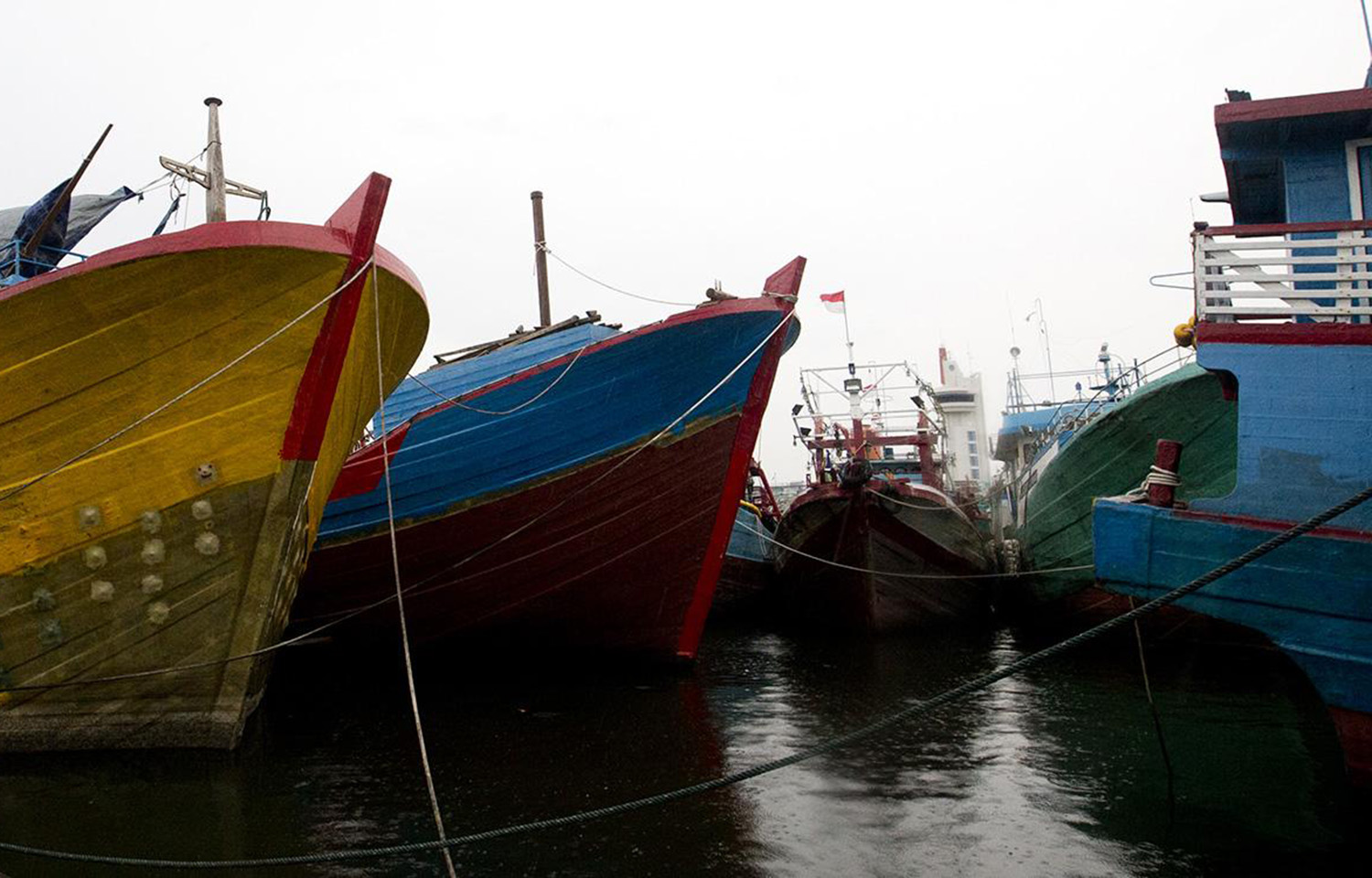
A new report published by the World Trade Organization Secretariat shows governments spend 63 times more on fishery subsidies than they have on official development assistance (ODA) toward fisheries sectors in the world's least developed countries.
The report, “Leveraging Global Partnerships to Implement the WTO Agreement on Fisheries Subsidies for a Sustainable and Food-Secure Future,” found that between 2010 and 2022, USD 6.2 billion (EUR 5.7 billion) was committed to support marine fisheries. Of that total, 71 percent comprised assistance directed at supporting the design and implementation of sustainable fisheries policies and practices in developing economies.
However, the report notes that annual ODA for fisheries is dwarfed by the estimated USD 22 billion (EUR 20.3 billion) spent globally on harmful fisheries subsidies – a 63-fold difference.
This comes at a time of increasing pressure on wild fishery stocks. The 2024 State of World Fisheries and Aquaculture (SOFIA) report, published by the Food & Agriculture Organization (FAO) – itself a leading provider of aid for sustainable fishing – found global marine fisheries face significant challenges, with the proportion of fish stocks at biologically sustainable levels dropping to 62.3 percent in 2021 from 90 percent in 1974.
The biggest donor project in value terms in 2022, as cited by the report, was a USD 103.8 million (EUR 96.5 million) grant from France to Indonesia to assist the latter to modernize its fishing ports. The second-largest project was a World Bank-funded USD 48 million (EUR 44.3 million) Natural Resources Management Project in Senegal. The Green Climate Fund put up USD 38.5 million (EUR 35.8 million) for the third-largest project, an Africa-wide fishery management scheme. Cambodia was the beneficiary of the fourth-largest aid project in 2022, the USD 35.2 million (EUR 32.7 million) Sustainable Coastal and Marine Fisheries Project, which was backed by the Asian Development Bank.
The 2022 Agreement on Fisheries Subsidies signed at the WTO provided for the establishment of the WTO Fisheries Funding Mechanism Trust Fund to assist developing members and LDC members with implementing the agreement.
WTO Deputy Director-General Angela Ellard said at the Aid for Global Trade Review on 27 June that new reporting requirements for developing countries under a WTO deal limiting harmful subsidies for fishing could be addressed through “targeted technical assistance and capacity-building, including through the new WTO Fisheries Funding Mechanism, as well as other sources of development finance.”
Yet, donations to the WTO Fisheries Funding Mechanism Trust Fund are modest in the context of subsidies paid out by big fishing powers. The E.U., a leading fisheries subsidizer, has contributed EUR 1 million (USD 1.1 million) to the fund, and E.U. member state France has contributed the same amount. Total donations have reached EUR 15 million (USD 16 million).
