

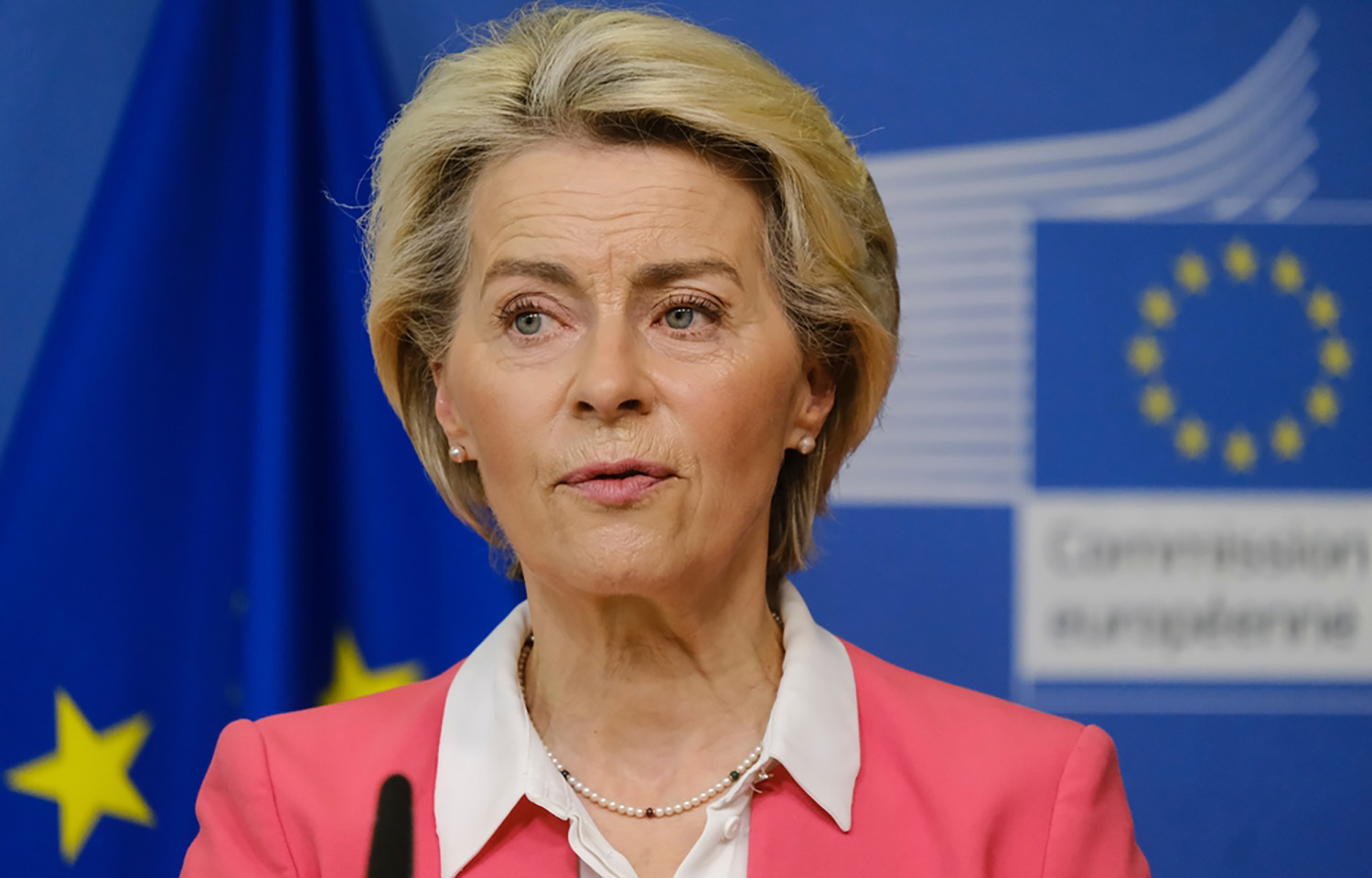
In the recent European elections, Ursula von der Leyen won a second term as European Commission president.
With her reelection, the E.U. fisheries sector, including fisheries trade body Europêche, is greatly hoping she fulfills her pre-election commitment to appoint a full-time fisheries commissioner who could elicit a better balance between conservation, sustainable use of natural resources, financial viability, and food security.
“Europêche is hopeful that this change will provide fisheries more political weight within the Commission’s structure and agenda, enhanced support for the sector, and balanced E.U. policies that will help the sector thrive, unlike the current situation,” Europêche Managing Director Daniel Voces told SeafoodSource.
Voces’s organization is also optimistic that von der Leyen’s announcement indicates a shift toward greater bloc-wide recognition and understanding of fisheries concerns, as well as the sector's importance to society overall. Furthermore, it hopes through the launch of an evaluation on the E.U. Common Fisheries Policy (CFP), announced on 20 June 2024, the Commission will show increased sensitivity toward fishing companies’ and fishers’ concerns.
“We expect the Commission to put forth similar efforts to address the issues in our sector as they are currently making in the agriculture sector,” Voces said.
Nevertheless, anxieties linger in the E.U. fisheries sector. Voces said that the E.U.'s decision to cut EUR 105 million (USD 113.8 million) from the current European Maritime, Fisheries, and Aquaculture Fund (EMFAF) from 2025 to 2027 has added to the pessimism.
“These budget cuts reinforce the perception that the E.U. is neglecting the primary sector and not prioritizing it. This is certainly not a step forward,” he said.
This move carries some hypocrisy, according to Voces, who said that during Covid-19 fishers were recognized as “essential workers” but that this recognition has not been reflected in many E.U. policies. Voces said that current decision making has left fishers feeling they are regarded as dispensable, and are used as leverage in trade agreements with third countries.
“Gradually, thanks to the momentum created by demonstrations from farmers and fishers, as well as the call from some governments and political groups, E.U. authorities are beginning to listen more attentively,” he said. “However, we have not seen any concrete reforms so far.”
Elsewhere, Virginijus Sinkevičius vacated his position as European commissioner for the environment, oceans, and fisheries after being elected as a member of parliament for Lithuania, his home country.
Europêche acknowledged the outgoing commissioner carried out services that were “extremely quick and efficient,” especially in adopting financial aid measures, and that he oversaw an overall improvement in fish stocks. However, the organization largely said his tenure was marred by moves that hurt E.U. fishers.
“During his mandate, we have witnessed the adoption of disproportionate rules, increased bureaucracy (especially under the new control regulation), expanded area closures, reduced employment and fleet size, and record-low levels of seafood self-sufficiency. Meanwhile, the E.U. has granted more trade preferences to imports from third countries that do not meet our sustainability standards. The situation is dramatic in many fishing ports,” Voces said. “In my entire career, I have never seen such widespread frustration. Disheartened by the current circumstances and decisions made in Brussels, fishing companies just want to scrap their vessels and find alternative livelihoods.”
Voces said regardless of whomever takes over Sinkevičius’s role, Europêche wants to see improved economic conditions and legal security for fishing communities, less bureaucracy, a level playing field for domestic fishers competing against international products, and ensured resilience against environmental and geopolitical challenges.
“For that purpose, a revision of the CFP is a must. We also need a political mandate that strikes a true balance between biodiversity conservation, a competitive fishing fleet, and food security,” Voces said. “We hope that this time, the Commission will finally initiate the necessary changes.”
No changes are expected to the CFP until late 2025, which Europêche believes offers the European Commission plenty of time for effective industry consultation. For example, this consultation, according to Europêche, could cover a greater balance between rebuilding fish populations, at which the CFP has been successful, and the fleet’s socioeconomic recovery. On a larger level, the organization is calling for a greater balance between environmental policies and ensuring that a career in the fisheries sector remains financially viable.
“The cost has been too high. The CFP, as implemented by the Commission, has been extremely inefficient and disproportionate when it comes to the socioeconomic dimension,” Voces said. “Since 2000, the E.U. fleet has endured a 28 percent reduction, and the situation continues to worsen. Meanwhile, the bureaucratic burden and operating costs have not ceased to grow.”
Overall, Voces said he hopes E.U. officials recognize that the management and protection of the oceans require significant public and private efforts and investments and that the Commission must legislate collaboratively with the sector, rather than imposing regulations that threatens its survivability.
“Only together can we achieve a higher degree of environmental protection and socioeconomic progress while nurturing [the European] population with low-impact and healthy food. The decline of our fleet will only increase our reliance on food imports from third countries and the disappearance of rural coastal communities dependent on the fishing industry,” Voces said.
