



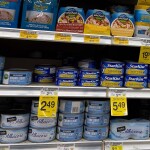



Inflation is changing how Americans shop for seafood, executives with Category Partners said during a presentation at Seafood Expo North America, 12-14 March in Boston, Massachusetts, U.S.A.
According to the Idaho Falls, Idaho, U.S.A.-based strategic insights company, which focuses exclusively on the fresh industries in the retail grocery channel, average retail prices of frozen seafood jumped 6.6 percent for the 13 weeks ending 4 February, resulting in a 8.3 percent drop in sales by volume and a 2.2 percent decline in dollar sales. Conversely, fresh seafood inflation was 1.1 percent for the quarter, resulting in a 2.9 percent slide in sales by volume, though the category realized a 1.9 percent increase in dollar sales, according to the NielsenIQ scan, powered by Category Partners analysis.
However, seafood had the lowest inflation of any fresh department over the past year and quarter, rising only 1.1 percent for the past 13 weeks, versus dairy, which had a 21.4 percent hike in prices; bakery, which realized a 15.4 percent price hike; and meat, which realized a 3.8 percent incline, according to Category Partners President Adam Brohimer. Still, because seafood is typically higher in price per pound than most other fresh categories, even smaller increases in inflation have a measurable impact on purchasing behavior, Brohimer said.
“A 1.1 percent increase in price translates into higher dollars,” Brohimer said. "Consumers feel a 1 percent increase more in seafood than they potentially would elsewhere, so let’s not pop champagne corks just yet.”
According to Category Partners’ February Consumer Survey, at least 90 percent of Americans say they are somewhat or extremely concerned about inflation. In August 2022, 62 percent were extremely concerned and 30 percent were very concerned about inflation. This February, 53 percent of consumers said they are extremely concerned and 37 percent were somewhat concerned.
More than half (52 percent) of shoppers said they have noticed that prices are significantly higher in fresh seafood, while 33 percent said prices are somewhat higher. Thirteen percent said they have not noticed a change in prices.
Still, fresh and frozen seafood sales reached USD 1.8 billion (EUR 1.7 billion) each during the most recent quarter.
Salmon realized the largest drop in fresh seafood volume during the most recent quarter, with prices up 9 percent, resulting in a decline in sold volumes of 2.4 million pounds. Catfish sales by volume also declined 651,000 pounds in response to a 8.6 percent increase in price. And, while shrimp prices only rose 0.4 percent, volume declined by 2 million pounds.
In frozen seafood, shrimp lost the most volume at 9.7 million pounds as inflation rose 4.2 percent. Salmon volume dropped by 3.6 million pounds, driven by a 21 percent hike in prices.
“Frozen is still experiencing some substantial upward price pressure – the price outpaces fresh by 5.5 percent – so there are some headwinds for frozen,” Brohimer said.
Overall grocery inflation is “definitely a big concern and something we need to address,” Category Partners Research and Market Intelligence Senior Vice President Cara Ammon said. “It’s still a large percentage of consumers who believe inflation will be around another year or two ore more.”
As a result of inflation, consumers are changing where they buy seafood and cooking at home more. Many shoppers are willing to switch retailers to fight inflation, Brohimer and Ammon noted.
“Previously there was a lot more loyalty at the retailer – I buy my fresh meat and seafood at my preferred retailer. That’s not the case today,” Brohimer said.
Grocery stores are the primary benefactors of consumers switching stores to save money, but consumers are also buying more at Walmart and other superstores, warehouse/club stores, and discount outlets. Twenty-six percent of shoppers said they are buying more fresh seafood and 36 percent are buying more frozen seafood at Walmart, according to Category Partners’ February Consumer Survey. Thirty-five percent said they are buying more frozen seafood at grocery stores, while 33 percent are buying more fresh seafood.
Nearly a quarter (24 percent) have upped their purchases of fresh seafood at warehouse/club stores, while 27 percent are buying more frozen seafood at those stores. Twelve percent are buying more frozen seafood at superstores other than Walmart, and 10 percent are buying more fresh seafood.
Discount grocers such as Aldi and Lidl are also benefiting from consumers’ inflation concerns, as 16 percent are buying more frozen seafood and 13 percent are buying more fresh seafood at those outlets.
Nine out of 10 consumers report making changes to the way they shop for groceries due to inflation. Most consumers (53 percent) are looking for sales and discounts and 40 percent are checking store ads to see what is on sale. Thirty-five percent are purchasing more store brands, 24 percent are shopping at lower cost stores, and 32 percent are looking for lower-cost substitutes.
Notably, 28 percent are buying more value packs and 27 percent are stocking up/buying in bulk.
Seafood suppliers and retailers can also benefit from the cooking-at-home trend that boomed at the start of the Covid-19 pandemic and has remained fairly strong throughout. A majority (79 percent) of consumers are cooking and eating at home more, down from 85 percent last August.
“That’s still more than half eating at home more. Even though they’re getting back to their busy lives, all of that at-home eating can be a benefit to retailers,” Ammon said.
Photo courtesy of Category Partners
