



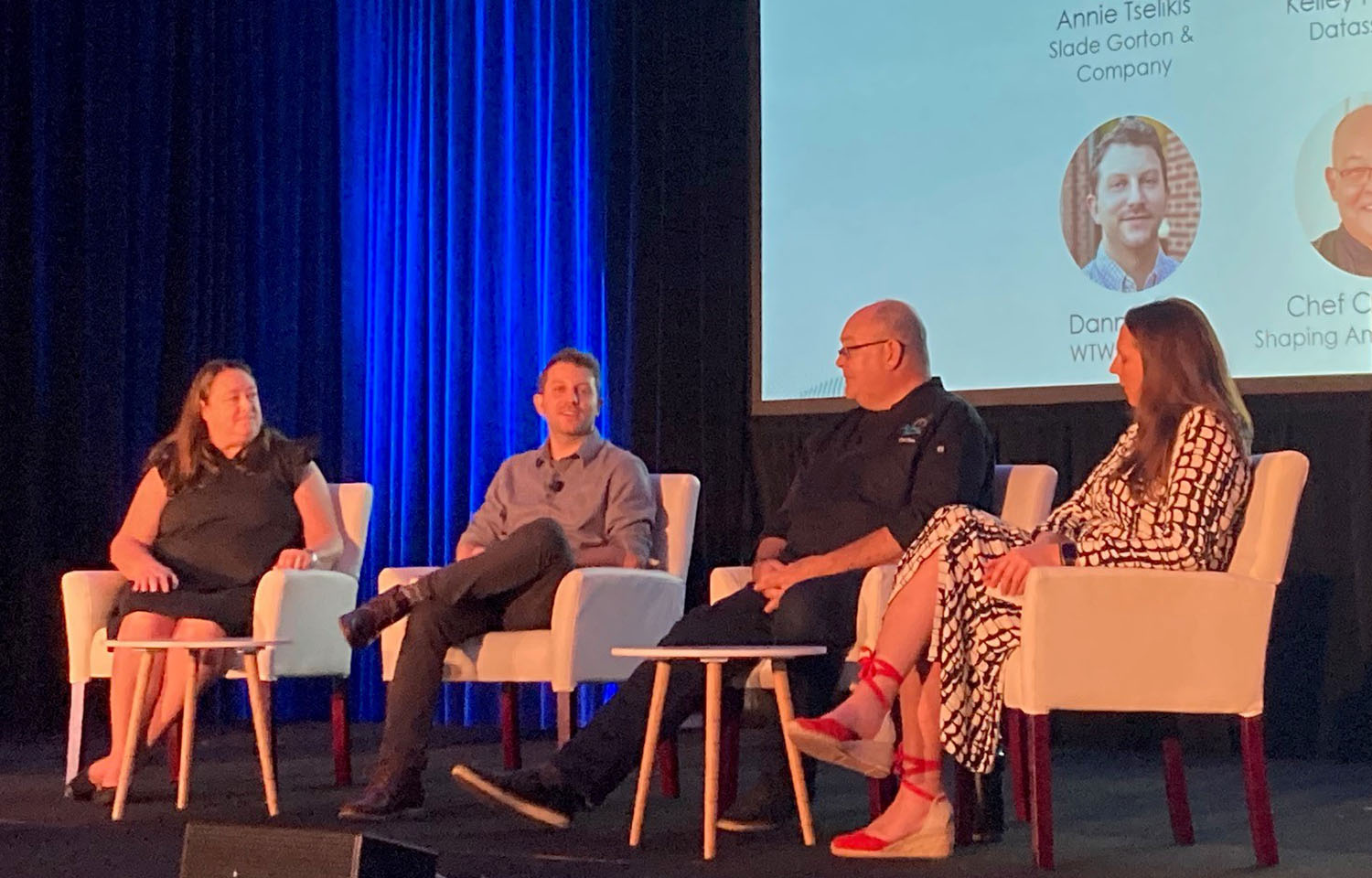
Quick-service restaurant (QSR) operators are looking to expand their seafood offerings beyond fried fish sandwiches, with an aim of offering healthier dishes featuring salmon, shrimp, and other seafood, according to restaurant industry experts speaking at the 2024 Global Seafood Marketing Conference (GSMC), which took place in Orlando, Florida, U.S.A. from 23 to 25 January.
“In today’s world, at lunch, you sell a lot of fish sandwiches, and they’re all fried. How can we get into something that’s a little bit better for you?” said Cliff Pleau, a culinary innovator at food and beverage consultancy firm Shaping America’s Plate, during a panel that focused on QSR operations.
Datassential Vice President of Customer Experience Kelley Fechner also emphasized the emerging trend and pondered where it might go in the near future.
“We’re probably not going to see a salmon salad at McDonald’s. That’s OK,” she said. “But, what would work there? What fits beyond a fish sandwich at lunch?”
Pleau suggested salmon as a “gateway” for QSR operators looking to initiate this process, as it is an approachable fish that they can start with before incorporating other species. Shrimp and cod are also approachable and work well without needing to be fried, and entrees that can seamlessly become a part of most menus include salmon salad, a salmon BLT, spicy cod tacos, and citrus grilled shrimp, Pleau said.
Shaping America’s Plate is itself creating a fast casual restaurant in Jacksonville, Florida, U.S.A. The restaurant is expected to open this fall and will be showcasing pecan wood-fired Kvarøy Arctic salmon, “serving it in a way that inspires guests to craft their own experience” at home, Pleau said.
The health benefits of seafood are numerous, but seafood prices are higher and margins are a lot smaller than other proteins, Pleau warned.
"If you can deliver and execute quality, I think people will buy it up if they’ve had a great experience with it,” Pleau said.
Los Angeles, California, U.S.A.-based Sweetgreen is one restaurant that has realized success with the introduction of seafood, including its salmon plates that come in two flavors – miso glazed and barbecue.
Sweetgreen and Brooklyn, New York-based Luke’s Lobster collaborated on the creation of Luke’s Lobster Roll Salad, exclusively available at Sweetgreen’s restaurants in Boston, Massachusetts and Cranston, Rhode Island. The collaboration is designed to make a positive impact by supporting Maine lobstermen and the broader seafood sustainability movement.
Another avenue restaurants are exploring to introduce more seafood include customized bowls, according to Annie Tselikis, the director of business development and marketing for Waltham, Massachusetts, U.S.A.-based Slade Gorton & Company.
“That would allow operators to move away from the traditional fried fish sandwich,” she said. “The great thing about seafood is … it fits so many different culinary applications and so many different diets.”
Seafood options are “perfect” for those following a Mediterranean diet, as well as those requiring halal and kosher diets, according to Tselikis.
“It checks off a lot of boxes to be able to access many people with a very diverse background in a way that beef doesn’t,” Tselikis said.
Fechner said offering specials on seafood dishes regularly on certain days of the week could help boost trials of new items; for example, a customer might order a salmon dish on Tuesday and then find out that there will be a peel-and-eat shrimp special on Thursday.
“It just kind of snowballs,” she said.
To help out restauteurs, the seafood industry needs to work collectively to provide them resources, such as information on how to handle, prepare, and store products, according to Tselikis.
“There is a lot of misinformation out there in the universe, and we need to be a guidepost as an industry to support our customers and our operators,” Tselikis said.
Photo courtesy of Cliff White/SeafoodSource
