



Seafood has continued to see lower inflation rates than many other foods, but price hikes continue to impact its sales across the United States.
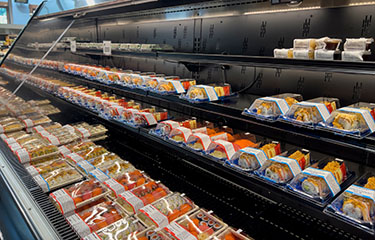
Frozen seafood prices jumped 6.3 percent in January to USD 10.44 (EUR 9.74) per unit on average compared to January 2022, according to IRI and 210 Analytics. Ambient seafood inflation rose 7.4 percent to USD 2.14 (EUR 2.00) on average, and fresh seafood experienced the lowest inflation at 3.3 percent to USD 8.95 (EUR 8.35) per unit on average.
Fresh seafood prices increased 8.2 percent for the year ending 29 January, “far below the rate of inflation for total food and beverages,” 210 Analytics Principal Anne-Marie Roerink told SeafoodSource. Frozen and shelf-stable seafood also experienced “relatively mild” inflation, rising 10.1 percent for frozen and 10.6 percent for shelf stable for the year.
Conversely, overall food and beverage inflation increased 13.2 percent in January and a significant 30.3 percent for the year ending 29 January. Fresh chicken prices rose 9.4 percent in January and 15.4 percent for the year, while fresh beef prices fell 0.5 percent in January and rose 2.3 percent for the year.
While seafood price hikes may not be as severe as other categories, they' still taking a toll, Roerink said.
“A 5 percent increase on something that is USD 10.00 [EUR 9.33] per pound to start is more than a 10 percent increase on something that is USD 3.00 [EUR 2.80] per pound," Roerink said. "So, the gap between the protein choices can actually widen even though the rate of inflation may be favorable.”
Even though fresh produce, meat, and seafood have all had below average inflation over the past year, they are still among the most mentioned items by consumers when referring to grocery cost increases.
“So it really becomes about underscoring value,” Roerink said.
As a result of inflation, frozen seafood sales had the biggest decline of all seafood product-types in January, dropping 5.2 percent to USD 548 million (EUR 511 million), while unit sales plunged 10.9 percent. Fresh seafood declined slightly by 1.8 percent to USD 484 million (EUR 452 million), while units dropped 4.9 percent.
Shelf-stable seafood sales rose 5.2 percent in January to reach USD 219 million (EUR 204 million), while unit sales fell 2 percent. Benefitting from inflation-weary shoppers seeking a value, shelf-stable seafood sales reached a record USD 2.7 billion (EUR 2.5 billion) in sales for the year ending 29 January. Tuna accounted for the majority of those sales at USD 2 billion (EUR 1.9 billion).
The average price of frozen salmon jumped 19.3 percent in January, while frozen pollock prices rose 19 percent. Frozen crab prices declined 15.7 percent. Frozen almon generated USD 55 million (EUR 51 million) in sales in January, a 7.5 percent decline from January 2022, but still good enough to make it the second-largest frozen seafood sales generator.
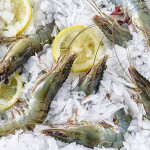
While frozen shrimp prices rose 2.5 percent in January and have risen 9.5 percent for the year to-date, it remained the “frozen seafood powerhouse,” sporting sales of USD 3.7 billion (EUR 3.5 billion) over the past year. Shrimp sales dropped 5.4 percent in January and 4.8 percent for the year, likely related to the above-average level of inflation, according to Roerink.
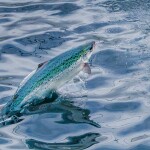
Fresh salmon inflation started to moderate in January, but its average price still rose 7.6 percent for the month and 11.2 percent for the year, according to Roerink. Fresh crab prices dropped 9.2 percent and fresh lobster prices were down 4.6 percent in January.
Despite continued inflation woes, there is some positive economic news on the horizon, as IRI predicts total food inflation to be lower in 2023 than 2022. Seafood inflation should be lower as well, IRI Executive Vice President, Americas Protein Practice Leader Chris DuBois told SeafoodSource.
“Meat and seafood inflation have been trending lower than total food and beverage and IRI expects them to continue lower,” DuBois said.
IRI projects overall food and beverage prices to increase around 7 to 9 percent, leading to a 5 to 7 percent hike in sales.
National Retail Federation Chief Economist Jack Kleinhenz said in the February issue of NRF’s Monthly Economic Review that a recession is unlikely and the economy is expected to see slight growth in 2023. Corporate and household balance sheets are “in the best shape we’ve seen going into a downturn,” Kleinhenz said.
“This should make any economic slowdown mild and limit the downside risks despite my outlook for the economy to straddle a zero-growth path during 2023," he said.
Wells Fargo Senior Economist Tim Quinlan said on 18 January at the 2023 National Fisheries Institute Global Seafood Market Conference in La Quinta, California, U.S.A., that his bank has already "penciled in" a recession this year.
Santa Monica Seafood President and CEO Roger O’Brien also predicted grocery retailers will continue to suffer during the first half of 2023, “especially when the media goes crazy scaring consumers once a formal recession is announced."
On the other hand, O'Brien expects third and fourth quarter of 2023 to show improvements for retailers in customer counts, sales, and profits.
Overall food costs increased 10 percent for Americans in January, compared to January 2022, according to the U.S. Bureau of Labor Statistics Consumer Price Index. Food at home realized the largest hike, rising 11.3 percent, while food away from home prices increased 8.2 percent. Fish and seafood prices declined 0.1 percent, according to the CPI.
Photo courtesy of Colleen Michaels/Shutterstock
