






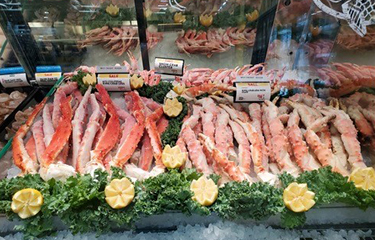
Fresh and frozen seafood inflation at U.S. retailers declined in April, but sales still continued to drop last month.
Frozen seafood prices dropped 2 percent in April compared to the same month last year. Fresh seafood prices declined 0.8 percent, and shelf-stable seafood prices rose 3.8 percent, according to new data from Circana and 210 Analytics. Frozen seafood sales plummeted 6.2 percent to USD 519.7 million (EUR 478 million), fresh seafood declined 2.7 percent to USD 480.5 million (EUR 442 million), and shelf-stable sales fell 1.2 percent to USD 204.4 million (EUR 188 million).
Among the species most impacted by pricing increases are frozen pollock and frozen and fresh shrimp, while salmon sales grew despite inflation.
“Inflation is wreaking havoc, and seafood’s more premium image as a protein source has put additional pressure on the category,” 210 Analytics Principal Anne-Marie Roerink told SeafoodSource.
Roerink said in addition to inflation, the overall grocery marketplace is experiencing challenges related to Covid-era emergency SNAP benefits ending and the nation’s credit card debt nearing USD 1 trillion (EUR 920 billion).
A shift in the Easter holiday this year to 9 April likely led to an alteration in March and April numbers, which probably moved some of the holiday sales to March, according to Roerink.
“May will provide a better understanding where demand truly sits,” she said.
Still, Roerink was surprised by the frozen seafood sales drop, as the category had held up well to the pressures buffeting the rest of the seafood sector in the first quarter of 2023.
"Shoppers often look to frozen when they are looking for value, as well as limiting food waste as another way to save,” she said. "Most of the frozen food categories are experiencing unit pressure, so in that regard, seafood is just following the patterns seen in most of the other areas. The difference then lies in inflation boosting dollar sales for some areas, but not enough for seafood.”
Frozen pollock prices soared nearly 16 percent, and frozen salmon prices rose 6.8 percent. As a result, frozen pollock sales plunged 8.6 percent in April, but salmon sales still increased by 4.4 percent, according to Circana and 210 Analytics.
The higher pollock prices over the past few months are the result of both higher demand and reduced supply, American Seafoods Chief Commercial Officer Rasmus Soerensen told SeafoodSource.
“We had a 19 percent drop in our quota last year, which of course immediately had a quite profound impact on pricing for all our products, because we were going through a time of very high demand for everything we produce on our vessels. All of a sudden we [had] almost 20 percent less supply. Consequently, everything frozen off our vessels went to historically high prices in the second half of 2022,” Soerensen said.
However, total allowable catches are “correcting,” so “we are nudging back towards a more normal level at 1.3 million tons this year," Soerensen said. "It’s [up] 14 percent again."
The primary driver in overall frozen seafood deflation was a 66 percent freefall in frozen crab prices. As a result, crab sales jumped up 6.8 percent. Shrimp prices also declined 2.3 percent, and tilapia prices fell 4.1 percent.
U.S. snow crab prices began falling several months ago and plummeted from USD 19 (EUR 17.48) per pound in January 2022 to USD 7.50 (EUR 6.90) per pound in January 2023, Clearwater Seafoods Vice President of Sales Rob O’Sullivan said at the National Fisheries Institute’s 2023 Global Seafood Market Conference in Palm Springs, California, U.S.A., in mid-January.
In the fresh seafood department, the biggest price drops occurred in lobster, which declined 17 percent, and crab, which was down 14 percent. Fresh shrimp prices climbed 4.2 percent, while fresh salmon prices rose 2.9 percent.
Crab and trout were among the few species that realized a sales increase in April, with crab up 11.5 percent and trout up 2.2 percent. On the other hand, cod sales dropped 14.2 percent, seafood cakes dropped 14.2 percent, and shrimp sales declined 12.7 percent.
Despite lower seafood inflation, overall food-at-home inflation hiked up 7.1 percent in April compared to April 2022, according to the U.S. Bureau of Labor Statistics’ Consumer Price Index. Food-away-from-home soared 8.6 percent. Inflation at full-service restaurants rose 7.2 percent, and the price index for limited service meals rose 8.2 percent over the same period.
Due to inflation and concerns about the federal government raising the borrowing cap, U.S. consumer sentiment plummeted to a six-month low in April, according to a University of Michigan survey. The overall index of consumer sentiment is at 57.7 this month, the lowest reading since last November and down from 63.5 in April, according to Reuters.
Photo courtesy of 210 Analytics
