





As salmon processors continue to invest heavily in automation, the industry must also recognize that human expertise will remain central to operations, according to equipment and solutions provider JBT Marel.
Speaking at the North Atlantic Seafood Forum (NASF) JBT Marel Sales Manager Hans Marius Martinsen said the evolution of automation technology has created more streamlined processing, but has also presented a new challenge. As companies increasingly rely on sophisticated automation, they also require highly specialized workers capable of bridging biology, mechanics, and digital automation – and there’s a “structural scarcity” of such people.
Martinsen called this situation “the paradox of automation.”
“The more efficient automated systems become, the more critical the human contribution becomes,” he said.
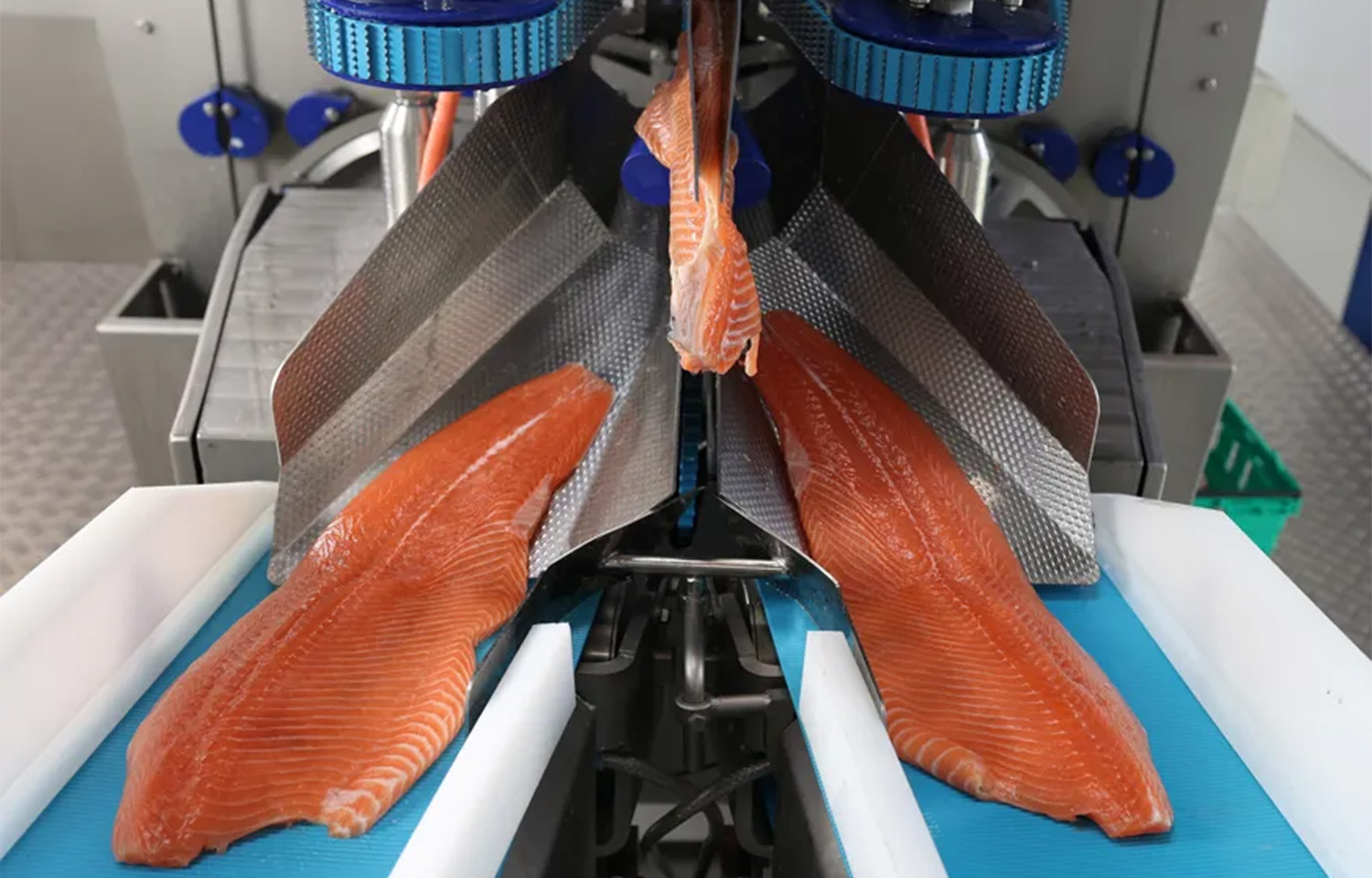
Martinsen said seafood processing technology has broadly evolved through three phases: manual processing, mechanization, and advanced automation. The latest phase has introduced sensors, cameras, and precision controls capable of assessing raw materials and adjusting processing parameters in real time. This technological leap has again shifted where expertise sits in the plant.
“Now the specialist is the automation engineer with a laptop,” Martinsen said.
But as salmon processing lines become increasingly interconnected, this reliance on specialists has created a new bottleneck. Properly operating the technology requires hybrid workers who also understand fish biology, along with mechanical systems and digital automation.
Not having such expertise onboard can impact the whole production line, while training such employees to a senior level can take years, he warned.
“The more efficient an automated system becomes, the more crucial the contribution of the operator,” Martinsen said.
This challenge is particularly acute in salmon because processors are working with highly variable biological raw materials with big variations in size compared to other products – such as poultry –making fully standardized processing difficult.
For this reason, the next generation of processing systems must focus less on removing humans from the process and more on reducing the reliance on specialized expertise, according to the company.
Martinsen said two advances will be key: Improving systems’ ability to understand raw materials before processing begins, and enabling automated equipment to learn from operational feedback.
Ultimately, he said, automation must be designed around the realities of salmon production in all its forms.
“We will not automate ourselves out of the paradox. We still need systems that work for people who understand the salmon – not just for people who understand technology,” Martinsen said. “But if we design for averages, we will get average results.”
