






Labor contract negotiations between the International Longshoremen's Association (ILA) and the US Maritime Alliance (USMX) over East and Gulf Coast U.S. ports ended just two days after they resumed on 11 November.
The union said it halted the talks over its refusal to cede ground on automation, which has long been the sticking point in negotiations.
“The ILA and USMX came to the table this week, prepared for four days of intensive bargaining to bring us closer to securing a fair contract. For the first day and a half, discussions were productive, and both sides engaged in addressing serious issues," a facebook message to union membership said. "However, late yesterday, talks broke down when management introduced their intent to implement semi-automation—a direct contradiction to their opening statement where they assured us that neither full nor semi-automation would be on the table. They claimed their focus was on modernization, not automation.”
The ILA said it is maintaining its position that it supports automation that improves safety and efficiency – so long as a human being remains in control.
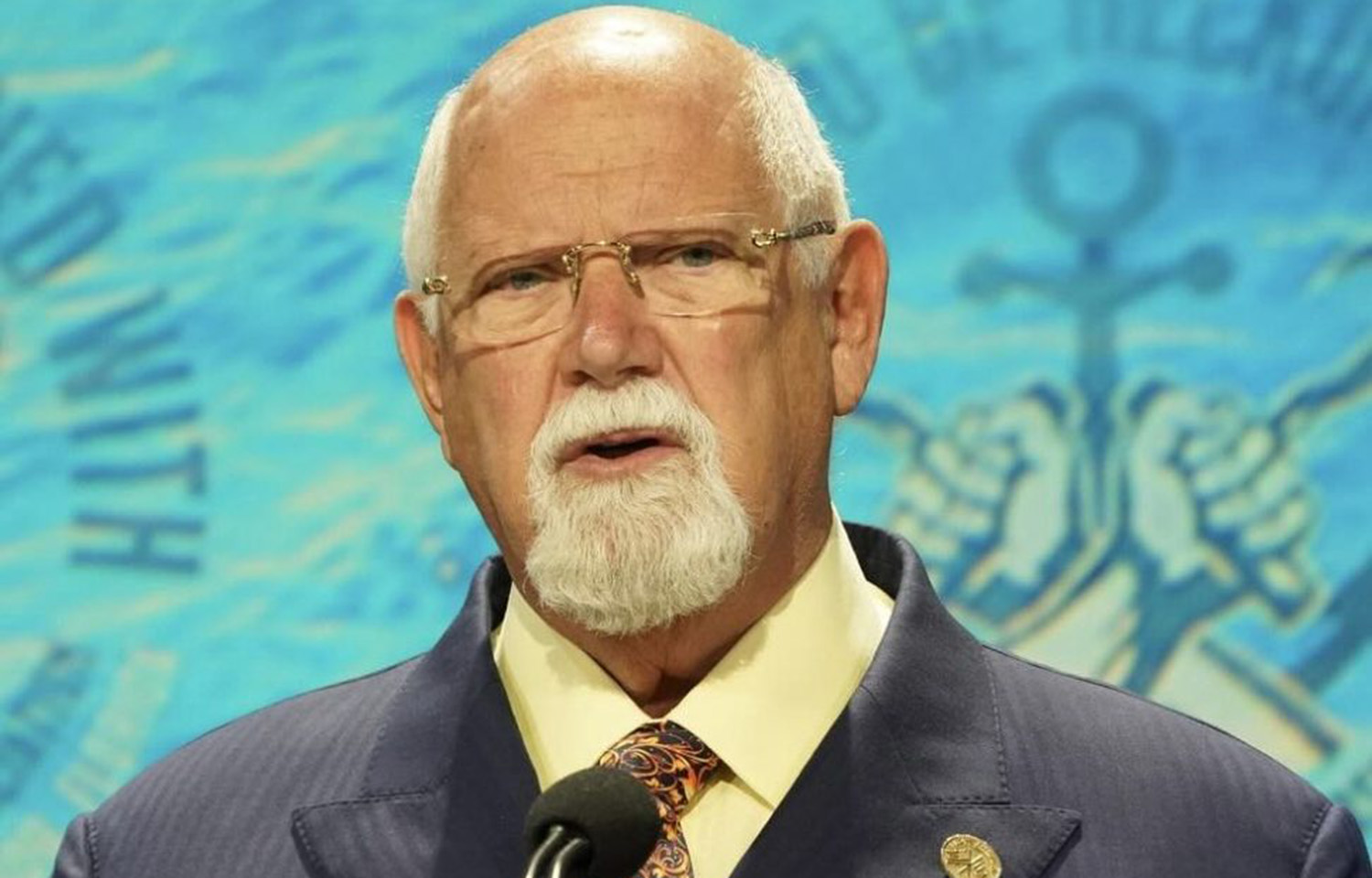
ILA President Harold J Dagget also issued a statement today, which expressed his thanks to the organization’s membership for its “incredible support and unwavering solidarity.”
“Together, we’re standing up to USMX and the shipping lines, who are pushing automation and new technology that threaten our jobs and the livelihoods of working people," he said.
A three-day strike in early October halted all shipping through ports, with the seafood industry among the first to be affected by the trade disruption. J.P. Morgan estimated that the strikes cost the country between USD 3.8 billion and USD 4.5 billion (EUR 3.4 billion and EUR 4.1 billion) a day.
The brief strike was temporarily resolved by the administration of U.S. President Joe Biden, which convinced the ILA and the USMX to agree to a contract extension through 15 January, and a commitment on the part of employers to a 65-percent pay raise over the life of the new contract. The hope was that the extension would give the parties time to agree on language about introducing automation to East and Gulf Coast ports.
The employers association maintained that it sought automation for the sake of competition, and not to cut jobs. In a 13 November statement on the failed talks, it said that “the USMX has been clear that we are not seeking technology that would eliminate jobs. What we need is continued modernization that is essential to improve worker safety, increase efficiency in a way that protects and grows jobs, keeps supply chains strong, and increases capacity that will financially benefit American businesses and workers alike.”
“The ILA is insisting on an agreement that would move our industry backward by restricting future use of technology that has existed in some of our ports for nearly two decades–making it impossible to evolve to meet the nation’s future supply chain demands," the USMX said.
For its part, the ILA said that “employers and certain media outlets perpetuate the false narrative that the ILA is stonewalling technological progress.”
The union countered this claim by touting the productivity of the ports staffed by its members, which have dramatically increased their daily gate moves, comparing their work to automated terminals worldwide, which it said “consistently lag behind in productivity.”
“It’s disheartening,” the union statement read, “that after making strides in our talks, management resorted to tactics designed to mislead and divide. They’ll likely claim they’re offering to meet our manning proposals as a compromise, but we see through this plot. Their endgame is clear: establish semi-automation now and pave the way for full automation later. We’ve seen this bait-and-switch strategy in other parts of the world and in other industries, and we will not let it happen on the East and Gulf Coast.”
Workers at the nation’s West Coast ports have battled with employers on the same issues, but have gradually accepted the automation of some services, including remote controlled cranes and yard tractors. In the last two rounds of contract negotiations for the West Coast ports, these innovations were seen as especially important because of competition from fully automated ports in foreign countries.
In the case of the West Coast ports, automation did cost some workers’ their jobs. According to a study produced by the Economic Roundtable and cited by the World Economic Forum, after limited automation was introduced at the Port of Long Beach and the Port of Los Angeles, at least 572 full-time equivalent jobs were lost in 2020 and 2021. This amounted to about 5 percent of the 13,000 jobs at the ports.
In a report published yesterday, the World Economic Forum validated the stated concerns of both the union and the employers. High Ambition Climate Collective co-founder and CEO Allyson Brown argued that October’s strike was an early indication of pressing issues which were likely to be soon felt throughout the global trade industry.
Today, port workers move 90 percent of the world’s goods. “Automation,” Brown wrote, “promises safer, more reliable operations, yet it also threatens to displace the very people who keep these critical systems running.”
Brown advocated for a “just transition for ports” that streamlined inefficiencies, prevented accidents by eliminating human error, and maximized sustainability efforts. She argued that the inclusion of clean energy to ports could provide work for unemployed dockworkers.
“Ports are uniquely positioned to serve as clean energy manufacturing and service centers. Projects such as offshore wind development require ongoing maintenance and administration and port workers, with their existing skill sets, are well-positioned to transition into these roles with target retraining.”
But, she said, this would require long-term financial commitments from port employers: “To make these new, climate-positive jobs attractive options for displaced workers, ports and terminal operators must invest in accessible and well-supported retraining programs that align with workers' needs. This proactive approach can provide stable, long-term roles for port workers, easing concerns about job security as ports modernize.”
If the parties cannot come to an agreement, the temporary contract which was extended in October will expire on 15 January 2025. That could mean that 45,000 workers might walk off the job at an inconvenient time for U.S. president-elect Donald Trump, who takes office on 20 January.
ILA members work on an hourly basis, losing pay when ports slow down, so they would likely be affected by a drop in foreign imports. The situation may present a challenge for the president-elect, who campaigned on extensive tariffs to deter foreign imports, but who has, according to union president Dagget, been supportive of the ILU in the past.
