



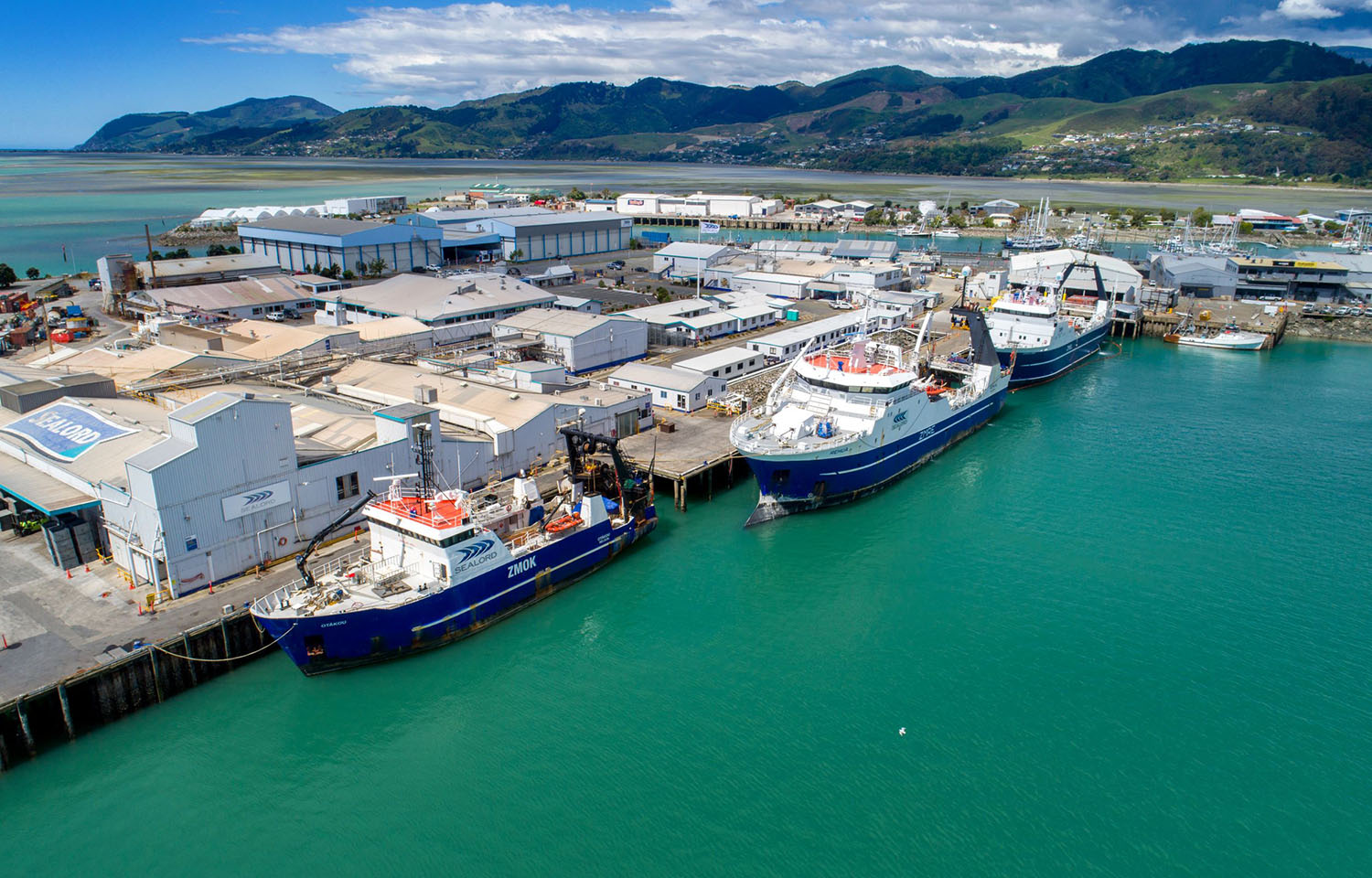
New Zealand-based seafood company Sealord has begun the process of closing its factory in Nelson, New Zealand.
The company announced plans to close the facility, which manufactured frozen crumbed and battered fish products, after it underwent a 12-month review of the company’s business. With the closure, a total of 79 people will be laid off, including 57 factory roles and 22 management or office roles.
Sealord CEO Doug Paulin said in a release that the company is currently the last significant supplier of frozen coated fish products manufactured in New Zealand. However, Sealord’s frozen crumbed and battered fish products – sold in New Zealand and Australia – make up just 6 percent of its business based on revenue.
“Unfortunately, like many manufacturing businesses in New Zealand that have been forced to close in recent times, we are similarly affected by hugely challenging economic factors,” Paulin said. “Increasing operating costs, particularly labor and electricity, plus freight, exacerbated by requests for higher supermarket margins, means we must reconsider the way we manage our retail frozen branded business. Despite the best efforts and 'mahi' of our workers, we may have to exit the frozen coated fish business that we have built up over many years.”
Sealord said it is now investigating whether it can move processing and packaging coated fish products outside of New Zealand to be able to continue offering its products.
“Many of our coated factory staff have worked at Sealord for much of their working life. Our priority at this time is providing support for our people as we work through the process,” Paulin said.
The closures will not affect the company’s deep-sea fishing operations. Sealord operates a fleet of deep-sea fishing vessels targeting a range of species including mackerel, southern blue whiting, squid, orange roughy, hoki, and dory.
The company said its operating model for its canned tuna products will also remain intact.
Alongside the closure of the coated factory, Sealord announced it has proposed changes to the Nelson Site Collective Agreement, which covers union member workers in the company’s land-based operations, including cold and dry storage, a byproducts plant, and a wetfish factory.
“We are hoping to agree changes to the collective agreement that will help keep Nelson land-based manufacturing operating,” Paulin said.
