


Menlo Park, California, U.S.A.-based independent, nonprofit R&D institute SRI International received a USD 4.2 million (EUR 3.7 million) U.S. Department of Energy Advanced Research Projects Agency-Energy (ARPA-E) award to develop an underwater kite that generates electricity through the ocean's tides and river currents.
SRI has worked in collaboration with the Berkeley, California, U.S.A.-based University of California Berkeley to create the "Manta," a hydrokinetic turbine, through the U.S. Department of Energy's Submarine Hydrokinetic and Riverine Kilo-megawatt Systems (SHARKS) program. Now, researchers have been testing the technology in San Francisco, California, U.S.A. and are exploring the possibility of bringing power to more rural areas like the U.S. state of Alaska.
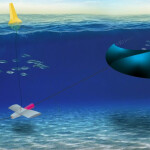
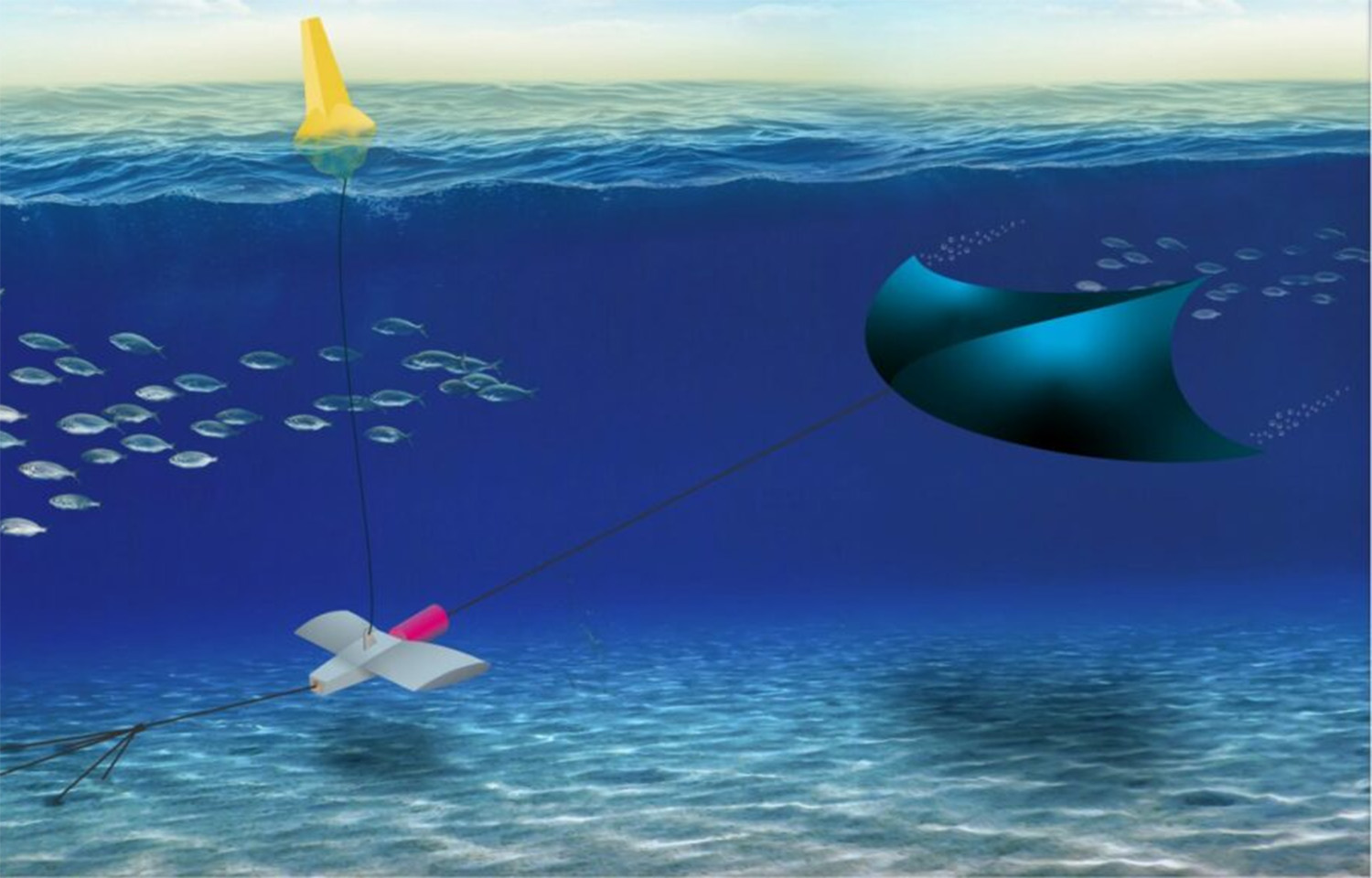
The name Manta is inspired by the aquatic Manta Ray species' "graceful" movements through the water column, which is mimicked in the underwater kite's test runs displaying a kite out and reel-in pumping action.
The Manta works through an underwater kite device to produce power through a generator, which is placed at the base of a tether housed on either a boat or an anchored mooring, as reported by IEEE Spectrum. As the tide shifts and pulls the kite underwater, the tether tied to the mooring or boat extends and spins the generator, which in turn produces power. The tether can then be reeled back in with much less force, as the kite returns to a streamlined position with minimal effort, thus exerting much less power.
For the project, the U.S. Department of Energy's contract required researchers to produce machinery that could create 1 kW of power at under USD 0.09 (EUR 0.80) per kilowatt-hour. Bend, Oregon, U.S.A.-based engineering company BladeRunner Energy previously tested a tethered corkscrew-style rotor in the Alaskan river system, using a 2-meter-diameter device that can produce 5 kW in flows between 1.8 and 2 m/s, non-commercially. The company looked to deploy its' technology in the Native village of Napaimute so that residents can replace 100 percent of the community's diesel consumption off an 11-kW engineered machine. SRI International said the same goal exists – to completely eliminate diesel consumption, ideally at a large, commercialized scale once testing is completed.
Additionally, SRI International said the device is safe for both human-led commercial activities and for wildlife encountering the underwater device as it does not utilize anchored rotary turbines. Instead, SRI International said the Manta uses a "relatively lightweight and low-cost polymer composite-coated foam structure." The machinery can also be deployed away from the power grid, allowing remote locations such as Alaska to operate the Manta without needing to use diesel generators – especially amidst rising fuel prices – or access the sometimes-distant power grid network. Additionally, the technology is able to spin generators at higher speeds without high-ratio gearing, which also can reduce operational costs. SRI International said the goal is to commercially deploy the Manta with demonstrations on the equipment that can be adapted to the individual area's needs and infrastructure.
According to Energies Media, the technology's next testing location will be with the Metlakatla Indian Community in Alaska’s Alexander Archipelago, home to narrow tidal straits with changing water flow strengths. The power grid supports electricity needs for many Native people's lighting, refrigeration, and communication – all functions that would require steady access to power.
SRI International added that a full efficiency analysis of the system will be complete by the end of 2026 to help determine if the design can be scaled commercially to areas like Alaska, allowing fishers to rely less on costly diesel barges and provide greater consistency in electrical access.
