


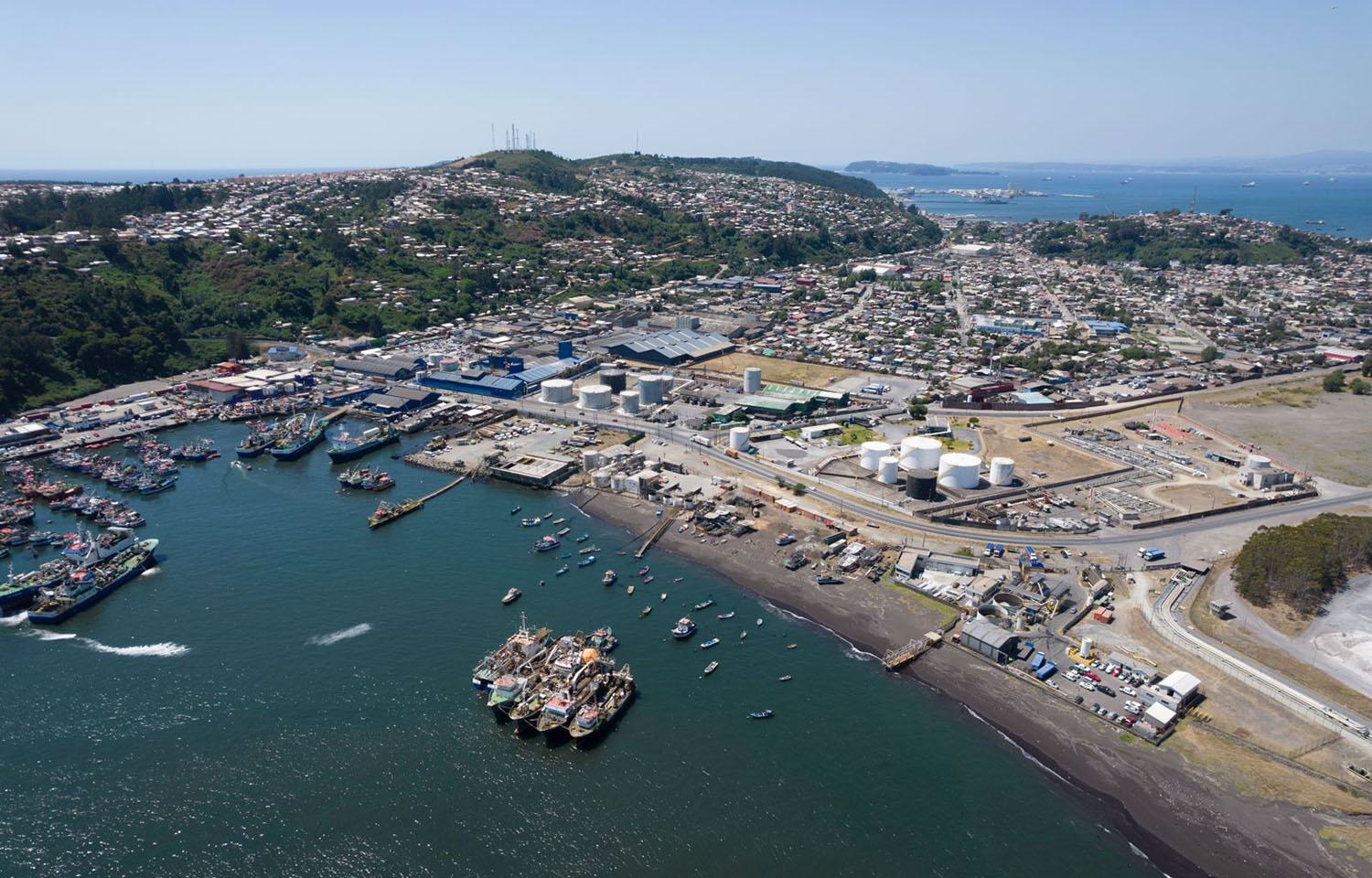
Chilean fishing company Landes, one of the six largest fishing firms in the country, has filed a legal action with the 26th Civil Court of Santiago against the state for what it claimed is “covert expropriation” in the new fishing bill making its way through the country’s congress.
The Talcahuano, Chile-based firm has requested key documents relevant to the processing of the current bill be made public. The so-called “ley de fraccionamiento” seeks to decrease quotas for industrial fishing firms and increase quotas for artisanal fishers, replacing the existing legislation which the government has said is “illegitimate and illegal.”
The existing fishing law, enacted in 2013, handed control of the vast majority of Chile’s marine resources to a handful of large-scale private fishing firms. In a situation commonly referred to as the “Corpesca case,” named after one of the four large companies that benefitted from the fishing law, a number of parliamentarians were accused of accepting bribes to influence the writing of the bill to favor the larger seafood firms.
Now, Landes is looking to confirm that the current legislative process lacked technical, financial, and legal foundations, for which it plans to solicit nullification of the bill and a compensation claim against the state owing to the “radical modification of the fishing quota, particularly in the jack mackerel fishery,” the company said in a statement.
“The new fisheries legislation promoted by the executive [branch] is a tombstone for a company like ours, which employs more than 600 people in Talcahuano, Biobío Region, in a key area for the country’s development,” Landes CEO Andrés Fosk said. “Even more serious, it affects the well-being of hundreds of families by pushing initiatives that violate the constitution and affect property rights that have been developed with more than 70 years of investments and business work.”
David Cademartori, a partner at Barros & Errázuriz, the law office that is handling Landes’ case, asserted that the process of the bill did not comply with the rules established for proper legislative debate.
“This has not happened from the beginning and what we have seen, as it is called in constitutional jargon, is a kind of ‘legislative smuggling,’” he said.
According to the complaint, the preparation of technical, financial, and regulatory impact reports is required by current regulations to ensure the legality and constitutionality of any bill, but in this case, these were deliberately omitted.
Fellow large-scale fishing firms Blumar, Camanchaca, and Austevoll Seafood’s FoodCorp have also questioned the bill to change the existing fishing regulations, saying that if it is passed they may recur to local courts, the constitutional court, or international tribunals.
