


The U.S. Department of Labor (DOL) has added shrimp manufactured in India to the 2024 “List of Goods Produced by Child Labor or Forced Labor.”
The DOL publishes the list biennially, and the Bureau of International Labor Affairs (ILAB) maintains the list to raise public awareness of child labor and forced labor around the world. ILAB said the list is not intended to be punitive and serves as a means of raising the issue, potentially fostering collaboration and engagement with foreign governments to curtail the issue of forced and child labor.
The Indian shrimp industry was added to the list after separate reports from the Corporate Accountability Lab, the Associated Press, and the Outlaw Ocean Project all revealed issues with shrimp production throughout the supply chain. Those reports are cited by ILAB’s labor report as primary evidence for India’s inclusion on the list.
The addition also comes after the Southern Shrimp Alliance requested the DOL to add Indian-produced shrimp to the list, citing the same reports.
“For the purposes of the next scheduled update of the List of Goods Produced by Child Labor or Forced Labor in 2024, the Southern Shrimp Alliance requests that ILAB find that there is sufficient evidence to include shrimp produced in India in the 2024 List of Goods Report as a good produced through child and forced labor and, further, immediately include shrimp from India on ILAB’s List of Products Produced by Forced or Indentured Child Labor,” the SSA said.
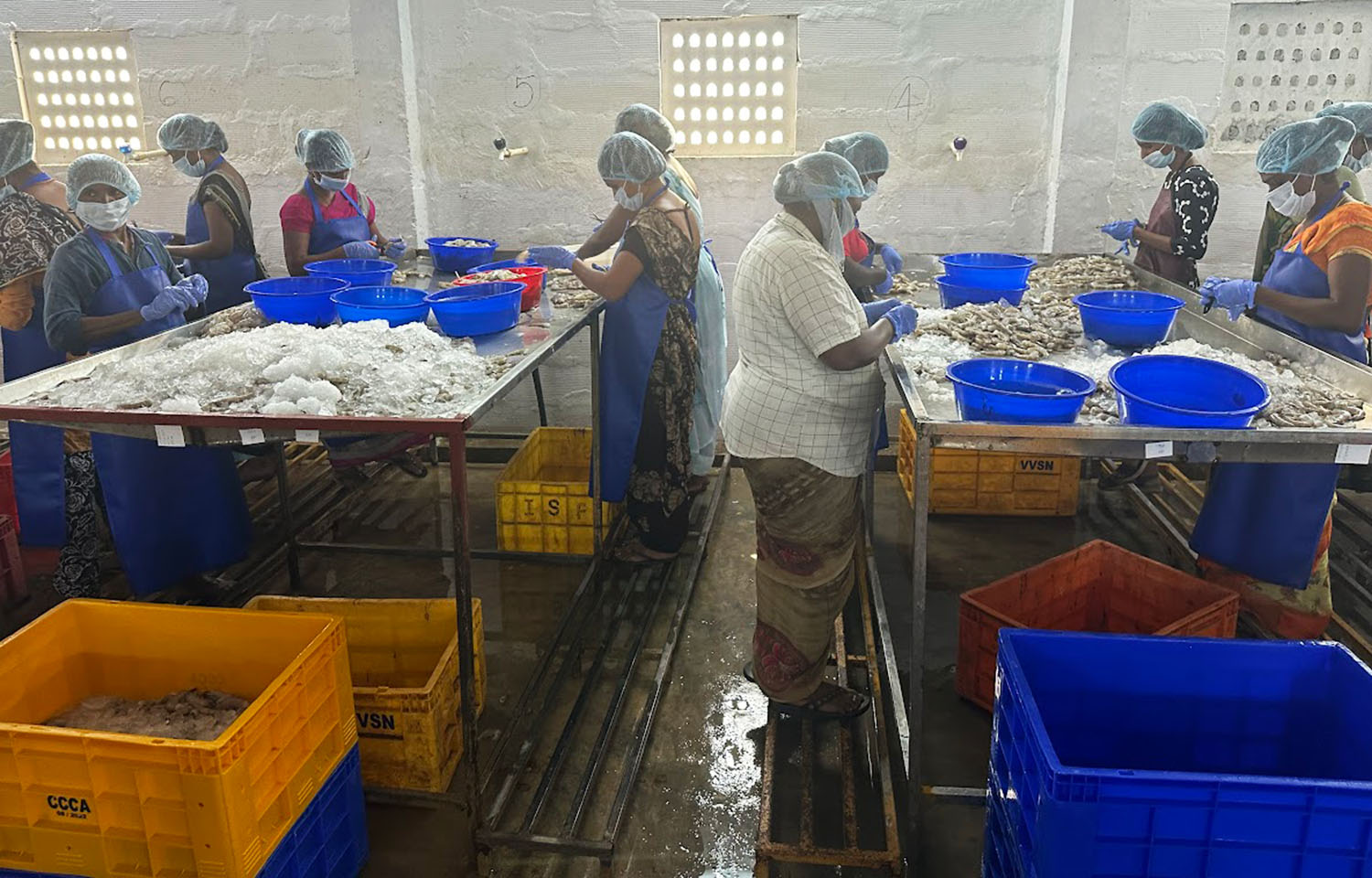
ILAB did just that, and its report highlights the poor conditions at peeling sheds and processing plants in Andhra Pradesh mentioned in the AP, Outlaw Ocean, and Corporate Accountability Lab reporting. Multiple reports detailed poor working conditions and highlighted exorbitant job-placement fees for workers that force them into debt bondage.
“Workers often reside at or near the worksite in employer-provided housing – typically in a remote location – and severe security measures including lock-ins and surveillance preventing workers from freely leaving the premises,” the ILAB report states. “Work to process shrimp involves exposure to chemicals, extreme cold, standing for long hours, and high risk of injury, sometimes without proper personal protective equipment. Verbal and physical abuse, including sexual harassment and abuse, are reportedly prevalent. Reports indicate housing facilities are commonly overcrowded, dirty, and poorly maintained.”
Josh Farinella, the former general manager of Kerala, India-based shrimp processor and exporter Choice Canning, was featured in the Outlaw Ocean Project’s report as a whistleblower and told SeafoodSource in an interview that his “eyes were opened” to the conditions when he moved to India to manage one of the company’s facilities.
Farinella told SeafoodSource he was told to ship antibiotic-contaminated shrimp to the U.S., witnessed employees being forced to remain in the facility against their will, and saw that facilities for workers were inadequate.
Choice Canning denied the allegations and said the company is one of the few shrimp processors to receive an “A” in its Business Social Compliance Initiative Social Audit. Choice Canning Vice President of Sales and Procurement Jacob Jose told SeafoodSource there is no forced labor at his factories or third-party contractors.
“Forced labor doesn't exist in India. They’re twisting terms to use the term forced labor; there's no forced labor in the Indian industry. It doesn't exist,” he said.
Regardless of the company’s denial, Indian shrimp is now on the ILAB list, which the SSA said will officially notify all U.S. buyers of Indian shrimp to exercise additional due diligence. The SSA is also calling for Indian shrimp to be added to the list of products produced by forced or indentured child labor – which would impact federal procurement.
“When evidence of forced labor and child labor surfaced in Thailand’s shrimp supply chains, retailers abandoned those workers to source cheap shrimp from India,” SSA Executive Director John Williams said. “Today, the Department of Labor has taken an important step in addressing those same labor abuses in the Indian shrimp supply chains. U.S. shrimp buyers must eradicate forced labor from their supply chains, not find another cheap labor source. Shrimp producers cannot continue the race to the bottom.”
Elsewhere, Thailand’s shrimp industry was first added to the ILAB list of goods produced by child labor or forced labor in 2009 after it was the subject of a Pulitzer Prize-winning Associated Press investigation that found the industry was rife with abusive labor practices.
After being added to the list, Thailand undertook reforms to the industry, and in May 2024, the DOL pushed for the list to determine that the presence of child labor in the shrimp industry has been reduced.
In the latest report, ILAB highlighted Thailand’s shrimp products and officially removed it from the list of products produced by forced or indentured child labor.
“This decision comes after rigorous assessments and consultations with the U.S. Department of Homeland Security and the U.S. Department of State, acknowledging the concerted efforts of the Thai government, industry stakeholders, and CSOs to address child labor and forced child labor in the shrimp sector,” the report said.
While the report removed Thailand’s presence from using child labor, it said more work is needed to eradicate other labor abuses in the country’s seafood sector, including adult forced labor used in the production of shrimp.
The shrimp industries of Bangladesh, Myanmar, and Cambodia were also included on the list of goods produced using child or forced labor.
