


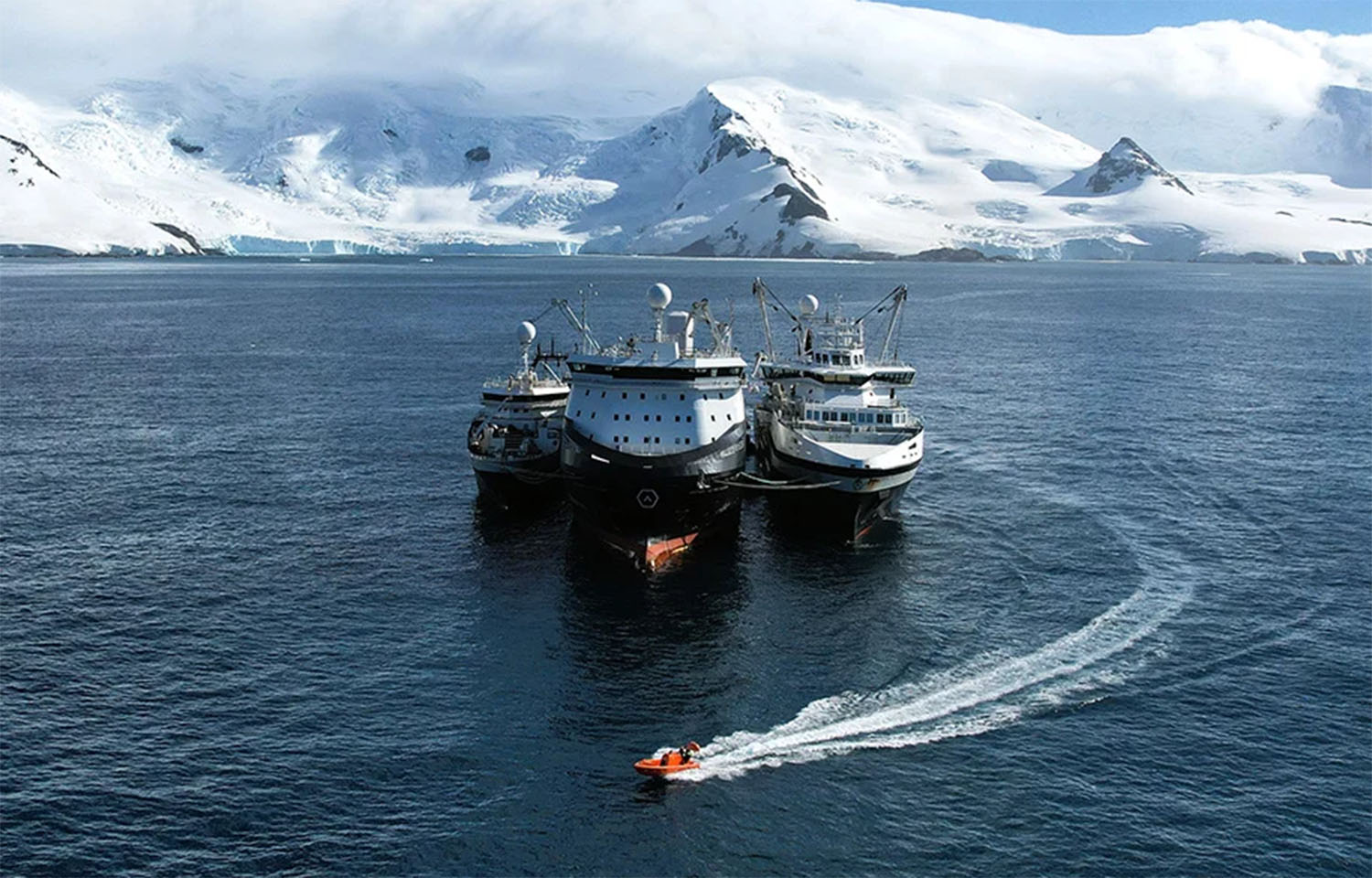
NGOs are claiming the krill fishery in Antarctica is nearing its catch limit for the second year in a row and again have raised concerns over the lack of regulations.
The Antarctic krill fishery is managed by the Commission for the Conservation of Antarctic Marine Living Resources (CCAMLR), which consists of several major countries in a regional fishery management organization. CCAMLR has set a precautionary catch limit of 620,000 metric tons (MT) in the area it manages, a limit it only reached for the first time in 2025.
Hitting that limit for the first time caught the attention of groups like the Antarctic and Southern Ocean Coalition and Sea Shepherd, which pushed for world governments to curb the pace of krill fishing in the region. CCAMLR had been working to reach a consensus to set quotas for krill, including a 395,000 MT limit in Antarctic Zone 48.1, but has failed to do so.
CCAMLR also failed to pass certain formalized conservation measures, including a measure that would have forced fishers to catch over a wider area, and as a result, the vast majority of the krill catch was caught in subareas 48.1, 48.2, and 48.3.
Based on CCAMLR’s report of the 2025 season, krill fishers caught just under 625,000 MT of krill in the fishing season across 12 vessels, which includes just under 360,000 MT of catch from Subarea 48.1.
Now, NGOs are warning the krill fishery is approaching its 620,000 MT trigger limit again.
Antarctica2030 said the area is “again rapidly approaching its catch limit,” though CCAMLR does not post current catch aggregates in a publicly available database.
Conservation group Sea Shepherd also claims major krill fishers have signaled their intention to potentially fish in a different region of Antarctica in 2026, which has seen relatively little fishing since 1991. The group claims companies are looking to fish in areas 58.4.1 and 58.4.2, which would be subject to separate catch limits from Area 48.
“Divisions 58.4.1 and 58.4.2, where the vessels have now also notified an intention to fish, are subject to separate catch limits that currently allow for a combined take of up to 892,000 MT,” Sea Shepherd said. “If substantial krill fishing were to begin there, it would represent not only a major geographic expansion of the modern industrial krill fishery into an area that has experienced virtually no sustained commercial exploitation for more than three decades but also, in effect, more than double the amount of krill the industry is currently permitted to extract without increasing the Area 48 trigger limit.”
Aker QRILL, which catches the majority of krill in the Antarctic Ocean, has long claimed current limits are well below amounts that would have a serious impact on the overall health of the biomass.
QRILL Chief Policy Officer Pål Skogrand told SeafoodSource in 2025 that the 620,000 MT limit is a fraction of the precautionary catch limit of 5.61 million MT and an even smaller fraction of the estimated biomass of 63 million MT in the area.
“The 10 krill-fishing vessels have maintained use of fishing grounds spread up to 450 kilometers apart, and industry voluntary closures of 30- to 40-kilometer buffers around penguin breeding colonies have also been maintained,” Skogrand said.
