
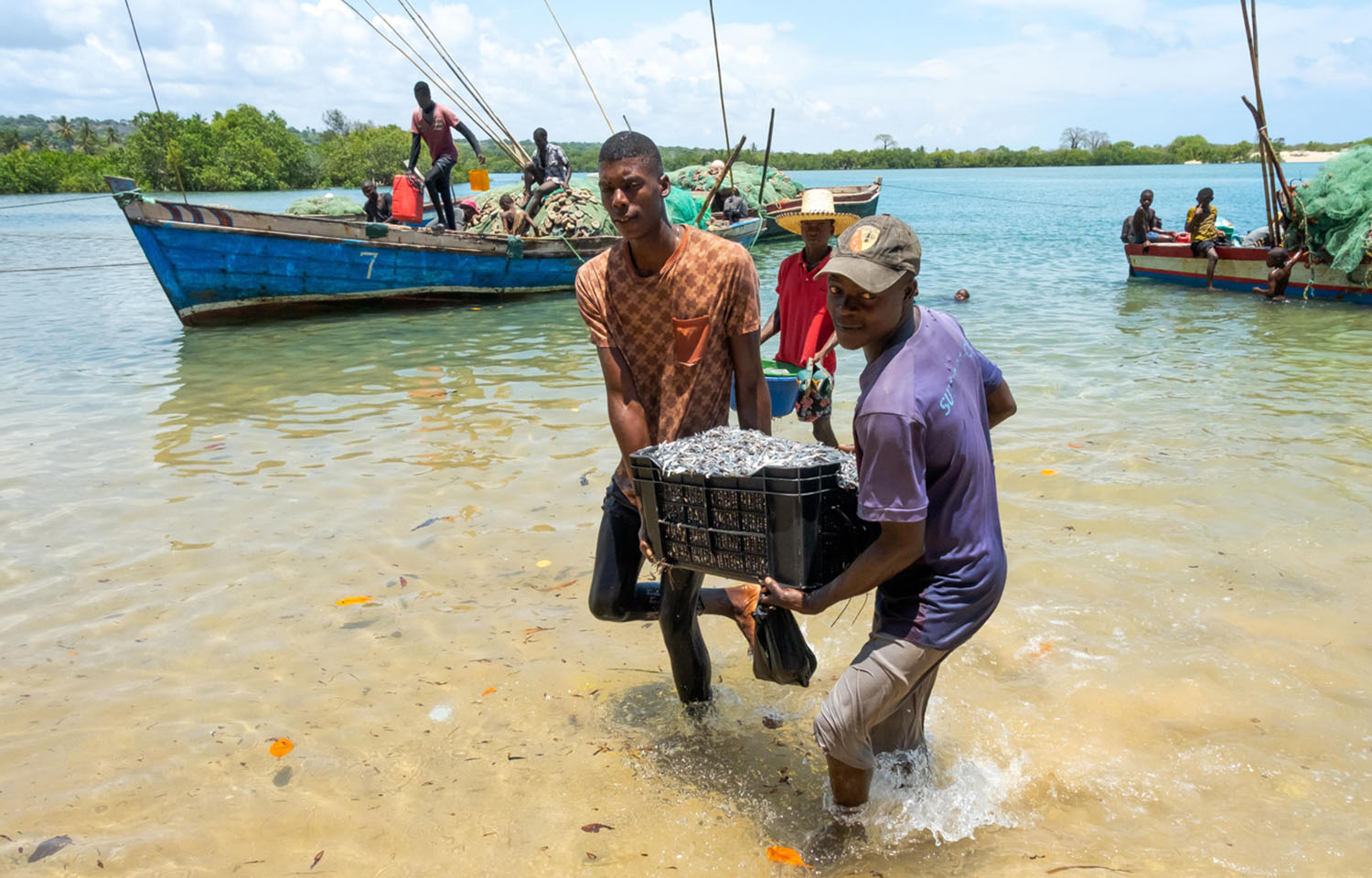
Global nonprofit watchdog Human Rights Watch (HRW) has condemned the killing of fishers in Mozambique's province of Cabo Delgado and urged the government to allow and fully support a transparent investigation into the incident that happened in mid-March.
HRW said at least 13 fishermen were killed by the country's navy personnel. The government claims the incident happened when security targeted the fishers while enforcing measures intended to limit the movement of non-state armed groups along the country's 2,470 kilometer coastline. Those measures are ostensibly intended to contain a raging civil conflict pitting the Mozambican government against militant groups opposed to the involvement of international oil and gas companies in extracting the country's natural gas resource.
Mozambique is reputed to hold up to 100 trillion cubic feet (Tcf) of proved natural gas reserves and is the third-largest holder of proved natural gas reserves in Africa after Nigeria and Algeria.
According to Transparency International, since the discovery of large offshore natural gas reserves in 2010, the development of foreign-owned liquefied natural gas projects in the northern province of Cabo Delgado "has resulted in the displacement of farmers and fishermen with reports indicating some fishermen have been relocated far from the coast, while gas drilling operations have affected fish stocks."
Armed groups such as Ansar al-Sunna and the Islamic State have increased their opposition to the development of foreign-owned liquefied natural gas projects in the country. The Mozambican government has responded by imposing movement restrictions in areas such as Ibo island, where according to relief and UN agencies fishermen have been displaced by fighting, while in other regions fishers have migrated entirely. The shifts have resulted in a decrease in the average size of fish landed and lower total catch per fisherman since the outbreak of the conflict, due to increased pressure on fish stocks in those areas.
The killing of the fishers in March, HRW says, "occurred as part of efforts (by the government) to restrict insurgent movement along the coast and highlights the continued risks faced by civilians whose livelihoods depend on fishing.”
“Mozambican authorities should urgently and impartially investigate the incident, hold those responsible for wrongdoing to account, and pay prompt and adequate compensation to the victims or their families,” HRW said.
HRW said the state-imposed movement restrictions have negatively affected fishing activities in Cabo Delgado, one of Mozambique's top fish producers, and significantly reducing incomes of fishers, increasing the likelihood fishing communities in the province would be impoverished.
The ongoing civil conflict in Mozambique is likely to have far-reaching consequences on the country's fishing industry, including issues with operating landing sites, storage and processing facilities, fish markets, roads for transportation of fish and fish products, and other fisheries sector services according to UN's Food and Agriculture Organization (FAO).
FAO expressed concern the conflict "is worsening food and nutrition insecurity in the region, where communities are yet to recover from the impacts of Cyclone Kenneth that landed in April 2019."
