






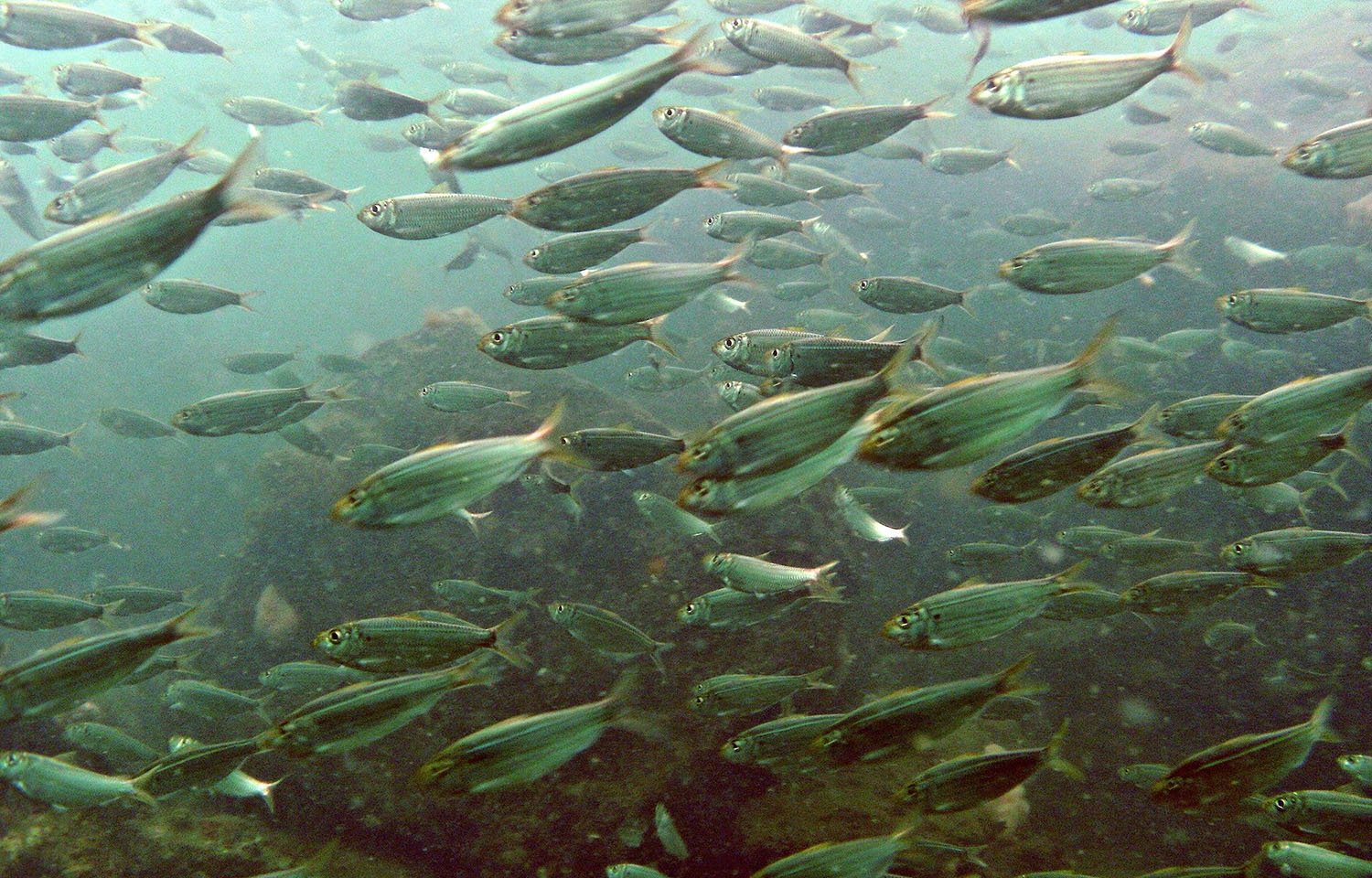
An ongoing debate over the future of the U.S. Atlantic menhaden fishery has gained national media attention, with the industry pushing back against NGOs and activists.
The Washington Post recently published an opinion piece by Mark Robichaux – a former Wall Street Journal reporter – that reviewed recent back-and-forth over the nation's menhaden fishery and its claimed impacts on the wider environment, which includes accusations it is responsible for a decline in osprey populations and that it is diminishing an important forage species, resulting in declines in predators like striped bass.
The opinion piece accuses the fisheries management of the species of being “rudderless” and called for cutting catch limits and instituting new regulations governing things like net depth.
“The warnings are no longer subtle. The only question left is whether the people who manage this fishery will act on them – or wait until there’s nothing left to manage,” the piece states.
The industry immediately pushed back against Robichaux’s piece, calling it misleading.
“Readers unfamiliar with these fisheries may likely come away believing that menhaden stocks are collapsing, predators are being starved by commercial fishing, and regulators have largely failed to act – which was Mr. Robichaux’s point,” the Menhaden Fisheries Coalition, a collective of menhaden fishermen, companies, and related businesses, said.
The piece is the latest in a longstanding debate over the menhaden fishery and its potential impacts on the wider ecosystem and largely retreads a similar back-and-forth that has been ongoing for half a decade.
The main fisher of menhaden on the East Coast of the U.S. is Ocean Harvesters, which has long argued science continues to indicate the fishery is healthy and sustainable.
Some of the debate started when the Atlantic States Marine Fisheries Commission (ASMFC) implemented Amendment 3 in 2018, which required the Atlantic Menhaden Management Board to reexamine the quota allocations for menhaden every three years. The menhaden fishery is allocated to individual states along the East Coast, with the majority given to Virginia – where Ocean Harvesters and Omega Protein, a major processor of the species, are based.
Conservationists are pushing for a reallocation of that quota and a reduction in the fish harvesters would be allowed to catch, but both Omega Protein and Ocean Harvesters have long argued the current science shows the fishery is not posing any problems.
In response to the new opinion piece, the Menhaden Fisheries Coalition points out the stock is nowhere near the point of disappearing, pointing out that the most recent ASMFC assessment found the species was not overfished and overfishing was not occurring – but still cut the quota 20 percent to ensure a zero percent chance of any overfishing.
“While some argue that management should be even more precautionary, that is very different from suggesting the coastwide stock is in crisis,” the coalition said.
The coalition said the opinion piece’s emphasis of the ecosystem-based target leaves out that the fishery is well below the ecological overfishing line and that current quotas are well below any overfishing thresholds.
“Fishing between the two does not constitute overfishing, and the adopted 2026 catch level was projected to have a zero percent probability of exceeding the ecological overfishing threshold. The lower target may be a policy preference for some observers, but it is not accurate to describe it as the minimum level predators simply ‘need,’” the coalition said. “Had the ASMFC done nothing at its October 2025 meeting, the stock would still continue to be healthy, and overfishing would not be occurring. Mr. Robichaux either didn’t understand this or ignored this to drive home his flawed personal opinion.”
The reignited debate comes ahead of ASMFC's annual meeting in November.
