



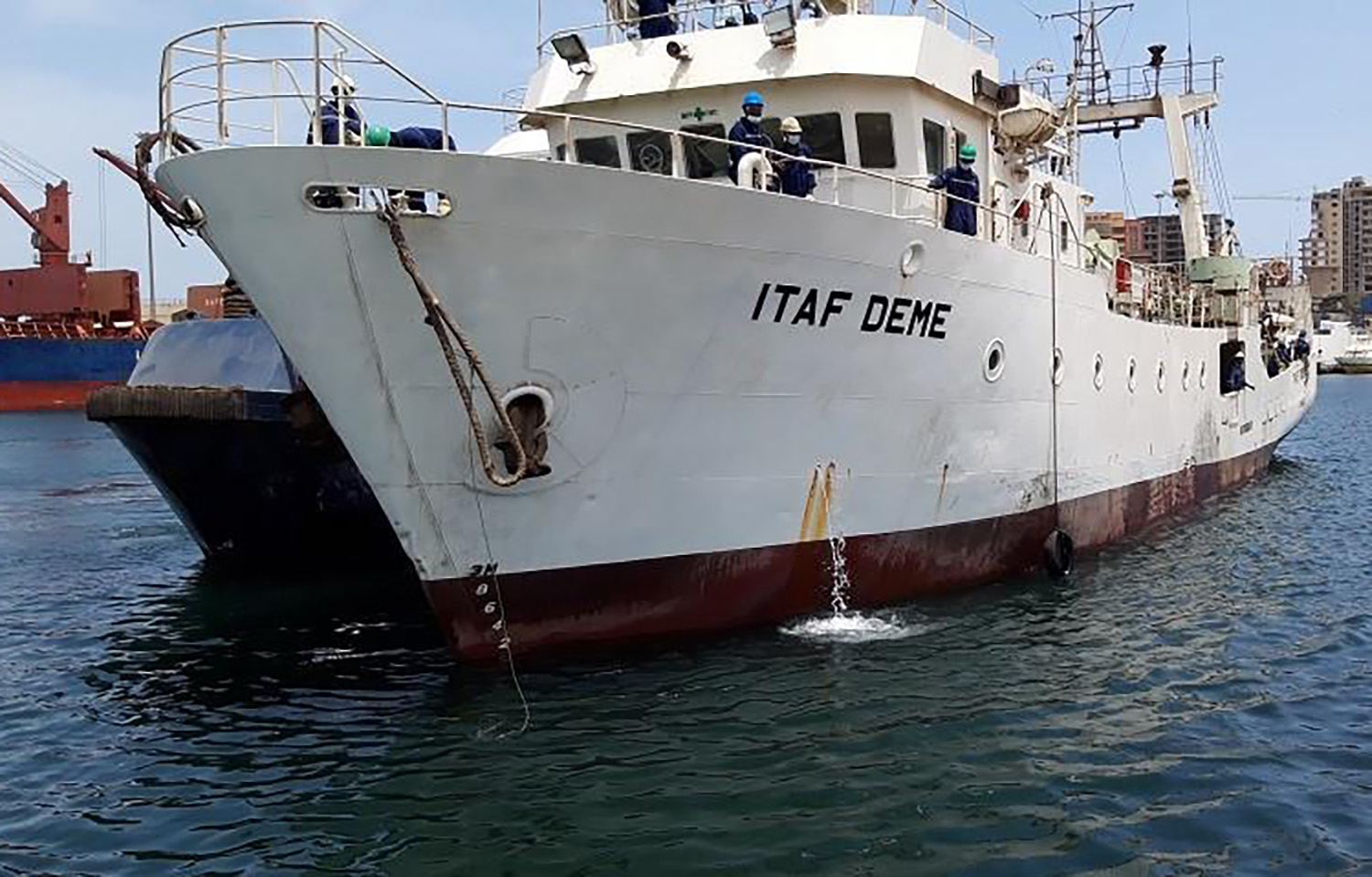
Senegal’s Atlantic Ocean purse-seine tuna fishery has secured Marine Stewardship Council (MSC) certification, becoming the first fishery in West Africa – a region where over 40 percent of the world’s illegal fishing occurs – and the fourth across the continent to achieve the credential.
“West African Atlantic fisheries are among the world’s most productive but are increasingly threatened by high fishing pressure and unsustainable management practices,” Edouard Le Bart, MSC’s regional program director for Southern Europe and Africa, said. “The certification marks a transition to sustainable fishing in the region and is a major win for regional fisheries management and the people of Senegal.”
The fishery, which is regionally managed by the International Commission for the Conservation of Atlantic Tunas, targets Atlantic bigeye, eastern Atlantic skipjack, and Atlantic yellowfin through free-school and fish aggregating device (FAD)-assisted purse-seine sets. Vessels operating in the fishery are flagged to Senegal and operate in the exclusive economic zones and high seas of Senegal, Mauritania, Cape Verde, Guinea Bissau, Guinea, Sierra Leone, and Liberia.
The fishery initially had a deadline of April 2025 to comply with MSC certification standards, such as ensuring that the catch of target tuna and other primary species do not exceed sustainable levels, prioritizing an ecosystem-based approach to fisheries management, and promoting best FAD practices.
Fishing companies Compagnie Africaine de Pêche au Sénégal S.A. (CAPSEN) – a division of South Korean fishing firm Dongwon Industries – and Dakar, Senegal-based Grand Bleu S.A. are the fishery’s representatives to the MSC. Both companies worked to implement improvements per MSC guidelines and, in doing so, secured the credential five months before the deadline.
Both firms implemented improvements during the MSC’s pre-assessment phase, including introducing a digital template for gathering catch information at sea, and maintaining an accurate record of unintentional interactions with endangered, threatened, and protected species.
MSC also said the fishery adopted the use of non-entangling FADs and is in the process of transitioning to FADs made of biodegradable materials, such as bamboo, cotton, and coconut fiber, to reduce the impact on non-target species and vulnerable habitats.
“We are proud to demonstrate our commitment to a transparent supply chain and sustainable sourcing,” CAPSEN Vessel Operation Manager Jason Bo Seung Kim said. “We work closely with the local processing plant that packages our tuna raw materials and is itself certified to the MSC’s Chain of Custody Standard. We are dedicated to ensuring the future of sustainable fishing practices in Senegal and West Africa and are delighted to receive the MSC certificate for this important fishery.”
With the certification, fishers, processors, exporters, and more fishery stakeholders in the area are likely to gain access to additional opportunities in key international markets, such as the U.S. and Europe.
In addition to greater market access, the certification could also mark a turning point for West Africa’s seafood industry in the drive to reduce rampant illegal fishing, according to the MSC.
Some estimates state that illegal fishing is around a USD 2.3 billion (EUR 2.2 billion) business annually in the waters of Mauritania, Senegal, The Gambia, Guinea Bissau, Guinea, and Sierra Leone.
Having at least some of these waters overseen by MSC regulators should ensure that more legitimate business is done in the region, as MSC-certified fisheries “are examined against the rigorous requirements of the standard through an independent, stakeholder-driven assessment,” according to MSC Program Director for Africa, the Middle East, and South Asia Michael Marriott.
“The independent auditor who assessed Capsen & Grand Bleu S.A. noted that the fishery showed effective management practices,” Marriott told SeafoodSource. “Since entering a fishery improvement project (FIP), almost five years ago, this fishery has made numerous improvements to meet the MSC standard. With Senegal’s fishing industry coming under scrutiny, we hope CAPSEN and Grand Bleu’s progress story can demonstrate how sustainable fishing can operate in this part of the world.”
Though this may help limit illegal fishing off of Senegal, other experts have voiced concerns that change will not occur at large until management practices are adopted across the region’s interconnected fisheries, which would require collaboration from seafood stakeholders, global governments, civil society groups, and more.
“Fish species migrate up and down the west coast of Africa, so it makes little sense to manage these interconnected fisheries individually,” Sally Yozell, the senior fellow and director of the environmental security program at Washington, D.C., U.S.A.-based global peace nonprofit Stimson Center, told SeafoodSource last year. “Bilateral fisheries management agreements have created a short-term race for fish instead of a long-term sustainable plan. If governments chose to manage through a regional bloc, it would be better for the resources and the marine environment, reduce corruption, and be more equitable from country to country – not to mention more efficient and effective.”
