


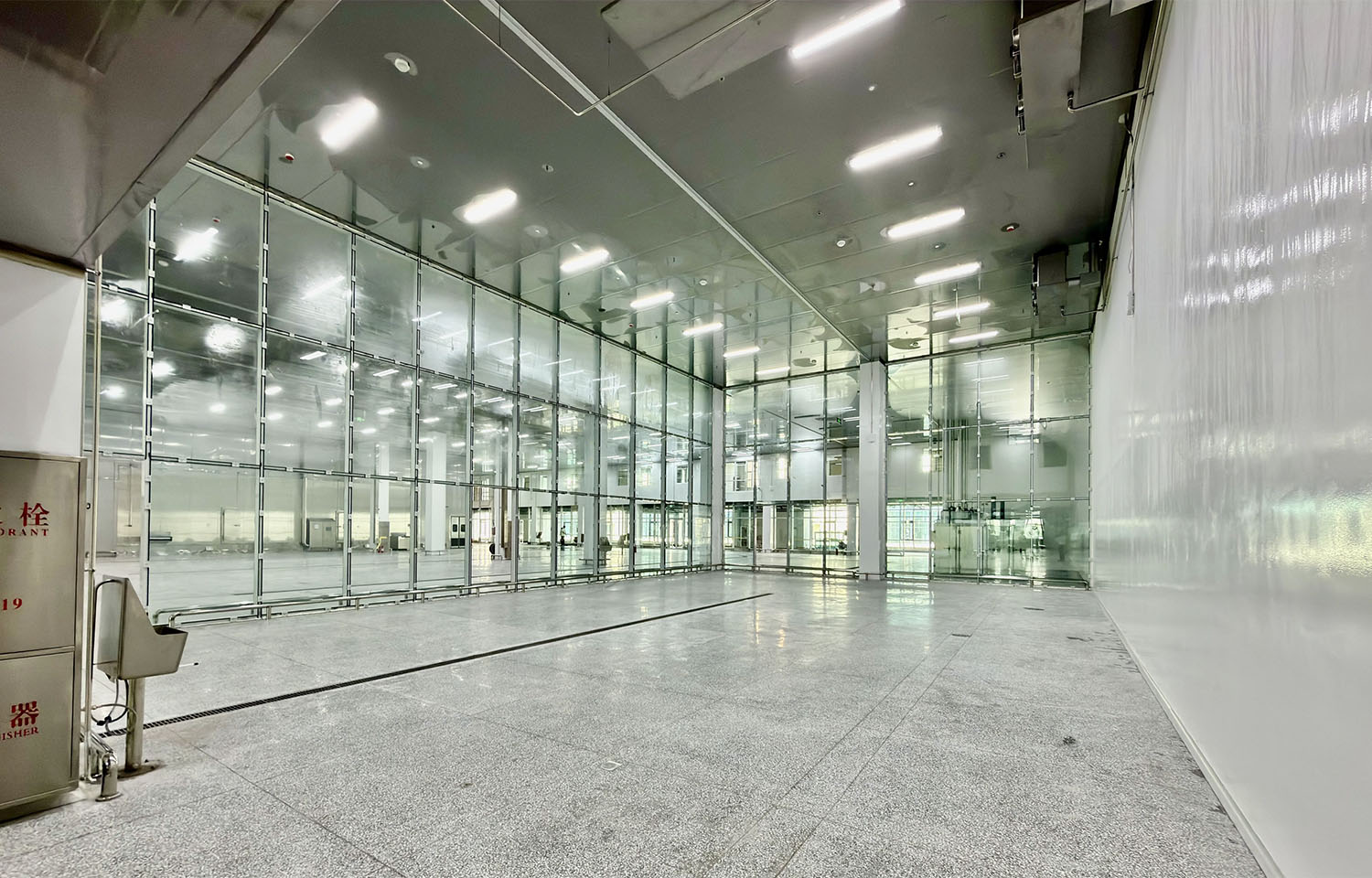
A new seafood processing plant opened by Pan Fish near Qingdao is aiming to bring Norwegian expertise to salmon processing, establishing one of the largest facilities of its kind in the world.
The plant was built from the ground up to mirror similar plants in Norway, and was designed by Thommesen Architecture in Trondheim, Norway – the designer of key processing plants along Norway’s coastline. Thommesen Architecture Managing Director Øystein Thommesen told SeafoodSource the company has designed several salmon processing plants in Norway, including SalMar ASA’s processing plants at InnovaMar and InnovaNor, Lerøy Seafood’s processing plant at Jøsnøya, and the giant hatchery operated by Lerøy Midt at Belsvik.
Thommesen said executives from Pan Fish – which describes itself as China’s leading salmon importer – visited those plants as major salmon buyers and turned to him when they decided to build their own plant in Jiaozhou, located near Qingdao.
“Pan Fish have been cooperating with SalMar for a number of years,” Thommesen said. “They decided to expand their operations in Qingdao … Pan Fish wanted a design similar to those they saw when visiting plants in Norway; in particular, they wanted a good working environment. They see the Chinese population is falling, and they say it’s not so easy to get workers into the industry. Therefore, they wanted the best possible working environment.”
Chinese consumption of salmon and other premium species has risen sharply in recent years, with the country rapidly becoming a top destination for Norwegian seafood exports, creating new demand for suppliers of processing equipment. The Jiaozhou plant was built with that increasing demand for Norwegian seafood in mind, and can handle salmon, shrimp, and other seafood through the same building.
Thommesen said the key differences between the Pan Fish project and plants he designed in Norway was size and the need to be focused on the market rather than the coastline it is built near.
“The scale is larger. Jiaozhou is 45,000 square meters and handles salmon, shrimp and other seafood, against 18,000 square meters at Nova Sea on Lovund and 17,500 square meters at InnovaMar on Frøya, which are the largest we have designed in Norway,” he said.
Thommesen designed the Pan Fish plant to Norwegian requirements for efficiency and the working environment inside the plant. He also had to take into account the plant’s location within the supply chain, which differs compared to the Norwegian plants he’s designed.
“The bigger difference is where the plant sits in the chain, because a Norwegian plant stands at the raw material and takes live fish from a boat at the quay,” he said. “Jiaozhou takes chilled fish in boxes from the airport, and that changes the intake, the cold storage, and the balance between processing and trade.”
Thommesen said his design ensures the plant combines a good working environment with efficient processes, which included determining where to locate raw material production rooms and support systems in a way that considers the movement of people and required hygiene zones.
Thommesen said when designing a facility, orientation and costs are largely set by its purpose, because once the plan is finalized things like product flow, staffing, and energy use are fixed for the lifetime of the building.
“Processing lines come first in the design; it’s not a matter of erecting a building and fitting the process into that, rather, the building wraps around the processing line,” Thommesen said.
Thommesen said he also had to adapt to Chinese regulations, which require a registered Chinese architect to sign and stamp drawings.
“We delivered concept, logistics, product flow, and staff areas while a local design institute produced the permit documents. In Norway, the same people follow a project from the first sketch through to operation,” he said. “In China, we were involved in the concept work; we were not particularly involved in the detailed implementation of the project. From the concept you have to develop drawings, you have to define the connections with different materials.”
Thommesen said he believes his firm’s long track record in complex projects gave it an edge when designing the new facility.
“The largest deliveries in this field come from the big multidisciplinary consultancies, where architecture is one discipline inside a total package, and there are good architects along the coast with local portfolios,” he said. “What is rarer is an [architectural practice] office that has had processing buildings as its main business continuously since the 1960s. Our competence came from milk before it came from fish, and more than fifty years of dairies for TINE SA [Norway’s largest dairy cooperative] taught us hygienic zoning, washable construction, and stepwise expansion.”
Across all of its projects, Thommesen Architecture intentionally designs facilities to be scalable over time, setting out the shape of a facility based on the potential for adding more capacity in future years, Thommesen said.
“We settle the production line first and let the flow the processing needs shape the building, and we plan the next stage into the first one, which is how TINE Verdal [dairy processing plant] has grown step by step from the 1980s to 23,000 square meters without losing its coherence,” Thommesen said.
Thommesen said that the architecture firm has seen most processing line configurations throughout its decades of experience in designing facilities, allowing it to do a lot of the design work itself with partial input from European equipment suppliers. With its first foray into China, the company is also hoping to build relationships in Asia.
“If Chinese equipment makers want to approach us, we are open to it, because the exercise is the same wherever the machines are made, and we would be glad to take that experience on,” Thommesen said.
Construction of a plant in China is “faster and cheaper,” since steel, parts, and building capacity are readily available, but the design side is not made easier by that, stressed Thommesen.
“The approval documents have to come from a licensed Chinese institute, and the hygiene standard is set by the market the plant sells into, which for us means HACCP [Hazard Analysis and Critical Control Point], BRCGS [Brand Reputation through Compliance Global Standards] and EHEDG [European Hygienic Engineering & Design Group] whether the building stands in Norway or in Shandong,” he said. “On a processing plant the equipment and the technical installations dominate the investment in any country, so cheaper local fabrication influences a smaller share of the total [cost] than people expect.”
Thommesen said he is keen to do more work in China where some of his key partners are active as equipment suppliers.
“The suppliers we work with are the European processing suppliers, and the cooperation runs from day one, because the machines set floor areas, ceiling heights, deck loads, service routes and the space around each line for cleaning,” he said. “On the Jiaozhou plant, BAADER supplied all the processing equipment, and we worked closely with them on fitting the processing and the building to each other, the same as at the Grieg processing plant at Gardermoen [near Oslo airport].”
Thommesen said he is mildly, but not excessively, concerned about the issue of Chinese companies copying his designs – an issue that was the foundation of U.S. trade action against China.
“Yes, we are concerned, but this is an issue also in the western world … We have been at the front of design of these factories since working with SalMar,” Thommesen said. “We have spent 30 years studying these designs. This knowledge cannot be copied in one year.”
