

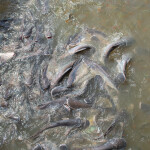


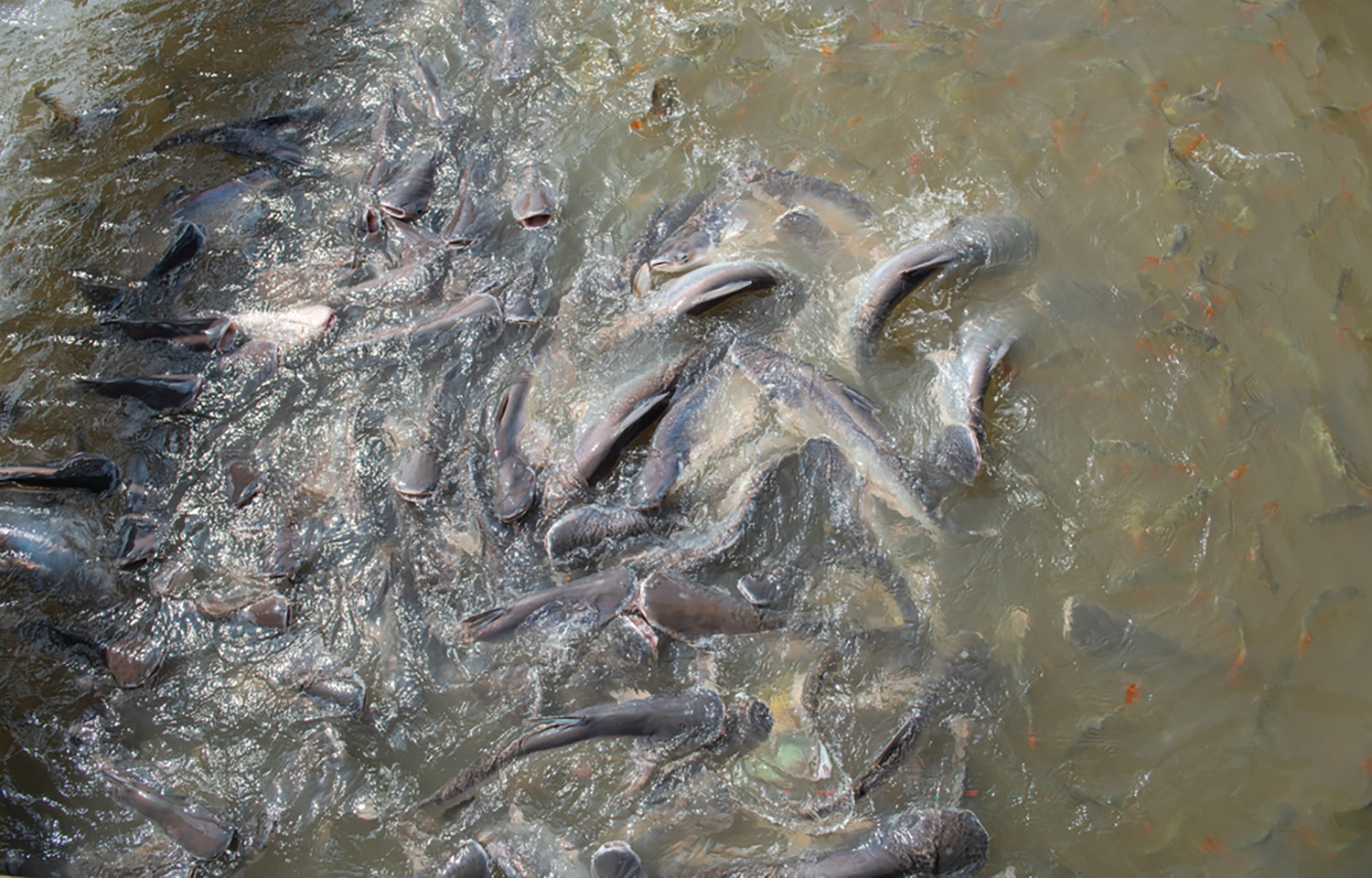
The University of Stirling in Scotland has secured GBP 2.4 million (USD 3.2 million, EUR 2.8 million) that will fund a four-year international research project aimed at tackling antimicrobial resistance in Vietnam’s pangasius-farming industry.
Led by Professor Margaret Crumlish of Stirling’s Institute of Aquaculture, the project will investigate how antimicrobial resistance develops in freshwater aquaculture systems and the barriers preventing farmers from adopting alternatives to antibiotics.
Bringing together researchers with backgrounds in aquaculture, microbiology, veterinary medicine, and environmental science, along with specialists in social sciences and humanities, the team will work with farmers, policymakers, industry leaders, and other stakeholders to develop a research roadmap and practical framework for improving antibiotic stewardship in freshwater aquaculture.
“Antimicrobial resistance is widely recognized as one of the most pressing global challenges facing society and is categorized as a ‘One Health’ issue because it affects human, animal, and environmental health,” Crumlish said. “Aquatic environments play an important role in the development and transmission of antimicrobial resistance, and aquaculture both depends on and interacts with these ecosystems.”
Crumlish further explained that Vietnam’s pangasius sector provides an ideal opportunity to examine how antimicrobial resistance develops, how it affects production, and how alternative approaches to disease management can be made more sustainable.
The project will also investigate why farmers continue to rely on antibiotics, even when they may not be effective.
“When antibiotics stop working effectively in aquaculture, particularly in freshwater systems in Southeast Asia, farmers often have few alternatives, but they trust antibiotic products, even if they are not effective,” she said. “This leads to rapid antimicrobial resistance development that can impact human, environmental, and animal health.”
The project builds on the university’s previous research into fish vaccines as alternatives to antibiotics, including the development and testing of vaccines targeting bacterial diseases affecting Vietnamese pangasius, with earlier research identifying both the potential of vaccination and barriers to its adoption by farmers. The new initiative will draw on data from these past projects.
Crumlish said the transdisciplinary approach was intended to ensure that potential interventions were not only scientifically robust but practical for farmers to implement.
“Alongside experts in aquaculture, microbiology, veterinary medicine, and environmental science, we have researchers from the social sciences and humanities working together throughout the entire project,” she said. “By co-creating solutions with farmers, policymakers, industry leaders, and other stakeholders over the next 48 months, we aim to ensure that any interventions are both scientifically robust and practical to implement.”
Funding for the project is part of a wider U.K. government and U.K. Research and Innovation (UKRI) investment of more than GBP 54 million (USD 71.3 million, EUR 63.7 million) across 18 research and innovation projects focused on future epidemics, antimicrobial resistance, and next-generation animal vaccines.
Fears of antimicrobial resistance are prevalent in aquaculture sectors across the globe, with officials in Nigeria, for example, warning earlier this year that the nation’s aquaculture industry was at risk of collapse due to fish farmers ignoring expert advice on the use of antibiotics.
