




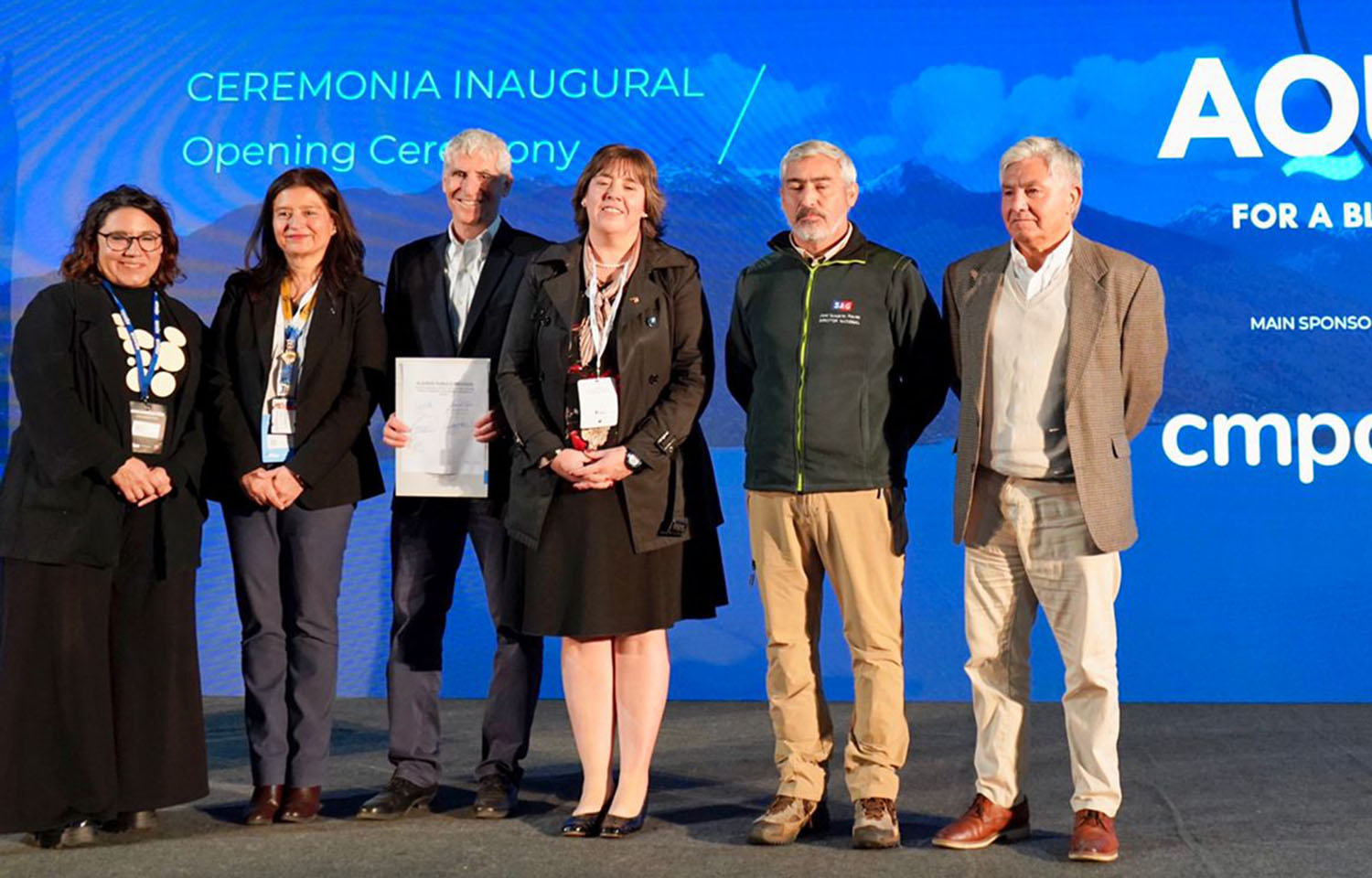
Eleven salmon farmers in Chile, together with the Salmon Council, SalmonChile's Salmon Technological Institute (Intesal), and with the support of Aquabench, have joined forces with the Chilean government’s Agricultural and Livestock Service (SAG) and the National Fisheries and Aquaculture Service (Sernapesca) to work collaboratively towards increasing vaccines to prevent bacterial diseases and reduce the use of antibiotics.
The parties hailed the so-called “Yelcho Project” as the first public-private partnership of its kind between salmon companies, SAG, and Sernapesca. The salmon farmers participating include Aquachile, Australis Mar, Blumar, Camanchaca, Cermaq, Cultivos Yadran, Marine Farm, Mowi, Multi X, Salmones Austral, Ventisqueros, and Aquabench, which account for nearly 90 percent of Atlantic salmon production in Chile.
The agreement outlines six strategic pillars: consideration of parameters established under the World Organization for Animal Health (WOAH) and the National Antimicrobial Resistance (RAM) plan for salmon production processes; significant reduction in the use of drugs, particularly antibiotics; review of regulations and new immunological technologies available; evaluation of immunity-boosting products and strategies; development of technical information to accelerate the obtention of new vaccines and/or immunological products; and continuous technical collaboration between authorities and the private sector. Specific working groups are to be created to address the different topics.
Calling the agreement an “unprecedented public-private partnership,” Salmon Council Executive Director Loreto Seguel said the project demonstrates the industry’s commitment to the continuous improvement of the standards with which salmon is produced in Chile.
“Our companies are permanently looking for ways to neutralize impacts and strengthen the industry. With this signing, we ratify our commitment and conviction for an industry that is sustainable from an environmental, social, and economic point of view,” Seguel said.
Intesal General Manager Esteban Ramírez said Chile’s salmon industry was united in finding a solution to battle diseases such as septicemia rickettsial salmondea (SRS) and reducing the use of antibiotics without affecting fish welfare.
“Every solution and development must always have at its center the obligation to care for the fish we farm,” he said.
Decreasing the use of antibiotics has been a goal for Chile’s salmon-farming industry for years. Farmers were able to lower antimicrobial use nearly 32 percent in 2022, according to Sernapesca. The industry’s antimicrobial consumption indicator (ICA) in 2021 was 470 grams per ton, while in 2022 it was 320 grams per ton, a decrease of 31.9 percent – the lowest rate posted since Sernapesca began tracking ICA data in 2007.
Unlike salmon farming in the Northern Hemisphere, where fish diseases are mostly viral and are not treated with antibiotics, Chile has oceanographic and biological conditions that favor bacterial illnesses such as SRS, the Salmon Council said. The bacteria is controlled with different preventive measures, with the use of antibiotics being the last recourse. Antibiotics are not used only in response to the presence of disease and under veterinary prescription with medicine approved by SAG and reported to Sernapesca.
