






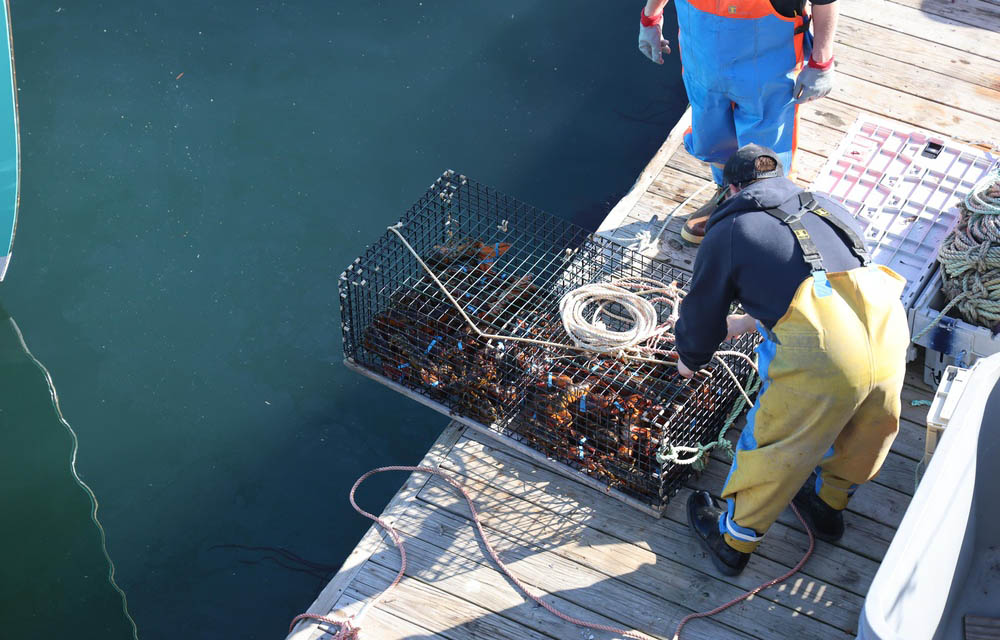
The U.S. House of Representatives voted to extend a moratorium on new lobster regulations related to North Atlantic right whales through 2035.
“Maine’s iconic lobster fishery contributes billions of dollars to the U.S. economy and employs thousands of Mainers. Unfortunately, the men and women who work the fishery have dealt with extreme regulatory uncertainty that threatens to stifle lobster fishing,” House Committee on Natural Resources Chairman Bruce Westerman (R-Arkansas) said in a release.
The extension comes six years after a flawed NOAA Fisheries biological opinion threatened severe regulations on New England lobstermen to protect the endangered whales. While the biological opinion was vacated by a federal court following a lawsuit and no new regulations materialized, the close call outraged the lobster industry. In 2022, Congress enacted a moratorium on new regulations of the lobster industry related North Atlantic right whales. That moratorium is set to expire in 2028, and NOAA Fisheries is preparing to update its regulations once it lifts.
Earlier this year, U.S. Representative Jared Golden (D-Maine) and U.S. Representative Mike Lawler (R-New York) cosponsored the Northeast Lobsterman Protection Act to extend the moratorium through 2035, further shielding the industry from regulations that could hamper the industry for the sake of protecting the whales.
“While this legislation is particularly important to Maine’s fishing communities, the Northeast lobster industry supports small businesses and hardworking families far beyond the coastline, including restaurants here in New York,” Lawler said in a release. “Fishermen have spent years adapting to conservation requirements and deserve regulatory certainty instead of constantly shifting rules that threaten their ability to operate and plan for the future.”
On 1 September, the House passed the bill in a tight vote, with 219 in favor and 196 against. New England commercial fishing groups were quick to praise lawmakers for the bill’s passage, with the Maine Lobstermen’s Association calling it “a major step forward for Maine lobstermen.”
“Extending the pause through 2035 will give scientists the time needed to build a meaningful body of data so future whale regulations are based on sound science, not assumptions, while protecting fishing families and coastal communities from needless economic harm,” Maine Lobstermen’s Association Executive Director Patrice McCarron said in a release.
However, conservation groups claim regulators have already studied the issue extensively and have the knowledge needed to both manage the fisheries and protect North Atlantic right whales.
“This is an extinction bill – plain and simple,” Oceana Senior Campaign Director Gib Brogan said in a release. “When a species is fighting for survival, you don’t keep kicking the can down the road for real protection, let alone a second time. These whales navigate through an ocean filled with over one million vertical fishing lines along their migration path. This bill could fast-track their extinction when proven tools to reduce entanglement risk, like time-area management and innovative gears, are available now. North Atlantic right whales don’t have time to wait they need these protections on the water now.”
NOAA Fisheries lists gear entanglements – primarily from the vertical lines used in commercial lobster and crab fisheries – and vessel strikes as the main threats to North Atlantic right whales, whose populator currently sits at just around 380 individuals. According to Oceana, at least 31 North Atlantic right whales have been harmed or killed by entanglements since Congress first passed the moratorium in 2022.
The legislation will need to be passed by the U.S. Senate as well before being sent to U.S. President Donald Trump to be signed into law. The White House previously issued a statement of administrative policy announcing that the president would likely sign the legislation if it made it to his desk.
“The Senate now has a choice: senators can stand with science, responsible ocean management, and the overwhelming majority of Americans who want these whales to thrive, or they can stand by while an iconic species disappears from our waters. The Senate must stop this extinction bill and reject H.R. 9436,” Brogan said.
