





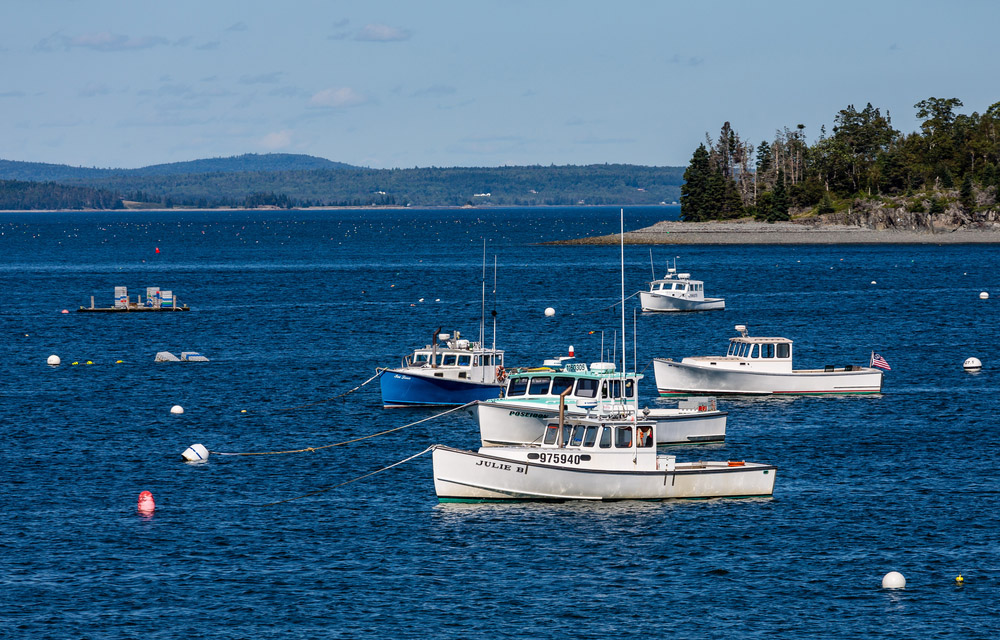
U.S. Senator Angus King (I-Maine) and U.S. Senator Susan Collins (R-Maine) wrote a joint letter to the heads of the U.S. Senate Commerce Committee asking them to take action on the Northeast Lobstermen Protection Act, legislation introduced by U.S. Representative Jared Golden (D-Maine).
If passed, the legislation would extend a moratorium on new regulations of the lobster industry related to North Atlantic right whale regulations through 2035.
“This pause is necessary to protect Maine’s lobster fishery, which is essential to the state’s economy and coastal communities. According to the Maine Lobstermen’s Association, the lobster industry supports an estimated USD 2 billion (EUR 1.7 billion) in annual economic activity and more than 17,500 jobs,” the senators wrote in the joint letter. “It is critical that any future regulatory actions appropriately balance protecting North Atlantic right whales with the economic and practical realities facing Maine’s lobster industry. We ask that you work to advance H.R. 9436 as soon as possible.”
The moratorium was initially adopted by Congress in 2022, following a controversial NOAA Fisheries biological opinion that threatened to lead to stricter regulations of the lobster industry in order to protect North Atlantic right whales, which are listed under the Endangered Species Act (ESA). While that biological opinion was ultimately vacated by a federal court as flawed following a lawsuit from the lobster industry, lawmakers passed the moratorium to shield lobstermen from any hypothetical regulations related to the whales. The 2022 moratorium, however, is set to expire in 2028, and NOAA Fisheries has signaled that it is preparing to update those regulations when the moratorium ends.
Earlier this year, Goldman and U.S. Representative Mike Lawler (R-New York) cosponsored the Northeast Lobsterman Protection Act to further delay any regulatory action, extending the moratorium through 2035.
The House passed the bill in a 219-196 vote on 1 September.
“Extending the pause through 2035 will give scientists the time needed to build a meaningful body of data so future whale regulations are based on sound science, not assumptions, while protecting fishing families and coastal communities from needless economic harm,” Maine Lobstermen’s Association Executive Director Patrice McCarron said following the vote.
Congress has approved tens of millions of dollars in funding to advance science on North Atlantic right whales since the moratorium went into place.
“The Maine Department of Marine Resources has used congressionally appropriated funds to establish a right whale research and monitoring program that is now in its third year of data collection,” Collins and King stated in their letter. “The program includes aerial, vessel-based, and acoustic whale monitoring. This work is ongoing, and extending the pause would allow it to continue and provide scientists and regulators with better data to inform future management decisions.”
The legislative push to extend the moratorium on new protections for right whales comes as the Trump administration is actively working to dismantle traditional ESA protections. In September 2026, a leaked Department of the Interior memo showed the administration was planning to change the ESA so only intentional harm to endangered wildlife is punishable. The memo uses vessel strikes on whales as an example of how the change would remove protections, noting that an accidental vessel strike on a whale would no longer count as a violation of the ESA. NOAA Fisheries lists vessel strikes and entanglements in fishing gear as the main threats to the whales.
Conservation groups argue that extending the moratorium could lead to the whale’s extinction.
“This is an extinction bill – plain and simple,” Oceana Senior Campaign Director Gib Brogan said in a release. “When a species is fighting for survival, you don’t keep kicking the can down the road for real protection, let alone a second time. These whales navigate through an ocean filled with over 1 million vertical fishing lines along their migration path. This bill could fast-track their extinction when proven tools to reduce entanglement risk, like time-area management and innovative gears, are available now. North Atlantic right whales don’t have time to wait they need these protections on the water now.”
The Trump administration has stated that blocking any mandate for ropeless gear in New England’s lobster fishery is a priority for NOAA Fisheries and has called on the New England Fisheries Management Council to deprioritize advancing any such regulations.
