

The U.S. Senate Committee on Commerce, Science, and Transportation has advanced U.S. Senator Dan Sullivan’s (R-Alaska) Bycatch Reduction Act, which is intended to limit contact between trawling gear and the seafloor.
“Today, my Bycatch Reduction Act passed out of committee and is headed to the full Senate for a vote. We’re one step closer to getting it across the finish line,” Sullivan said in a social media post. “I’ve been working with Alaskans to find ways to reduce bycatch, protect our fisheries, and strengthen our fishing communities. Together, we’re delivering results, and we’re one step closer to getting it done.”
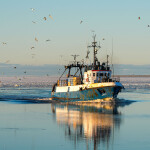
The legislation was initially introduced in January by Alaska’s full Congressional delegation with an exclusive focus on supporting research and development; however, Sullivan introduced a revised version of the legislation in June with several new provisions on regulating trawling and bottom floor contact. The revised bill directs NOAA Fisheries and the North Pacific Fishery Management Council (NPFMC) to establish a pelagic trawl gear performance standard and regulate contact with the seafloor habitat in the Bering Sea and Aleutian Islands. The bill would also require pelagic trawlers to be equipped with a seafloor contact detection system to ensure gear isn’t hitting the seafloor, as well as salmon excluder devices. Part of the legislation’s self-stated goal is to ensure “mid-water nets do not operate like bottom-trawl gear.”
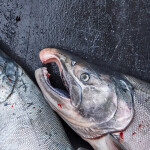
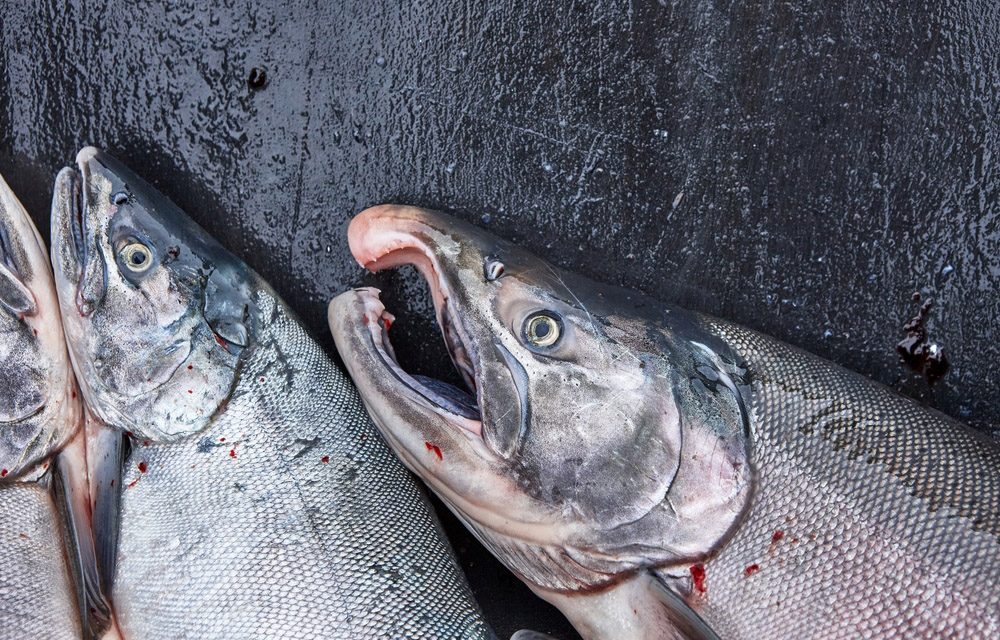
With some Alaskan salmon runs declining, the taking of salmon bycatch by commercial trawling vessels has become a controversial issue in the state.
Conservation NGO Oceana claims nearly 3 million chum salmon were caught as bycatch over a 10-year period. While regulators insist that the vast majority of salmon the trawling industry takes as bycatch doesn’t originate from Alaska, salmon groups have expressed deep frustration with the practice.
“This issue is a really important one to my fellow Alaskans. I hear from so many throughout our state. Salmon is the lifeblood of our state in Alaska, and we’ve had huge variable runs of different salmon species in different parts of our state,” Sullivan said during a 16 September markup of his bill. “We continue to have strong sockeye salmon runs in Bristol Bay, which is a blessing, and certainly one of the biggest salmon runs in the whole world. At the same time, other salmon runs […] the king run on the Yukon [River] is very, very weak, and it’s devastating communities throughout our state.”
As with the original legislation, the revised bill also includes support for research and development on reducing bycatch, reviving the Alaska Salmon Research Task Force, and establishing a Bycatch Reduction and Research Task Force. The Bycatch Reduction Act would also require more transparency on NPFMC actions, directing the council to put more information online and publicly post videos or transcripts of their meetings.
“It’s a very comprehensive bill that improves our fisheries in the North Pacific to address these salmon run challenges, to address the issue of trawl bycatch to uphold healthy marine habitats, to dramatically limit bottom contact by trawler nets in the North Pacific, to provide timelines and mandates to the NPFMC, to provide transparency and reforms to the council process, [to make] investments in innovative gear and technology, and to strengthen and modernize monitoring,” Sullivan said.
