



The World Agriculture Forum, with contributions from the FAO and Indian Council of Agriculture Research (ICAR), has released a new report calling for more investment and research in the blue economy – and more buy-in from governments.
Titled “Blue Economy Rising: Oceans, Aquaculture, and the Future of Food Security,” the new report covers the current state of aquatic food systems, lessons learned from them, and how investment and governance changes could enhance them. It also said the current growth trajectory is on a path toward stagnation without corrective action by governments and actors across the supply chain.
A nonprofit, the World Agriculture Forum is dedicated to enhancing sustainable agricultural development through a combination of global advocacy, innovation, and action on everything from farming practices to global trade policies. The new report on the blue economy was intended to examine emerging opportunities and, according to the forum, focuses on the intersections between “aquaculture, food security, environmental sustainability, technology, investment, infrastructure, governance, and inclusive economic development.”
“Its purpose is to identify the conditions required for aquatic food systems to move from incremental growth to sustainable transformation,” the report states.
Drawing on research from the FAO, ICAR, Future Aquaculture, and other institutions, the forum said it was meant to both bring stakeholders up to speed on the state of the blue economy and to predict its current trajectory.
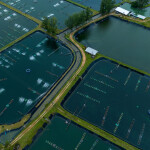
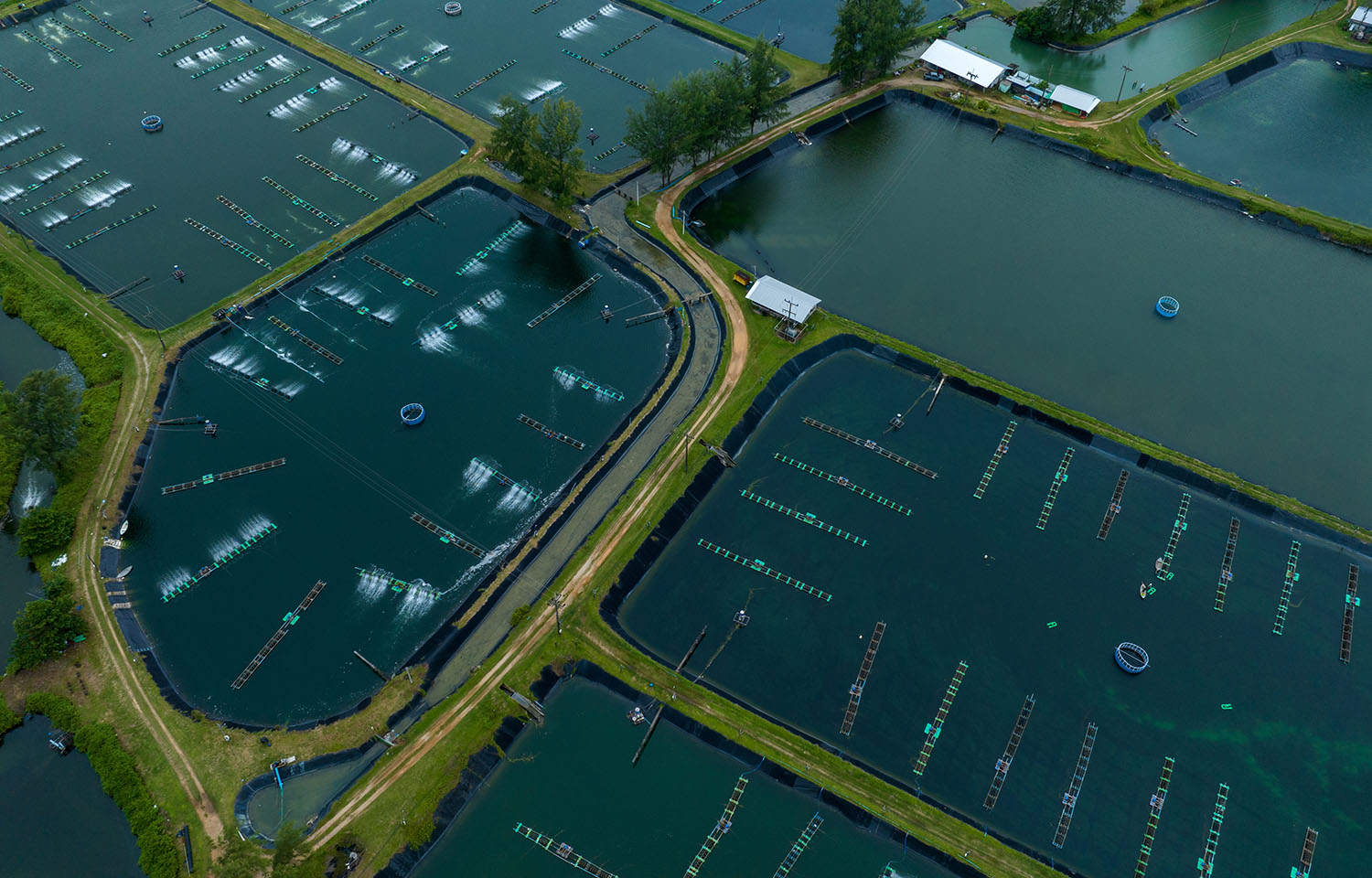
“Ask someone what they picture when they hear ‘fish farm,’ and most will describe something small like a pond, a net, a family operation on a riverbank,” the report states. “Few will picture what the sector has actually become: a production system now larger than everything the world's oceans yield combined, quietly responsible for more of what ends up on dinner plates than the fishing fleets that used to define the industry entirely.”
The forum said in many cases people haven’t caught up with the reality that aquaculture is now the dominant source of seafood in the world, as it all happened in “a single working lifetime,” and that growth can continue with the right advocacy.
“We wrote this report because we noticed a second thing people haven't caught up to: This remarkable growth story is running out of road and not for the reasons anyone expects,” the report states.
According to the forum, aquaculture is not suffering from a lack of science or technology, as most problems like health issues, closing nutrient loops, or increasing aquaculture production while using a smaller area “has already been solved by someone, somewhere, at a profit.”
“We visited some of those places. The solutions are not fragile or theoretical. They are sitting in commercial ponds and tanks right now, working,” the report states.
The issue is that those technological advances are often isolated and that there is an unwillingness to move ideas from where they have been proven to other regions. Across all the research, the issue wasn’t that solutions “didn’t transfer” but that nothing was being done to carry those solutions to different users.
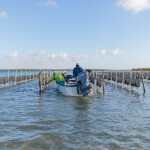
“Closing that gap is a harder, slower, and less glamorous task than inventing the next technology. It is also the one that will actually determine whether the next 20 years of aquaculture look like the last 20, or better,” the report states. “And, it is remembering, at every stage, that the person actually holding the net or tending the tank is not only a beneficiary of this transformation but they are the reason it is possible at all.”
The report also said that in order for aquaculture to continue its growth trajectory, that problem needs to be solved.
“The window to do this is narrower than the sector's own optimism suggests. A growth curve that is already decelerating does not wait for governance to catch up,” the report states.
It offered a range of different suggestions for how to accomplish those goals, and one of its key messages is that integrating agriculture and aquaculture “is the largest immediately available opportunity.”
“Using source water for fish farming first and the nutrient-rich discharge for crop irrigation eliminates effluent, displaces chemical fertilizer, and returns organic carbon to soils,” the report states. “In the Western Cape of South Africa, diverting just 1 percent of irrigation water through biofloc tilapia culture would produce a volume equivalent to the entire national Cape hake quota of 100,000 to 140,000 metric tons [MT] per year.”
It also said in order for countries to create transformational growth in aquaculture, governments and the public sector need to commit to sustained investment over decades.
“India's rise from eighth to second largest producer, from under 1 million MT to approximately 19.75 million MT, rested on research institutes established in 1947 and expanded over 75 years, 35 years of continuous selective breeding, a 15-year national disease surveillance program, and deliberate laboratory-to-land technology transfer,” the report said. “Private investment cannot substitute for this foundation.”
The report said the aquaculture sector is not short of solutions; it just hasn’t created the means to move those solutions to where they are needed.
“A knowledge shortage is solved by more research. A capital shortage is solved by more financing. The ... alignment between what works, who has it, who needs it, and who can pay for it is solved by neither,” the report states. “It is solved by governments willing to fund institutions on a multi-decade horizon rather than a project cycle; by investors willing to let value creation lead and capital follow, rather than the reverse; by companies willing to treat the communities they operate in as co-owners of production security rather than as a cost of doing business; and by international organizations willing to define their role honestly, as brokers of knowledge and normative frameworks rather than substitutes for the domestic institution-building that only national governments can do.”
