




As global food demand grows, Chile's salmon sector positions itself as part of the solution
Sponsored
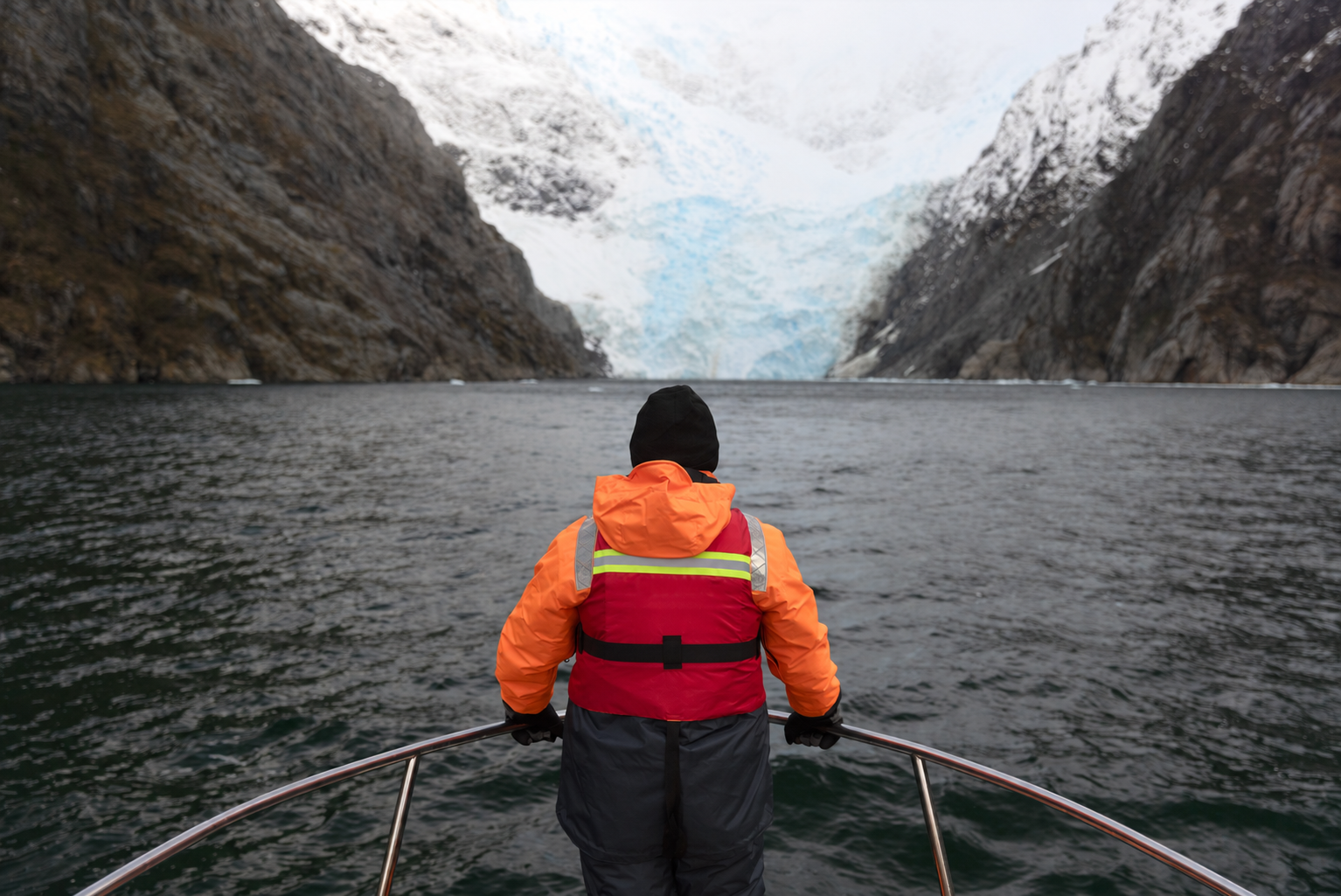
With a long, narrow coastline of protected fjords and channels, Chile’s salmon industry has a natural edge – particularly in Patagonia, where cold, clean waters fed by Antarctic currents and the Humboldt Current create ideal growing conditions.
However, it’s the farmers of coastal Patagonia – who show up every day, even in the worst of weather conditions – that power Chile’s salmon sector, according to Managing Director of Chilean Salmon Council Melanie Whatmore.
"Chile's salmon farmers are the heartbeat of our industry," Whatmore said. "As Chile has worked to expand its salmon sector, strengthening collaboration with our local salmon communities has been central to that growth."
In recent years, Chile has become one of the fastest growing salmon farming industries in the world, registering exports of USD 6.55 billion (EUR 5.63 billion) in 2025 – a 3 percent increase year-over-year, according to Asociación SalmonChile's Quarterly Export Bulletin, which referenced information from the country’s Central Bank.
Over the last two decades, salmon has become one of Chile’s top exports, second only to copper. A significant driver of economic growth, the sector has supported the creation of more than 4,000 small- and medium-sized enterprises and employed an estimated 86,000 people, according to Asociación SalmonChile.
"The people our industry supports are also our neighbors, our families, and our friends. We're proud of the work we've done to revitalize our communities, bring a fresh, nutritious, and sustainable protein source to our own tables, and strengthen our country's reputation as a leading international food producer," Whatmore said.
Since its inception in the mid-1970s, Chile’s salmon farming industry has followed a nonlinear growth trajectory, with periods of rapid, unchecked expansion routinely giving way to abrupt correction. However, Rabobank’s recent report, “From Crisis to Competitiveness: The Re-rating of Chilean Salmon,” suggests that pattern has shifted.
In the wake of improved biological performance, supportive political momentum, enhanced community relations, and expanded production, the report estimated that annual salmon production in Chile could expand by up to 6 percent.
In addition to investing in local communities, Chile’s salmon sector has taken concrete steps to increase transparency, improve the sustainability of its operations, and mitigate health risks.
Asociación SalmonChile’s 2024 report marks 10 consecutive years of sustainability reporting. In addition, the Global Salmon Initiative (GSI) now has 13 years of standardized data across antibiotic use, escapes, mortality, marine ingredients, certifications, and wildlife interactions, all independently audited.
"Transparency is central to Chile’s mission – especially when it comes to sustainability, antibiotic use, and marine ingredients," Whatmore said. "As the world's population grows and food resources come under increasing pressure, aquaculture has become essential to feeding the world sustainably. Chile's salmon sector is committed to being part of that solution."
According to Asociación SalmonChile, the sector invested CLP 17.095 million (USD 17.6 million) in research, development, and innovation in 2024, up 115 percent from 2023. That surge in research and development has driven significant improvements across the sector.
Over the past 30 years, Chile has gone from diets with almost 100 percent marine proteins and oils to formulations that, on average, now contain around 16 percent of nutrients from fishery resources, according to Consejo del Salmón.
Meanwhile, the latest Aquaculture Environmental Report by Chile’s Undersecretariat of Fisheries and Aquaculture (Subpesca) found that the vast majority of aquaculture farms in the country operate under aerobic conditions compatible with sustainable development. Additionally, Asociación SalmonChile reported that 99 percent of water is reused in fish farms through recirculation technology.
The sector has also worked to reduce its use of antibiotics. According to Consejo del Salmón, industry-wide antimicrobial use has fallen approximately 40 percent over the past decade.
In the wake of its recent success, Whatmore said Chile’s salmon industry will continue to work towards a more sustainable future while remaining dedicated its local salmon farming communities.
"We're proud of the progress we've made over the last 40 years, but we're also aware of the many opportunities in front of us – and that awareness is vital,” she said. “This is an ever-changing industry, subject to the whims of the environment, which demands that we never stay still. We are always looking ahead, seeking to innovate and address our threats and challenges with knowledge.”
To learn more about Salmon from Chile, click here.
