



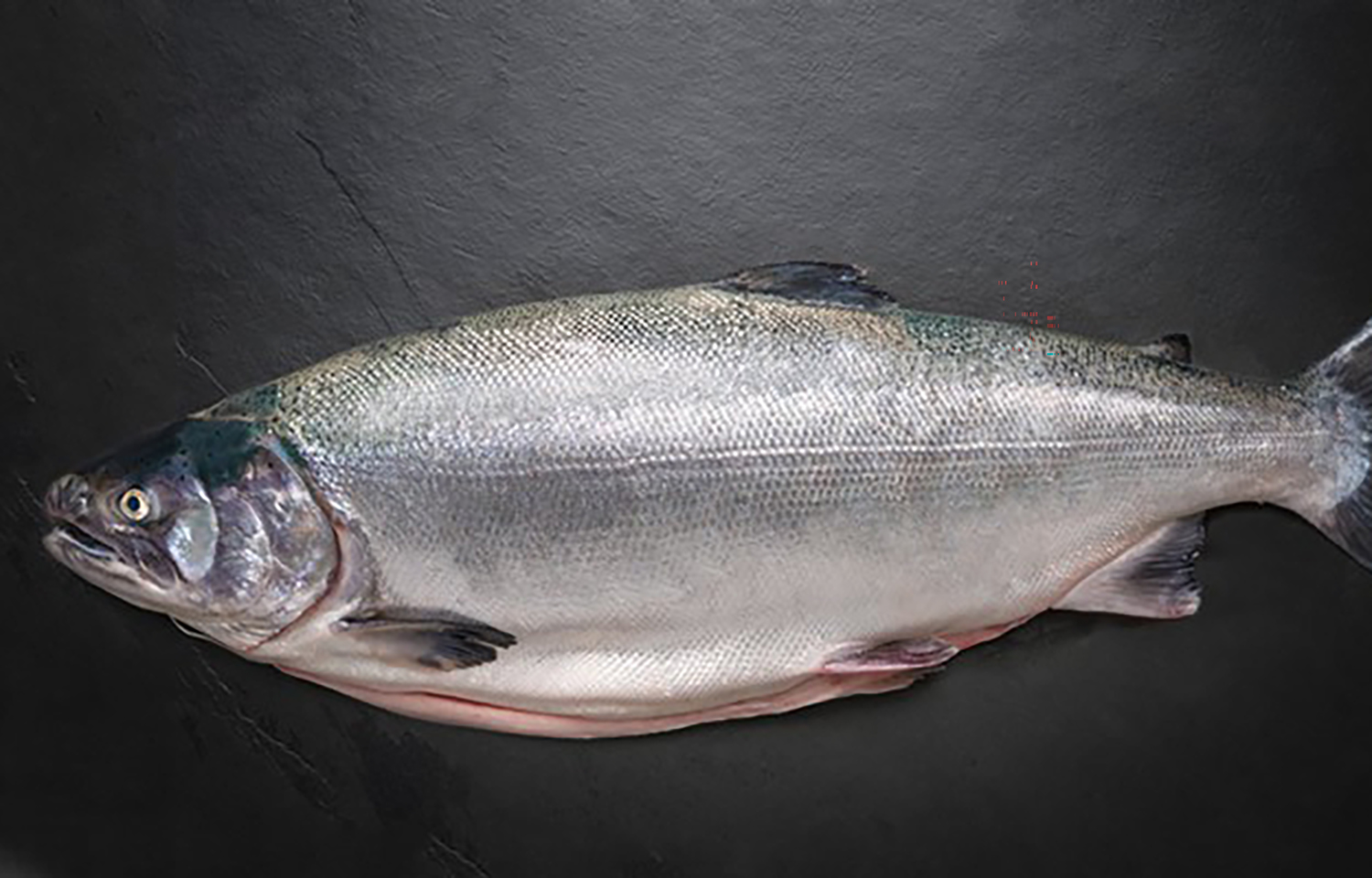
Certified Humane International – the representative organization in Latin America and Asia for Washington D.C., U.S.A.-based nonprofit Humane Farm Animal Care (HFAC) – has launched a new animal welfare standard specific for coho salmon, marking an expansion of its aquaculture certification standards.
The standard evaluates different stages of production, including handling during cultivation, transport, and procedures for harvesting, with the objective being to establish requirements that guide management practices for the evaluation of animal welfare conditions throughout the coho production process.
The new standard takes into consideration the unique characteristics of coho, representing a departure from broader salmon standards laid out in the past. According to aquaculture specialist Daniel Santiago Rucinque, part of the available scientific literature on coho is related to studies performed on Atlantic salmon, and although some knowledge can be shared between species, he said in a release that the definition of the criteria requires focusing on the specific characteristics of each animal.
The standard also drew on the practical experience of companies that work closely with the species in Chile – a country that produces approximately 90 percent of the world’s farmed coho and which is actively positioning to lend it a national identity, as opposed to the more globally mass-produced Atlantic salmon. This in-field collaboration with coho-farming firms, according to Certified Humane, made it possible to incorporate issues observed in production, contributing to the development of criteria applicable to sectorwide realities.
Updating the standard moving forward will be an ongoing process, according to Certified Humane Technical Director Rosangela Poletto, who said the experience gained during audits, as well as advances in scientific knowledge, will contribute to future revisions.
The Chilean aquaculture sector has been increasingly embracing coho production for multiple reasons.
Because of a mucus it naturally has on its skin, as well as stronger, tighter scales, coho is typically immune to sea lice and the infectious salmon anemia (ISA) virus. Coho can also be harvested before Chile's summer months, when the risk of algae blooms increases due to higher water temperatures. Moreover, the species requires less time at sea, which is the period in the production cycle when the fish are most susceptible to disease.
Due to these benefits, several firms have committed to greater coho production.
Last year, Puerto Montt-based salmon-farming firm Invermar launched full operations at its recirculating aquaculture system (RAS) facility, which it dubbed Aucha and which it defined as the country's first RAS facility custom-built for raising coho. Elsewhere, Salmones Aysén has been fully committed to coho salmon production for years, and earlier in 2025, Marine Farm cut the ribbons on a 30,000-metric-ton coho-processing plant.
The Chilean Salmon Council has also partnered with government-run export promotion bureau ProChile in a drive to get French chefs to incorporate coho salmon onto their menus.
