




Salmon-farming stakeholders in Chile – including companies, associations, government authorities, industry workers, and academia – have come together to begin working on a 50-year plan to help drive sector development.
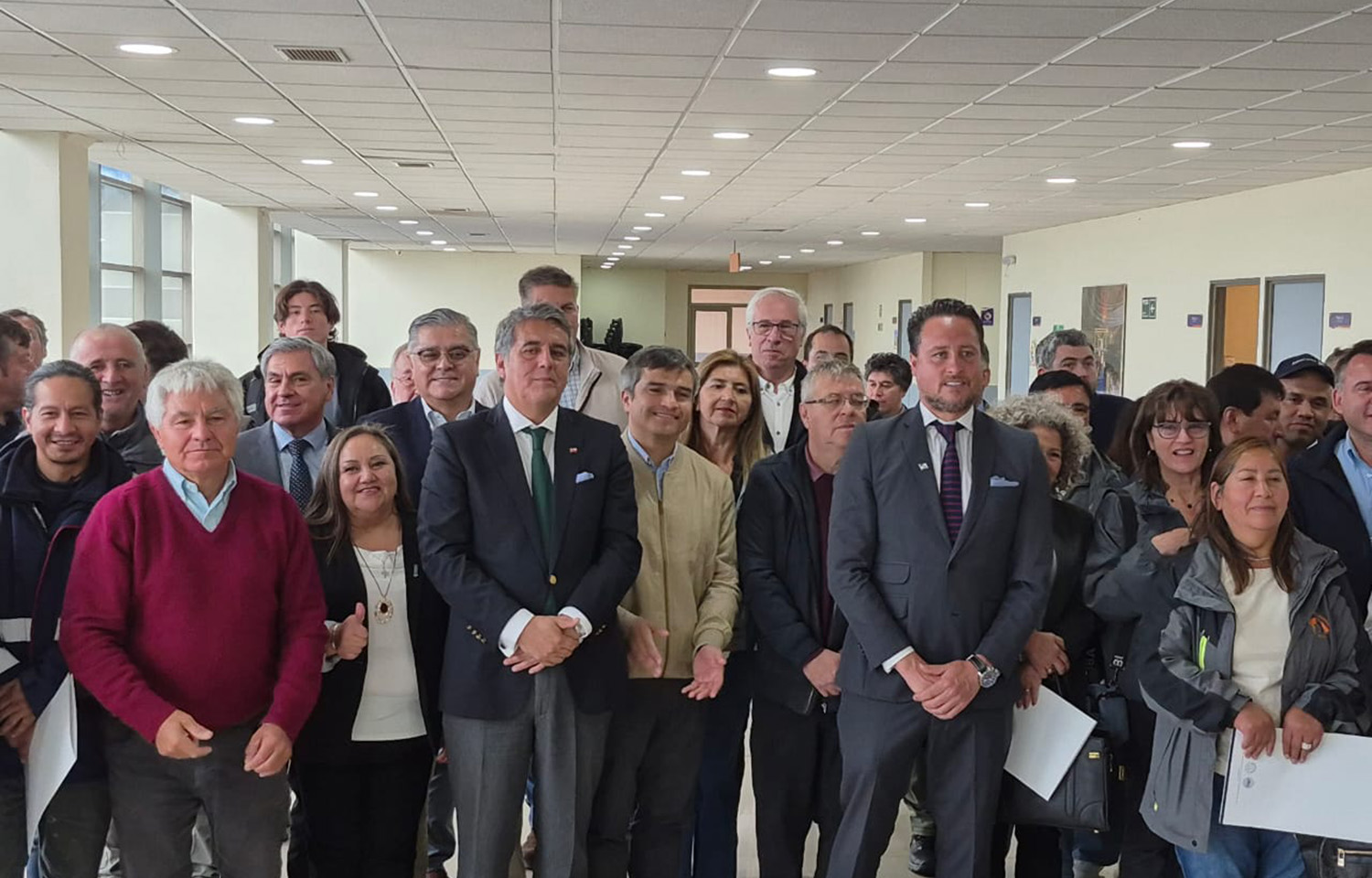
Interested parties met in the southern city of Puerto Montt at the beginning of March for a signing ceremony that confirmed their commitments to developing the 50-year salmon plan. The proposed plan has a three-pronged focus: territorial planning, sustainability, and human capital – and the next step is to form working groups on each focus area, Chilean Salmon Council Corporate Director Rodrigo Pinto told SeafoodSource.
“Chilean salmon is the second-most exported product by our country, at about 1 million metric tons per year, with returns of USD 6.5 billion [EUR 6 billion] per year, generating more than 70,000 jobs and representing an average GDP of 18 percent in the [southern salmon-farming] regions of Los Lagos, Aysén and Magallanes,” he said. “However, public policy for growth and development is clearly lacking. That must be corrected, soon, and with the participation of everyone.”
The three focus areas for the plan intend to address industry issues and build the basis of a public policy for growth and development, according to Pinto.
“Based on qualitative and quantitative agreements, we will be able to create a state policy that promotes sustainable productive growth in the environmental, social, and economic spheres, in a certain period of time. We have a significant job ahead of us,” he said.
Stakeholders within Chile’s salmon-farming industry have been calling for the nation’s government to more clearly define its stance on the future of the aquaculture sector, seeking a countrywide vision.
“What does the country want – salmon farming to be an economic pillar, like it is in Norway, or have it disappear as some NGOs want?” Blumar CEO Gerardo Balbontin asked towards the end of 2024 during the “Conversations for economic development” series of discussions hosted by business consultancy firm Deloitte.
The current lack of a unified plan for aquaculture in Chile is seen by the industry as a source of multiple complications, especially as there is an overlap of interests between the Indigenous population, conservationists, the salmon-farming industry, and artisanal fishers over the use of the nation’s waters.
Aysén Regional Governor Marcelo Santana recognized the salmon-farming industry as “preponderant and significant” for the development of the three southernmost regions, generating well-being and prosperity, but “in recent years it has moved on shaky grounds, with constant regulatory changes and a lack of future projection.”
His counterpart for the Los Lagos Region, Alejandro Santana, recognized other salmon-farming countries’ development of long-term public policies to grow sustainably, while “in Chile we face a lack of legal certainty … that prevents long-term planning.”
The resulting proposal will see stakeholders work to establish a framework for public policy for the next five decades, according to workers union Multisindical de Trabajadores Salmoneros President Alejandro Santibáñez.
“It is essential for our territories to demonstrate their needs and seek solutions, because it is we who live and work here, who know first-hand the challenges and opportunities of the sector,” he said in a statement. “We cannot expect the central government to continue delivering ordinances of things that it does not handle.”
Fellow workers union leader Marta Oyarzo, of the Coordinadora de Trabajadoras del Salmón, agreed on looking for solutions from within the salmon-farming region of Chile.
“I believe it is the first time that a working group has been promoted from within the region, and I think that is very valuable for the workers,” she said.
Pinto recognized industry stagnation, and said it needs to change its approach to make progress.
“We must work on a public policy that allows us to double production in Chile, just as Norway and Scotland did, because only in this way will we achieve the economic and social development that our regions need,” he said.
SalmonChile President Arturo Clement welcomed the initiative as an important step for the industry.
“We have always wanted Chile to have a country vision regarding the development of salmon farming, and this is the opportunity to build it together. Chilean salmon farming has enormous potential, but we need legal certainty and clear rules to be able to continue growing,” he said. “We cannot afford to continue operating under unstable regulations and a constantly changing regulatory framework. The sustainable development of the industry is possible, but it requires the commitment of the state and all the actors involved.”
The Salmon Plan’s General Council was comprised of the mayors of Puerto Montt, Punta Arenas, and Calbuco; the regional governors of Los Lagos and Aysén; representatives of salmon industry groups SalmonChile, Salmoneros de Magallanes, the Aquaculture Innovation Club, and the Salmon Council; representatives of the universities of Los Lagos, Austral, San Sebastián and Santo Tomás; the local representative of the Economy Ministry; and the aforementioned workers union leaders.
Individually, different salmon industry organizations have undertaken initiatives to have stakeholders’ voices heard in government to try to spur action.
SalmonChile recently sponsored the “Dialogues for the Salmon Farming of the Future,” covering six southern regions of the country, from Biobío to Magallanes, involving more than 800 participants and 287 different organizations.
“The purpose of the dialogues was, first, to project salmon farming to 2050, incorporating the view of those who are part of southern Chile; not only the companies, but also the vision of artisanal fishermen, communities, workers, unions, municipalities, and local authorities,” SalmonChile Corporate Affairs Manager Tomás Monge said. “The dialogues achieved a cross-cutting convening, leading to a frank and open conversation to project together the future of salmon farming and the regions of the south of the country.”
SalmonChile’s Director of Communities, Felipe Díaz, said that conclusions resulting from that process included the need to ensure that salmon farming has a stronger relationship with local communities; that the economic contributions the industry makes to the area where it is located are maintained and strengthened, generating greater local value; and to establish regulatory frameworks that are not only clear and understandable, but also offer stability to this productive sector in the long term, balancing economic growth and environmental stewardship.
Meanwhile, the Association of Salmon Farmers of Magallanes presented to the government a document titled “Proposal for the competitiveness of salmon in Magallanes 2024-2029,” which outlined 17 proposals including encouraging investment in salmon farming, establishing new agreements to relocate aquaculture concessions from parks and reserves, reusing fish farm sludge as soil improvers for agriculture in Magallanes, reducing the salmon production period to 21 to 24 months followed by three months of rest, and introducing algae production to improve fisheries ecosystems and carbon sequestration.
