
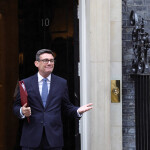

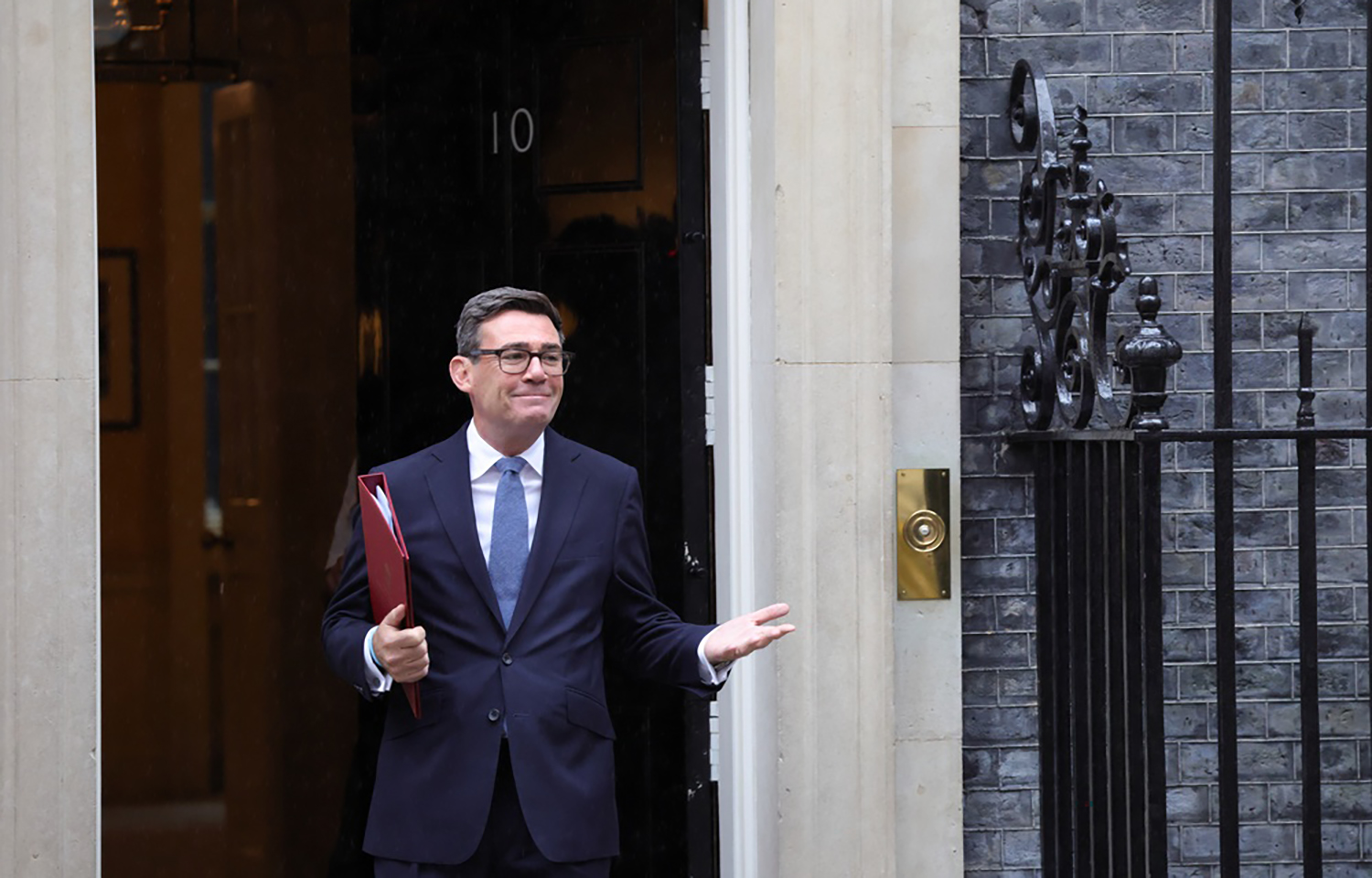
At a 20 November U.K.-E.U. Summit meeting in Brussels, Belgium, E.U. leaders Ursula von der Leyen and António Costa and U.K. Prime Minister Andy Burnham agreed on a package that will address challenges both sides have faced since the U.K. left the bloc six years ago, including the removal of expensive border checks and costly paperwork on food products moving between the two markets.
The agreed-upon trade package includes new deals on emissions, a youth exchange program, and food and drink stipulations, with the latter deal seeking to, among myriad objectives, ease supermarket prices and support industry growth and market access.
According to the U.K. government, the package could add up to 0.5 percent to the U.K.’s GDP by 2040 – equivalent to around GBP 17 billion (USD 22.3 billion, EUR 20.3 billion) a year to the country’s economy.
Burnham called it a “win-win” deal, insisting that both parties would be stronger as a result.
“Ten years on from [the] Brexit [vote], we open a new chapter, repairing a broken status quo with a Britain that is closer to Europe,” he said.
Under the deal, export health certificates (EHCs) – government documents that can cost up to GBP 200 (USD 262, EUR 239) each and are currently required to prove that exported animal products meet the destination country's health, safety, and welfare standards – will be scrapped.
Seafood exporters had long called for the implementation of digital EHCs, as the manual process was estimated to have cost the sector millions in extra costs; such a digital system never came to fruition.
Nevertheless, the Shellfish Association of Great Britain (SAGB) said the new arrangements for trade in food, agricultural goods, animals, and plants in the latest U.K.-E.U. Sanitary and Phytosanitary (SPS) Agreement are “good news” for the shellfish sector, especially as red tape led U.K. agrifood exports to the E.U. to plummet 32.5 percent since 2019.
SAGB pointed to the Common SPS Area outlined in the new agreement, which will apply the same rules across the board and make it easier and cheaper to move products between the U.K. and Europe. These changes should also reopen the market for certain classes of bivalves.
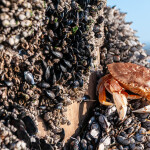
Post-Brexit, the E.U. has only allowed entry to mussels, oysters, cockles, clams, and scallop harvests originating from what it deems the cleanest water classification (Class-A), or if products have undergone purification/depuration prior to export.
Most U.K. waters don't qualify in that category, and shellfish from Class-B waters that are not purified have not been able to enter the E.U. Those restrictions didn’t apply to the U.K. when it was an E.U. member state but immediately triggered upon its introduction as a third-party country.
“This is a hugely positive development for every sector of the shellfish trade – from the live shellfish sector to processed products, crustacea, and, of course, the LBVs from Class-B waters,” SAGB CEO David Jarrad said in a statement. “It is encouraging to see common sense prevail and a practical agreement reached that recognizes the realities of our industry and the importance of maintaining a viable, competitive, and sustainable shellfish sector.”
Jarrad added that the agreement provides greater certainty and business security for operators, allowing businesses to plan with more confidence, protect jobs, and unlock investment that has “been missing from the industry for far too long.”
“The impact of Brexit has undoubtedly held back confidence and investment in parts of our shellfish industry, particularly in shellfish aquaculture. We hope this agreement marks an important step toward rebuilding that confidence, encouraging new investment and allowing the U.K. shellfish sector to realize its full potential,” he said.
The agreement has also received a warm welcome from the U.K.’s salmon sector, with trade body Salmon Scotland expecting significant benefits to come from the new trading arrangements.
“After ratification, this will reduce costs, border checks, and the time taken for European customers to enjoy nutritious Scottish salmon on their dinner plates, where it is in increasing demand,” Salmon Scotland CEO Tavish Scott said. “Our sector thanks the prime minister and the U.K. government for taking these important and significant steps to assist Scottish businesses and trade.”
The organization has repeatedly called for action to remove costly trade barriers, warning that additional paperwork and border checks make it harder to get fresh salmon to European customers quickly and efficiently. Ahead of the Brussels summit, it issued a new analysis warning that Brexit trade barriers could be costing Scottish salmon exporters GBP 130 million (USD 170.3 million, EUR 155.4 million) a year in E.U. sales.
It noted that before the U.K.’s departure from the E.U., two in every three Scottish salmon were exported to the bloc. By 2025, that had fallen to fewer than one in two.
If salmon sales to European countries had maintained its previous share, exports could have reached GBP 480 million (USD 628.7 million, EUR 573.6 million) last year, compared with the actual GBP 348 million (USD 455.8 million, EUR 415.9 million), it advised.
Salmon Scotland also pointed to separate analysis that found Brexit paperwork has cost British seafood exporters an estimated GBP 53 million (USD 69.4 million, EUR 63.3 million) since 2021, while official figures show that 266,374 EHCs were issued for fish and fishery products moving from the U.K. to the E.U. between January 2021 and October 2026.
