


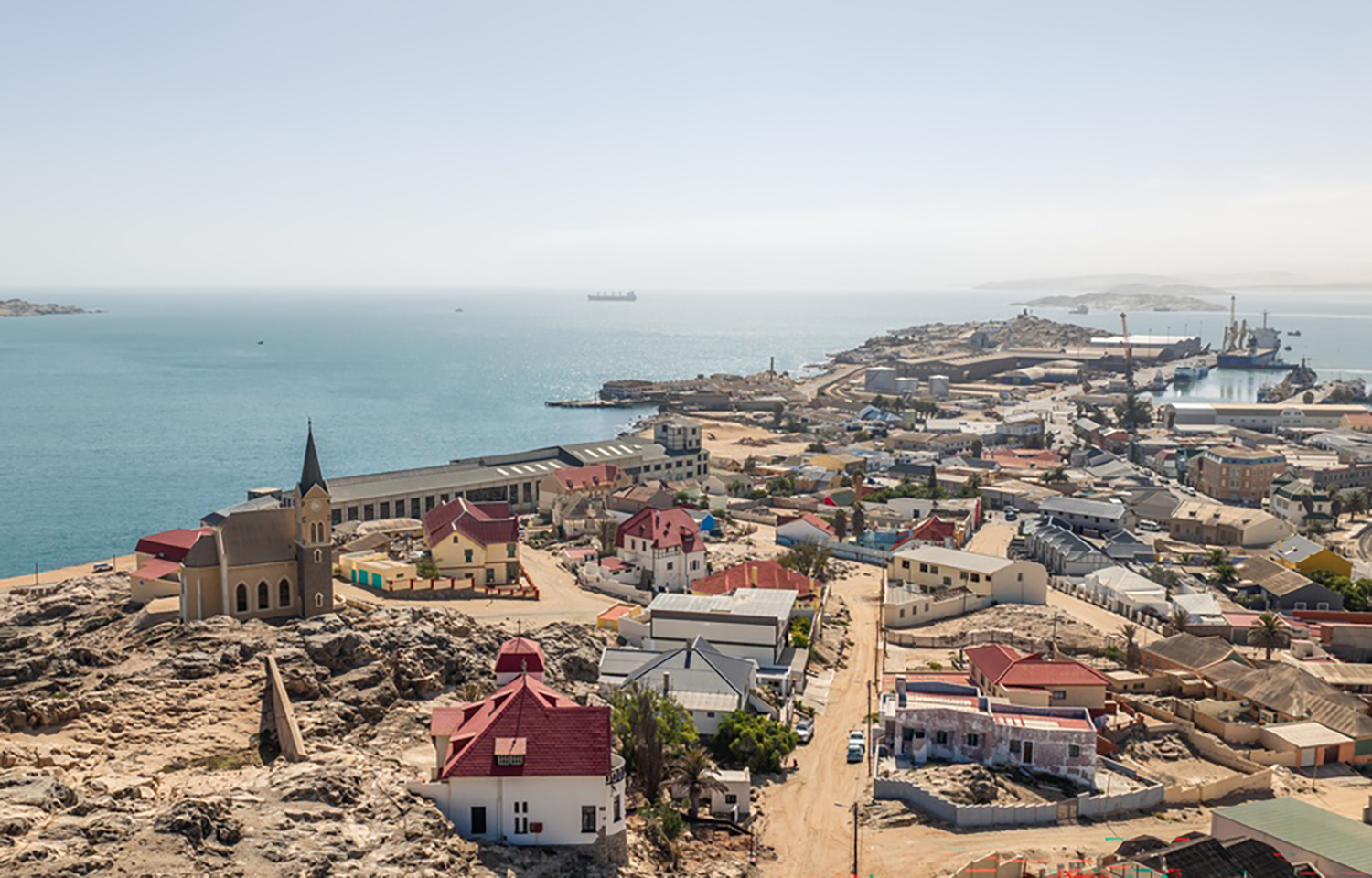
Namibia Minister of Agriculture, Fisheries, Water, and Land Reform Inge Zaamwani has approved the extension of a project permit for African Aquaculture Company (AAC)’s planned 51,000-metric-ton (MT) Atlantic salmon farm in Lüderitz Bay.
Zaamwani extended the permit from 15 years to 25 years, granting the NAD 2.5 billion (USD 152.9 million, EUR 131.5 million) project greater flexibility as it continues to develop.
“The extension of our license to 25 years – and of course we expect renewals thereafter – is great news for us because it will be easier to finance … compared to the 15-year one,” AAC CEO Helge Krøgenes told SeafoodSource, adding that the support the Namibian government has lended the project through the issuance of various applications and requisite environmental and business permits has been seamless.
The Namibian government has been equally laudatory of AAC and the economic potential of the project, with the nation’s National Planning Commission stating the project is expected to advance Namibia's economic diversification, industrialization, value addition, and job creation, as well as generate at least EUR 400 million (USD 467 million) in export earnings.
As regulatory approvals are being fast-tracked, Krøgenes said on the operational side, AAC has successfully imported 5,000 Atlantic salmon eggs from Norway and transferred them to South Africa, where initial smolt production will occur. After a planned upgrade to the Fizantakraal smolt facility, AAC should have the capacity to produce 300,000 smolts annually, with long-term goals of upping that total via recirculating aquaculture system (RAS) technology to 1.5 million smolts every year.
The firm has also entered into an agreement with local fishing enterprise Seaflower for access to feed storage, equipment, and other services needed for initial operations, while another partnership with Walvis Bay, Namibia-based fisheries and maritime firm Omankete will grant AAC greater processing, packing, and shipping capabilities.
At its current rate of progression, Krøgenes said he anticipates AAC will achieve its first harvest in the first quarter of 2028 under a phased production schedule to allow for “optimization of the capital requirement and ample time to introduce the Namibian Atlantic salmon into the international market for export.”
“We think the Lüderitz location has capacity to produce between 300,000 and 400,000 MT of salmon, but of course, AAC would first start with the 51,000 MT allowed under our permit,” he said, explaining he is optimistic about the future success of the project, especially as the annual consumption of salmon in Southern Africa “is growing twice as fast as in the rest of the world.”
