






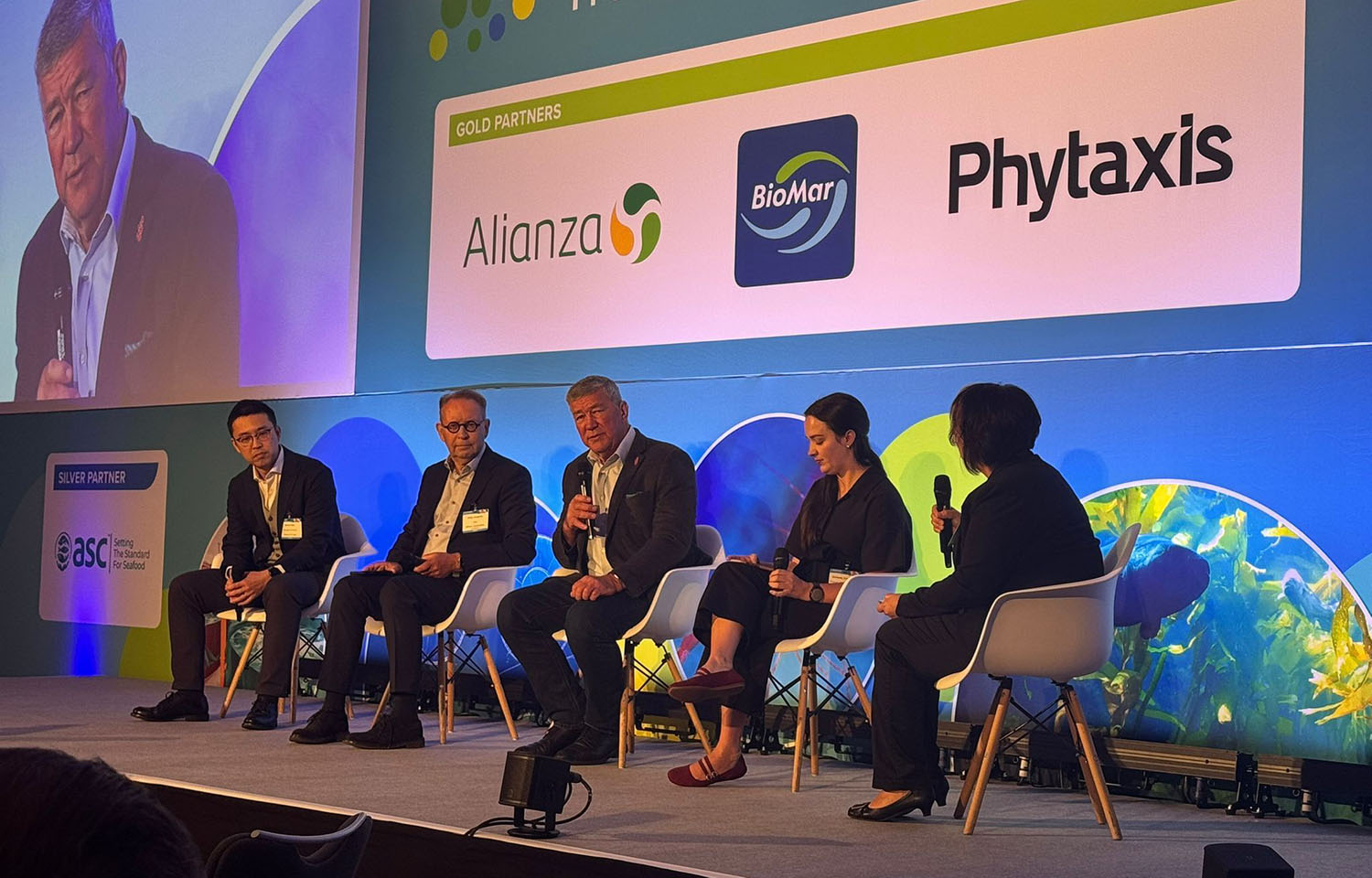
Africa currently accounts for just a small fraction of global aquaculture production, but panelists at the recent Blue Food Innovation Summit said they believe the continent could represent one of the most significant growth opportunities over the coming decades due to a combination of strong domestic demand, favorable natural resources, and growing investment as key drivers of expansion.
According to Kimberly Churchwell, who leads the aquaculture portfolio at the Gates Foundation, the core reason why aquaculture opportunity in Africa is so great is that demand for seafood already exists.
"In terms of regions, I think there's huge, untapped potential in Africa," she said.
Though domestic demand is great, Africa contributes less than 2 percent of total global aquaculture production, leading most nations across the continent to import seafood to meet demand.
"Taking just Nigeria, for example, they import between USD 1 billion and USD 2 billion [EUR 858.5 million and EUR 1.7 billion] of seafood and aquaculture products a year," Churchwell said. "There's real, insatiable demand there, and there's also an opportunity to produce about two-thirds of that domestically, provided the right kind of infrastructures and inputs are in place."
The Gates Foundation – a Seattle, Washington, U.S.A.-based nonprofit aimed at fighting poverty, disease, and inequity – has focused much of its aquaculture investment strategy on improving access to quality feed, seed, and management technologies for small-scale producers of low-trophic species like tilapia, catfish, and carp across sub-Saharan Africa and India.
Churchwell suggested that Africa's growth potential is often underestimated because low production levels are mistakenly interpreted as weak demand.
Aquaculture Stewardship Council CEO Chris Ninnes agreed that Africa has great potential to become an aquaculture powerhouse, stating that from a sustainability perspective, it’s one of the regions where aquaculture development is both most needed and most achievable.
"There's a lot of potential to do that," he said while cautioning that future growth must be accompanied by improvements in production efficiency and sustainability.
While much of Africa's aquaculture potential lies in low-trophic species, the continent has attracted investment in higher-value species, too.
One of the most ambitious examples to date is in Namibia, where the African Aquaculture Company is developing large-scale Atlantic salmon-farming operations.
African Aquaculture Company CEO Helge Krøgenes said the idea initially surprised many industry observers.
"Nobody has done salmon farming in Namibia," he said, explaining that oceanographic conditions along Namibia's coast closely resemble those found in established salmon-producing regions. "The temperature profile is 10 degrees Celsius during the summer and about 15 to 16 degrees during the winter – very similar to Chile."
The company has secured licenses covering 51,000 metric tons (MT) of production across three farming locations and is aiming to combine proven technology with local partnerships.
"We are using 100 percent local staff, while the majority of suppliers are from Norway," Krøgenes said. "It's proven technologies; the net pens have been used all over the world."
Ensuring economic benefits remain within local communities is essential to any African aquaculture project, Churchwell insisted, stating that development strategies should start with domestic market demand rather than focusing exclusively on exports.
"We're all consumers of fish," she said. "When we're investing, think about where the local market demand is, what does the industry want, and how do we capture that and keep it within the domestic market."
She further stressed that investment is needed throughout the value chain, not just at farm level.
"Investing in primary production is important but so are the routes to market," she said. "There's a huge hurdle to get from the pond to the market."
In this regard, Krøgenes said he believes Namibia's salmon industry can achieve both local economic benefits and export growth.
The company is initially targeting African markets while also exploring opportunities in China, the Middle East, and Europe through existing trade agreements.
"When we are in full production of 50,000 MT, we will match the export revenue of Namibia," Krøgenes said. "That was quite an eye-opener for the president of Namibia."
While the speakers expressed confidence in Africa’s long-term prospects, panelists emphasized that success depends on adapting technologies and business models to local conditions.
"It's great that we have a lot of innovation happening on the global stage, but that needs to reach the farmer," Churchwell said.
Churchwell also stressed that realizing Africa's aquaculture opportunity will require patience. As such, investors looking at Africa's aquaculture sector need to balance ambition with realistic expectations, “shooting for the potential of what's possible," she said.
