

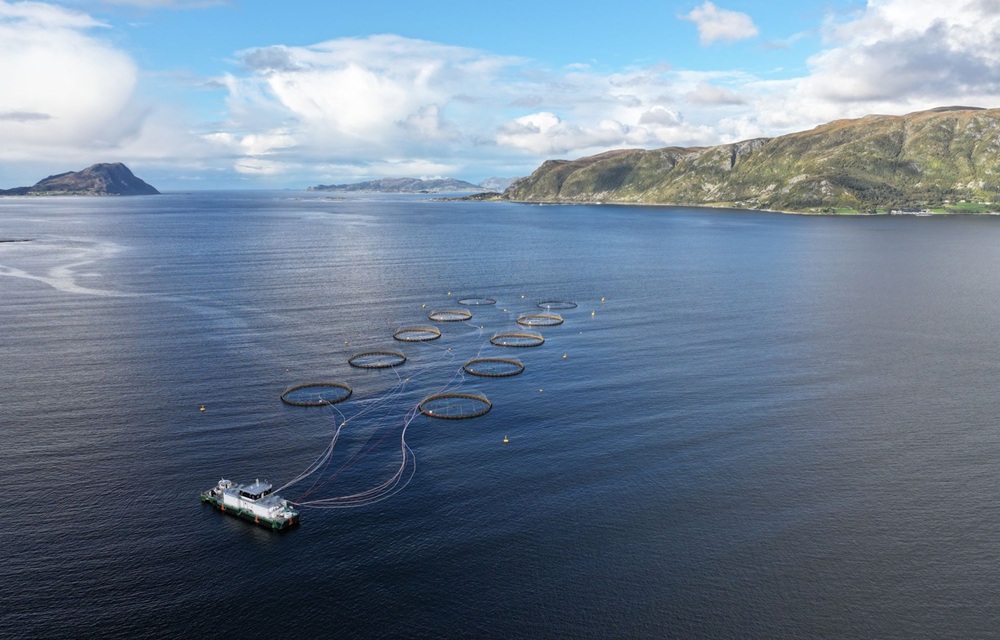
Ålesund, Norway-based cod-farming firm Ode finished 2025 as Norway’s largest cod producer by volume, and it plans to continue expanding production in 2026.
Ode outcompeted wild-caught cod harvesters in 2025, producing 10,018 metric tons (MT) of farmed cod over the course of the year. That’s equivalent to 65 percent of Norway’s total farmed cod production and nearly 30 percent of the total fresh cod exports in 2025, combining both farmed and wild-caught cod.
“Our 2025 results represent an important milestone, but they are far from the end goal. We have demonstrated that it is possible to deliver consistently high quality at scale while achieving low feed conversion, high survival rates, and strong growth performance. This is the result of long-term work and the dedication of a highly skilled and passionate organization. I am proud of what the Ode team has achieved together in 2025,” Ode CEO Ola Kvalheim said in a release.
Launched in 2020, Ode harvested its first batch of farmed cod in 2022. The company has been a key part of the growing dominance of farmed cod in Norway, which now makes up more than half of the nation’s fresh cod exports.
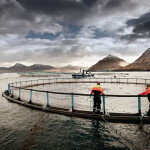
In 2025, Ode sold its first batch of “deep farmed” cod – a process that involves raising cod in a fully submerged cage in deeper, colder waters. The company said this method is intended to improve cod maturation, and it saw positive results in its first batch. Ode said it is now looking into how to expand its deep-farming efforts and work with technology partners to scale the practice.
“Customer feedback throughout 2025 has been exceptional. The quality we deliver is both high and consistent, and our customers are achieving strong results with our products. Our portfolio aligns closely with key global megatrends, including rising demand for healthy, clean proteins produced in a long-term, renewable, and low-footprint manner. This positions Ode well for continued growth in the years to come,” Kvalheim said.
Ode plans to continue expanding in 2026; the firm has announced plans to start cod farming at three new sites in 2026. The sites were previously held by Statt Torsk but became a part of fish-farming firm Vesterålen Havbruk when the companies merged in 2024. One of the three sites – Rekvika – has been run jointly by Vesterålen Havbruk and Ode since 2024, while the other two sites – Apalset and Stokkeneset – have been inactive. The company plans to launch operations at all three locations this year.
“Over the past years, Ode and Vesterålen Havbruk have cooperated to build a profitable and sustainable cod-farming industry. This collaboration has been positive for both parties, and Ode has now chosen to further invest in these sites, which are located within our core production area for cod. This acquisition will contribute positively to local activity and employment on Stadlandet and support our continued growth in the region,” Kvalheim said.
Vesterålen Havbruk CEO Brynjar Kværnstuen said its sale of the three sites was a strategic decision.
“We aim to concentrate our farming activities closer to our land-based facilities for slaughtering and further processing, where we see the greatest industrial synergies and long-term value creation for our company. Ode is a solid and highly competent operator within cod farming, and we are confident that the sites will be further developed in a sound and sustainable manner under their ownership,” Kværnstuen said in a release.
