


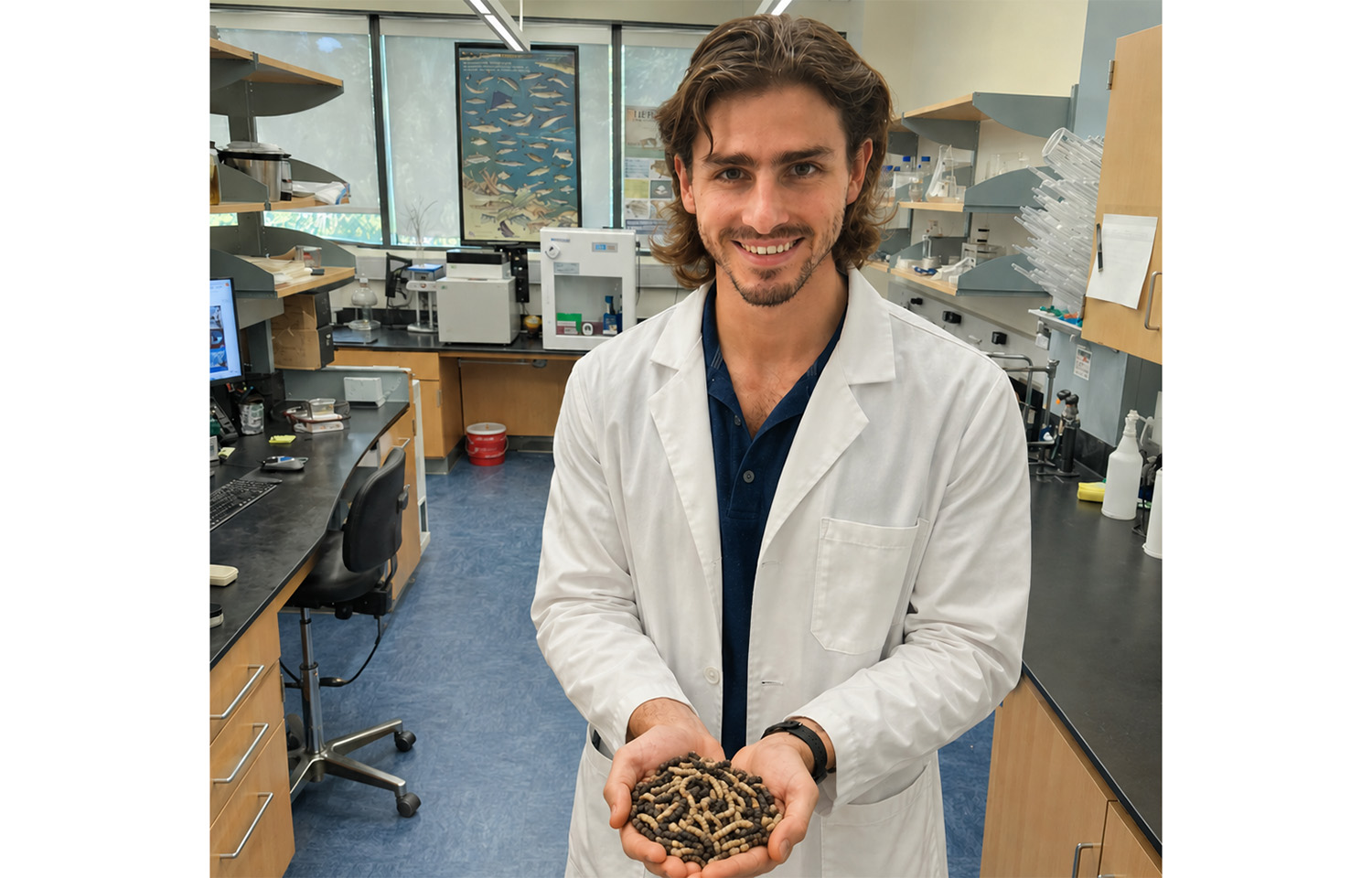
A new study by the University of Miami is trying to determine whether black soldier fly larvae could be a scalable solution to the U.S. state of Florida’s sargassum problem.
Florida’s Atlantic coast is regularly hit by “sargassum inundation events,” which cover the shoreline in massive piles of the seaweed. Researchers have determined the problem has been beginning earlier in the year, and in 2026, South Florida’s shores have been hit with a record-breaking bloom, according to the study’s authors.
The University of Miami's Rosesntiel School of Marine, Atmospheric, and Earth Science is working to determine if black soldier fly larvae could be used to transform the massive amount of seaweed into a usable resource for sustainable aquaculture feed or fertilizer.
“Our goal is not just to provide a solution to reducing sargassum impacts to our shoreline but to help redesign Florida’s response to it,” University of Miami Professor in the Department of Marine Biology and Ecology Daniel Benetti said. “Instead of treating it as waste, our scalable system will convert it into valuable products for aquaculture, agriculture, and emerging bio-based industries.”
The plan is to use the black soldier fly larvae to consume the seaweed, and then those larvae can be used as protein, effectively a form of “bioconversion.”
The school has already created an experimental black soldier fly larvae rearing system allowing them to monitor the process under controlled conditions and will now use that system to study the feasibility of using them to convert the blanket of sargassum into a usable resource.
“We’re turning an environmental burden into coastal value solution,” Benetti said.
Black soldier fly larvae have been a mainstay in insect-based aquaculture feed startups, and stakeholders have called for a ramp-up of insect-based feed production.
