






Norwegian aquaculture technology firm AKVA Group realized relatively stagnant growth in both the fourth quarter and the full year of 2024 but has its sights set on achieving more measurable gains this year.
AKVA brought in Q4 2024 revenues of NOK 792 million (USD 71.1 million, EUR 67.9 million), compared to NOK 800 million (USD 71.8 million, EUR 68.6 million) in Q4 2023. Its order intake for the period, however, climbed from NOK 718 million (USD 64.5 million, EUR 61.6 million) to almost NOK 1.1 billion (USD 99 million, EUR 94.4 million), with its Sea-Based Technology (SBT) segment generating a best-ever quarterly total of NOK 946 million (USD 85.1 million, EUR 81.2 million), driven by sales of deep-farming technology.
Though it brought in more orders, actual revenues earned by SBT in the quarter totaled NOK 542 million (USD 48.7 million, EUR 46.5 million), which was down from NOK 618 million (USD 55.5 million, EUR 53 million) a year previously. The segment’s EBITDA and EBIT ended at NOK 55 million (USD 4.9 million, EUR 4.7 million) and NOK 15 million (USD 1.3 million, EUR 1.3 million), respectively, compared with NOK 55 million and NOK 17 million (USD 1.5 million, EUR 1.5 million) in 2023.
LBT revenues for the quarter totaled NOK 217 million (USD 19.5 million, EUR 18.6 million), up from NOK 142 million (USD 12.8 million, EUR 12.2 million) previously. Its EBITDA and EBIT ended the period at NOK -14 million (USD -1.3 million, EUR -1.2 million) and NOK 12 million (USD 1.1 million, EUR 1 million), respectively, compared to NOK -15 million (USD -1.3 million, EUR -1.2 million) and NOK -18 million (USD -1.6 million, EUR -1.5 million) in Q4 2023.
Group-wide EBITDA increased by NOK 35 million (USD 3.1 million, EUR 3 million) to NOK 76 million (USD 6.8 million, EUR 6.5 million), while profit before tax ended the quarter at NOK -15 million (USD -1.3 million, EUR -1.3 million) – up from NOK -53 million (USD -4.8 million, EUR -4.5 million) in Q4 2023.
For the full year of 2024, AKVA reported revenues of NOK 3.6 billion (USD 323.3 million, EUR 308.9 million), compared to 2023’s NOK 3.4 billion (USD 305.3 million, EUR 291.8 million), an EBITDA of NOK 453 million (USD 40.7 million, EUR 38.9 million) – up from NOK 263 million (USD 23.6 million, EUR 22.6 million) – and an order intake of almost NOK 3.7 billion (USD 332.3 million, EUR 317.5 million) – down from over NOK 4.3 billion (USD 386.2 million, EUR 369 million) previously.
Delivering AKVA’s Q4 2024 results on 14 February, AKVA CEO Knut Nesse said the company was pleased with the financial performance over the past year and the progress achieved following a couple of difficult years.
“We are geared for growth, and I think the next chapter for AKVA’s development is to see top-line growth; that’s also going to drive higher profitability,” he said. “I really think we are going to see quite some growth in the years to come.”
One reason why AKVA has not been able to see exponential growth so far, according to Nesse, is that salmon farming has not grown significantly since 2021; this four-year trend has played out despite an underlying increase in demand for salmon, he added.
Consumption analysis suggests the market could absorb up to 5 percent more fish, but if present production levels continue as they have for the last few years, it’s likely that the industry can only achieve 1.5 percent maximum supply growth annually, he said.
“We believe [industry] needs to come to some kind of technology shift. We think that sustainable growth for the future can only be realized through applying new technology,” Nesse said.
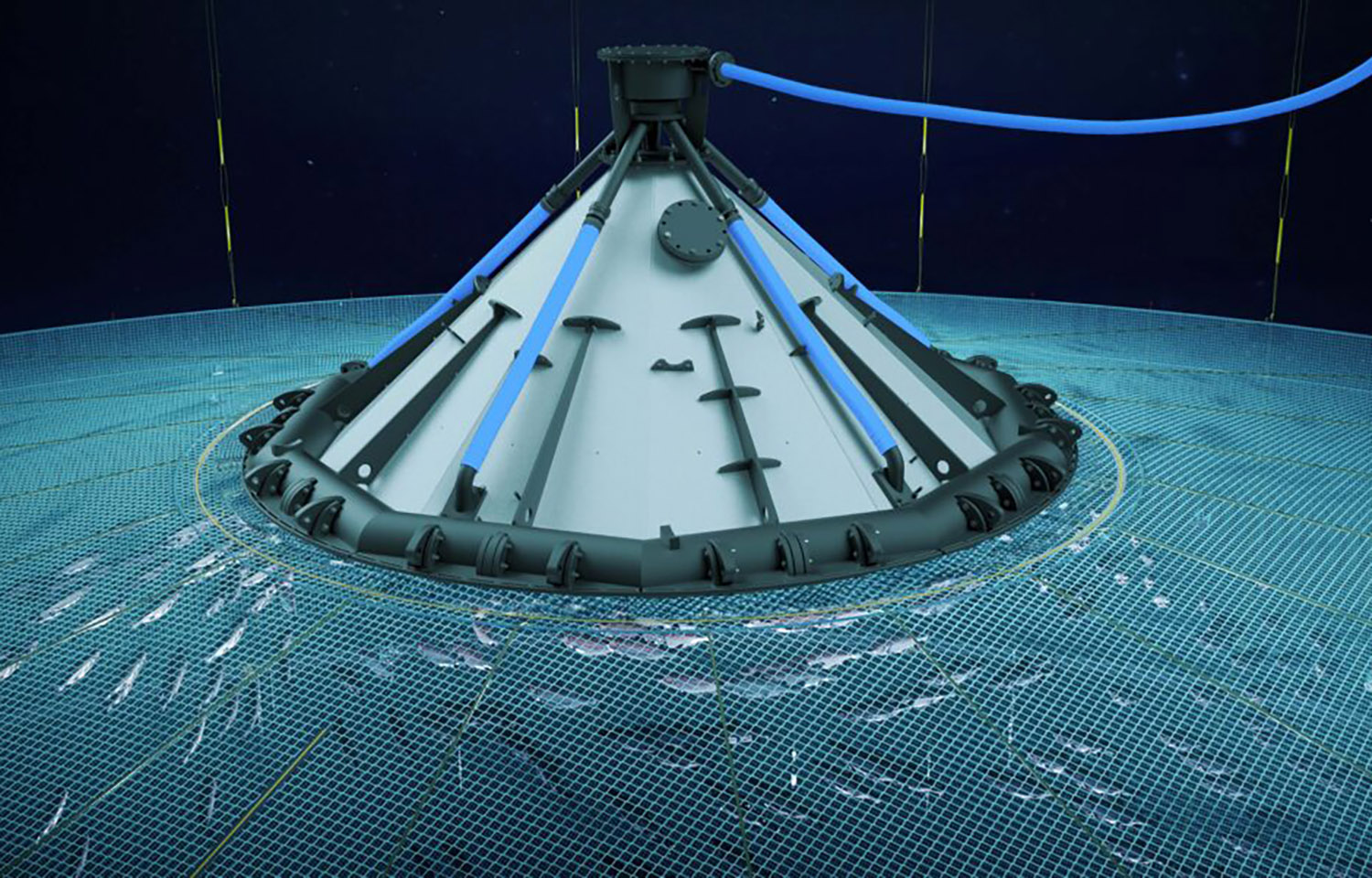
In the short to medium terms, deep-farming solutions, with typically lower mortality levels, offer a viable means to grow salmon supply, he said, adding that transitioning from traditional to deep farming could enable 8 to 9 percent growth and allow AKVA to see the top-line growth it believes is possible.
“We believe the real growth engine in the next five years is post-smolt. More companies are talking about the growth perspective of post-smolt,” Nesse said. “A 1-kilogram post-smolt is typically coming with two elements of growth: One is that you can utilize your license and license capacity better – on average 30 percent – and that’s not a bullish estimate; that's a prudent one. The other thing is that typically when you halve the production time in the sea, that also comes with lower mortality.”
Regarding other salmon production methods, Nesse said there could be some momentum for closed or semi-closed systems but added that AKVA believes it will take some time to really scale them up.
Similarly, moving out to more exposed areas to produce will also take more time because it will require more legislative support, he said.
“So, looking ahead to 2030 and the growth perspective, we really believe that deep farming and post-smolt are the more realistic growth drivers,” he said.
In the meantime, with salmon prices expected to remain strong driven by reduced supply and with the expectation that there will be a normalization of the post-smolt market in Norway this year, AKVA is targeting minimum revenues of NOK 4 billion (USD 359.6 million, EUR 343.4 million) and an EBIT margin of 6 percent in 2025.
One thing that will help achieve those numbers is newly awarded land-based contracts with Cermaq and Laxey that AKVA signed recently, which Nesse said will have a further positive effect on 2025’s revenue levels.
