





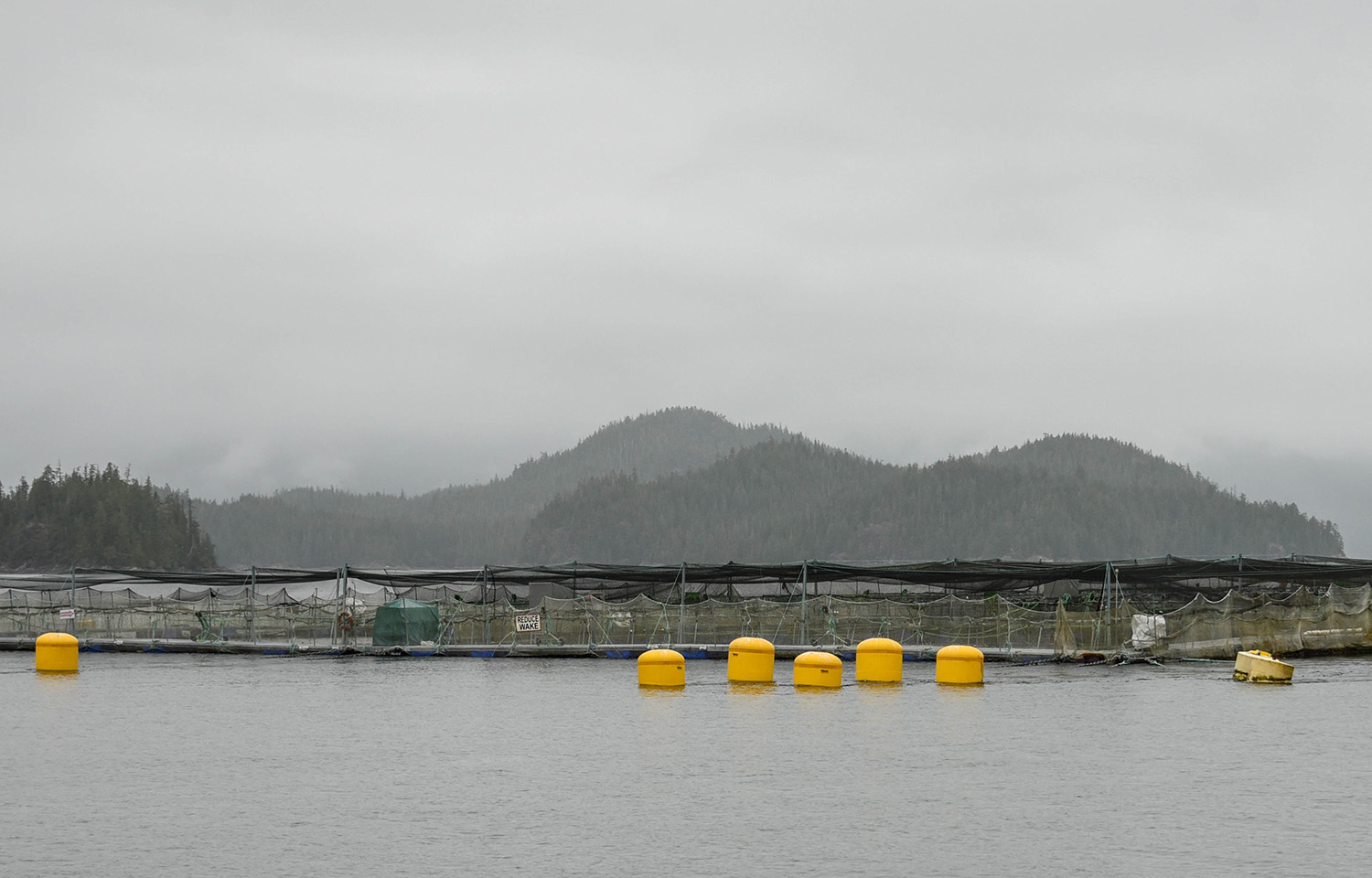
Salmon-farming companies in British Columbia, Canada, have defended their right to bring claims against the Canadian government, seeking damages for actions that phased out salmon farming in the Discovery Islands.
Canada’s Department of Fisheries and Oceans (DFO) announced in December 2020 it was working to phase out all fish farming in the Discovery Islands, located in B.C.
At the time, then-Minister of Fisheries, Oceans, and the Canadian Coast Guard Bernadette Jordan said the government was planning to phase out salmon fishing in an upcoming 18-month period, a move that communities, government officials, and companies said they were “blindsided” by.
In response, salmon-farming companies took the DFO to court and, in 2022, won a judgment to delay the decision to phase out farming. The department then went through another consultation process based on a decision by Joyce Murray, the next minister of fisheries, and ultimately decided to once again deny license renewals in the Discovery Islands. The Wei Wai Kum and We Wai Kai First Nations, as well as salmon farm operators Grieg Seafood, Cermaq Canada, and Mowi Canada West, applied for judicial review of the decision, but that effort in court failed.
Now, the latest decision has given Mowi Canada West, Allpen Diving, James Walkus Fishing, and Cermaq Canada the right to proceed and seek damages as they assert Jordan, Murray, and the DFO engaged in multiple acts that damaged their businesses.
As part of its lawsuit, Mowi alleged Canada is liable for malfeasance as the minister “engaged in deliberate and unlawful conduct in the exercise of public functions with actual and constructive knowledge that the conduct was unlawful and would or was likely to injure Mowi.” Cermaq also argued that the decisions were made against legal advice.
“I am satisfied that the plaintiffs have each pleaded adequate material facts (as I have described above) which, if proven at trial, may constitute ‘unlawful conduct,’” B.C. Justice Lauren Blake wrote in her analysis. “The plaintiffs each set out the material facts that identify the alleged unlawful acts of the ministers and set out their respective positions that the manner in which the various acts complained of were in excess of the minister’s powers, were exercised for an improper purpose, and were in breach of the statutory duties.”
Both Cermaq and Mowi also argued that the companies relied on earlier representations from the DFO, further invested in aquaculture from 2008 onward, and carried on business as usual until the sudden Discovery Islands decision, which caused losses and damages for the two companies.
Soon after the initial decision by the DFO to shut down farming in the Discovery Islands, salmon farmers in the region applied to have smolt transferred to avoid having to cull them – but those requests were denied. Mowi soon announced it was forced to cull 900,000 fish, while Cermaq was forced to cull 1.5 million salmon.
Blake, in her analysis, said both Mowi and Cermaq have pleaded sufficient enough material to establish elements for “negligent misrepresentation” by the DFO.
“It is clear from the pleadings that many of the documents referred to in the pleadings were developed with, and specifically for, the discrete and unique finfish aquaculture industry, and in close connection with the three major operators,” Blake wrote. “It is also clear that many of the alleged representations included plans with respect to an existing and ongoing state of affairs, and a commitment to the finfish aquaculture industry in the Discovery Islands.”
Blake wrote that the current evidence is enough to prove the determination over whether Mowi and Cermaq are owed a negligence claim “can only be determined at a full trial on the merits.”
