

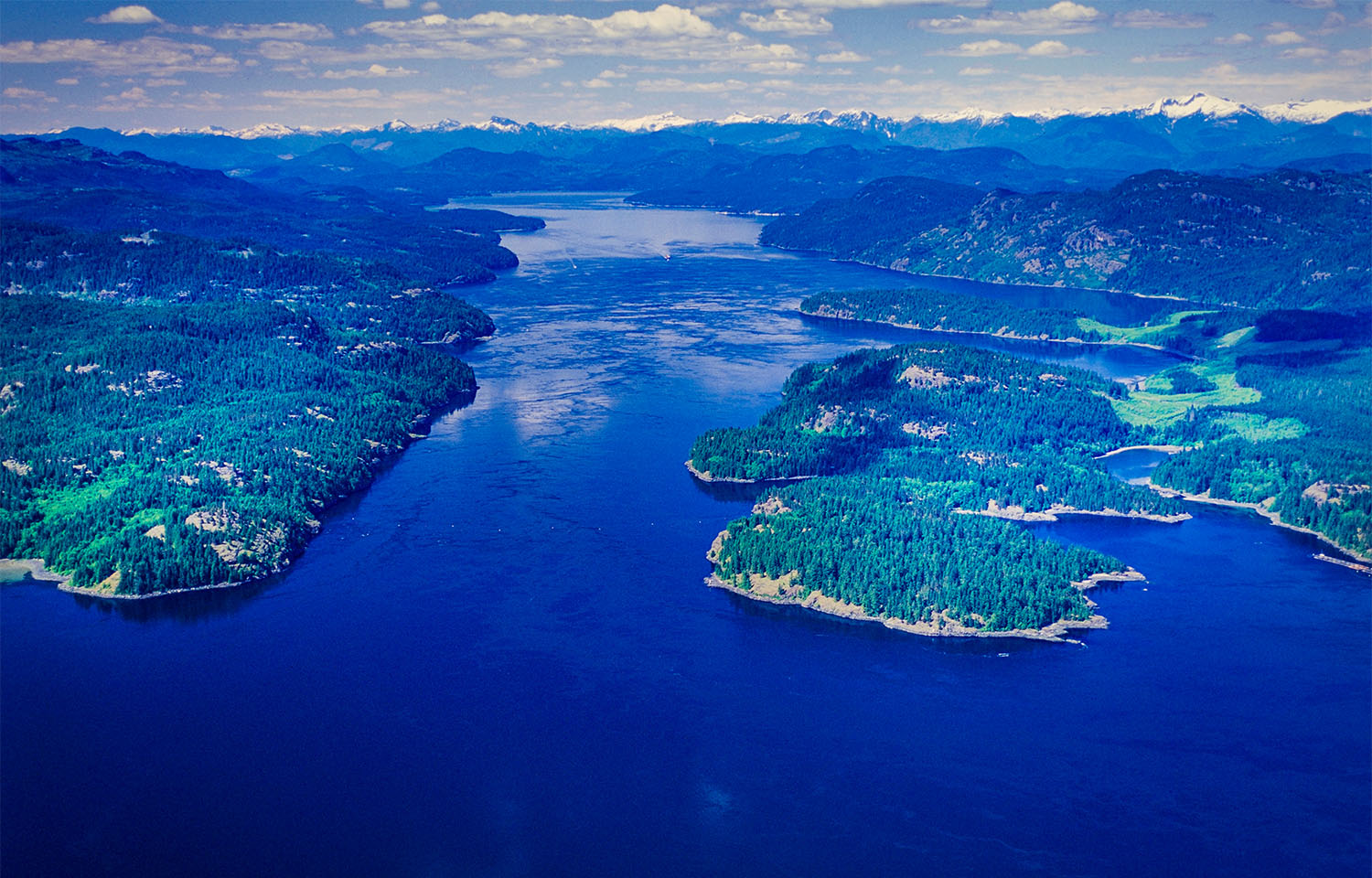
The Federal Court of Appeals in Canada has denied an attempt by salmon-farming company Mowi Canada West to appeal the denial of aquaculture licenses for its salmon farms in the Discovery Islands, located in British Columbia, Canada.
In its decision released on 29 January, the court of appeals upheld a June 2024 decision that found former Canada Minister of Fisheries, Oceans, and the Canadian Coast Guard Joyce Murray operated within her authority to deny Mowi license renewals and met Canadian standards for consultation and fairness. That earlier decision, issued by Canadian Federal Judge Paul Favel, came over a year after Murray denied the renewals in February 2023.
Groups opposed to net pen salmon farming celebrated the ruling, calling it the first step in a path toward clearing all open-net salmon farms in B.C.
“Today’s ruling is a crucial step in ensuring the survival of wild salmon on our coast,” ’Na̱mg̱is Hereditary Chief Ho'miska̱nis Don Svanvik said in a release. “It underscores that there is a clear path – morally, politically and legally – for the Liberal government to finish the job: to keep its promise to remove all open-net salmon farms from our coast by 2029, if not sooner.”
The court ruling marks the latest development in a fight over salmon farming in B.C. that has now lasted over half a decade and was kicked off in the Discovery Islands.
In December 2020, then-Fisheries Minister Bernadette Jordan announced all salmon farming in the Discovery Islands would be phased out within 18 months, as that would be the last time any farms in the region could be licensed by Canada’s Department of Fisheries and Oceans (DFO). That decision built on a platform launched by former Canadian Prime Minister Justin Trudeau, who wrote in 2019 that mandated the DFO should create a responsible plan to transition away from open-net pen salmon farming in British Columbia “by 2025.”
Salmon farming companies and B.C. communities tied to the industry said they were “blindsided” by the announcement in 2020, and multiple companies including Mowi Canada West, Cermaq Canada, and Grieg Seafood pushed for more time to close the farms, citing the growth cycles for salmon aquaculture.
Those requests were ultimately denied by the government, forcing Mowi to close one of its salmon hatcheries and cull 900,000 fish, while Cermaq Canada ended up culling 1.5 million fish.
A later court order overturned Jordan’s decision in 2022, claiming that Jordan’s decision was made in breach of the rights of salmon farmers in the area.
Following the court rulings, the DFO engaged in another consultation process with the salmon farming industry, First Nations groups, and environmental groups – and ended up canceling license renewals once again as a means of “taking action to protect wild Pacific salmon.”
That new decision led to the failed lawsuit by Mowi in 2024.
“In my opinion, this argument amounts to nothing more than an attempt to convince this Court to reweigh the evidence that was before the Minister with the hope that we will come to a different conclusion,” Chief Justice Yves de Montigny wrote in his decision.
First Nations groups called the decision a win for wild salmon in the Discovery Islands, claiming since the removal of net pens, the salmon returns have been better.
“We have seen far greater than predicted returns of salmon since the farms were removed from the Discovery Islands,” Stó:lō Tribal Council President and Tribal Chief Tyrone McNeil said in a release. “With this decision, all salmon runs will continue to grow year over year to the benefit of First Nations and British Columbians alike.”
Salmon farming groups have consistently rejected the link between salmon farming and wild salmon populations, stating the evidence does not support that assumption. B.C. Salmon Farmers Association (BCSFA) Executive Director Brian Kingzett said historical data on salmon returns in areas like the Fraser River show favorable marine conditions were more likely to be the cause for better returns for salmon.
BCSFA has also repeatedly pointed to research since the salmon farms have been removed that it says proves salmon farming in the region has no connection to the concentrations of sea lice on wild salmon. A research paper published in 2025 found that sea lice concentrations on wild salmon were similar or in some cases higher after salmon farms were removed in regions of B.C.
A separate study came to the same conclusion, finding sea lice levels on wild salmon in 2024 were some of the highest recorded over an eight-year period in the Discovery islands, despite the area being salmon-farm-free since 2022.
Canada’s DFO has already announced a total open-net salmon farm ban for the entire province of British Columbia, which will take effect on 30 June 2029. Mowi Canada West announced a strategic review of its operations in 2024 but, as of yet, has not published the results of that review.
Mowi Director of Environmental Performance and Certification Mia Parker told CBC the company maintains the appeal was about fairness and evidence in the government's decision-making.
“It remains our consistent position that government decisions on salmon farming must be evidence based, sustainable, transparent, and inclusive of rights holder First Nations,” Parker said.
