





Brazil has launched a new tilapia genetics bank, helping its growing tilapia-farming sector secure diversity and boost output.
Researchers working under the project “Fish for Health” – a multi-institutional effort supported by the São Paulo Research Foundation (FAPESP) – have completed a nationwide analysis of genetic and observable traits of Nile tilapia (Oreochromis niloticus) and established the first countrywide germplasm bank for the species.
The collection, which today holds more than 2,600 live fish, was designed to conserve genetic diversity and accelerate selective breeding to improve the nutritional quality of tilapia meat, increase growth rates, and reduce production costs.
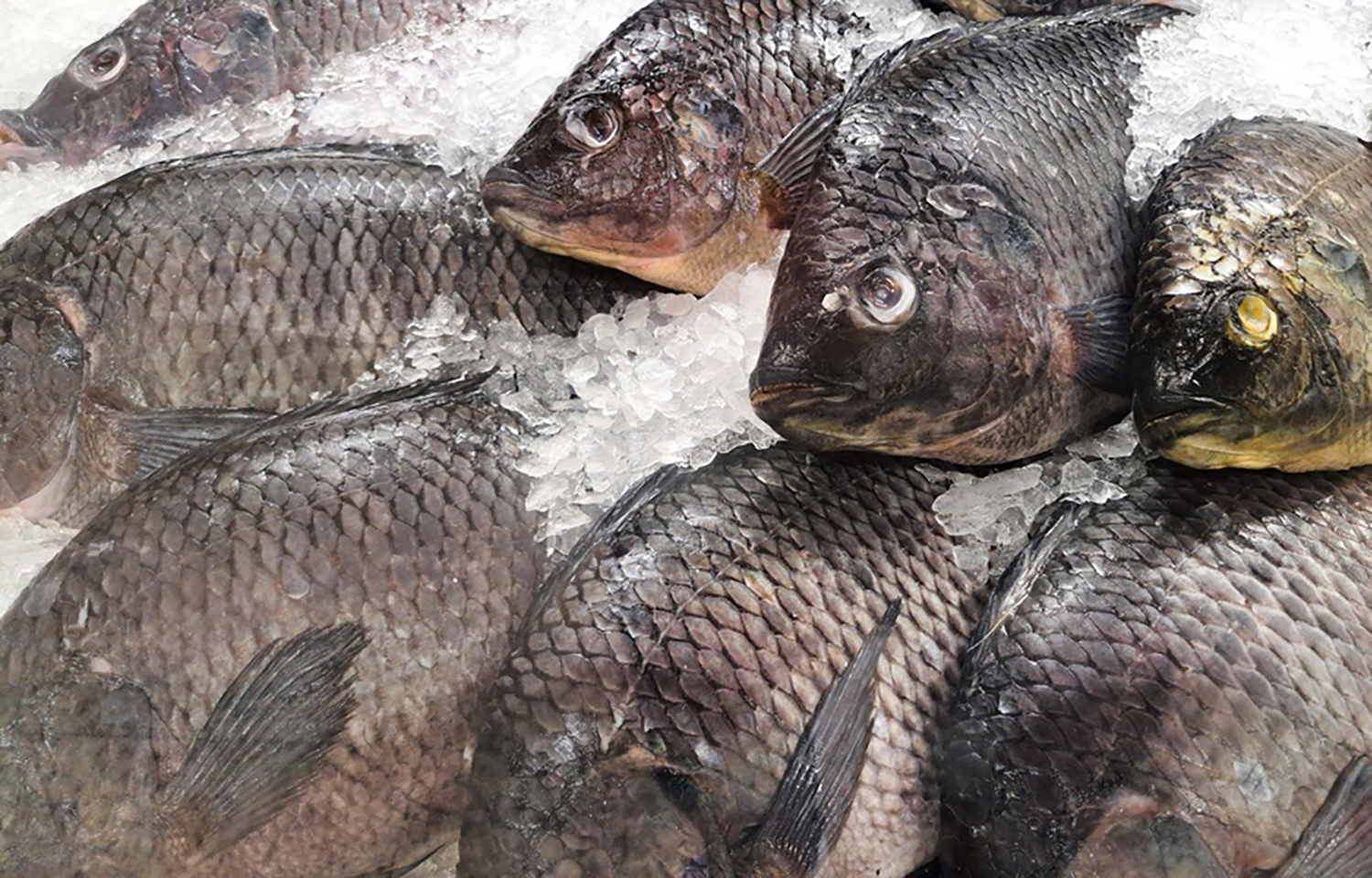
Tilapia is the most farmed fish in Brazil, accounting for over 80 percent of the nation’s aquaculture production. Despite a broadly uniform appearance across farms, the study that gave rise to the bank, recently published in the journal “Critical Insights in Aquaculture,” found that tilapia populations in the country exhibit high genetic diversity.
Since 2022, scientists have sampled nine distinct origins or families of tilapia farmed across the country and identified four distinct genetic clusters. These clusters have likely followed unique evolutionary paths, which may have conferred the fish with important adaptations useful to the industry.
Brazil’s vast geography – with its diverse climates and environments – has driven local adaptation since tilapia was first introduced in the 1930s. That patchwork of adaptation prompted the researchers to catalog and preserve distinct family lines and genetic traits across the country.
“These animals have been kept isolated and under the influence of different environmental aspects,” said Caio Augusto Perazza, the lead author on the study and a postdoctoral researcher at the University of São Paulo. “Fish raised in the south, for example, experienced harsh winters and adapted to these conditions despite tilapia being naturally acclimated to higher temperatures.”
The goal now is to convert the bank’s genetic material into actionable breeding tools. Using genome scans and crossbreeding tests across the four groups, they aim to identify genetic markers associated with traits that improve fish quality and accelerate production.
Ongoing experiments are trying to identify genetic markers linked to improved incorporation of omega‑3 and omega‑6 fatty acids into each fish fillet, resistance to both high and low temperatures, and enhanced growth performance. The researchers plan to sequence the full genomes of about 1,000 individuals and expect the first results on candidate markers by 2027.
Once robust markers are identified, producers will have two practical pathways: They can either have their broodstock genetically tested for desirable traits or obtain animals carrying the traits they need directly from the national bank, which is being kept by the São Paulo Institute of Fisheries in São José do Rio Preto.
According to Fernando Stopato da Fonseca, one of the study’s coordinators at the São Paulo Institute of Fisheries, the genetic bank also functions as a “living archive” and a sort of insurance policy, preserving genetic variability that could be used for population recovery and restoration programs in case particular fish families or regions suffer population losses due to disease outbreaks or climate impacts.
Although the current project is not focused on identifying disease-resistance traits, the bank also provides a platform for other research teams to pursue those issues by, for example, investigating markers that confer resistance to tilapia lake virus (TiLV). This disease is an emerging global threat that causes high mortality, has limited control measures so far, and in some cases leads to antibiotic misuse that can harm production.
“The bank functions as a true genetic insurance for tilapia in Brazil,” Fonseca said. “It guarantees the preservation of important lineages, supports future research, and contributes directly to aquaculture sustainability by enabling productivity gains with lower environmental impact and greater security for producers.”
