






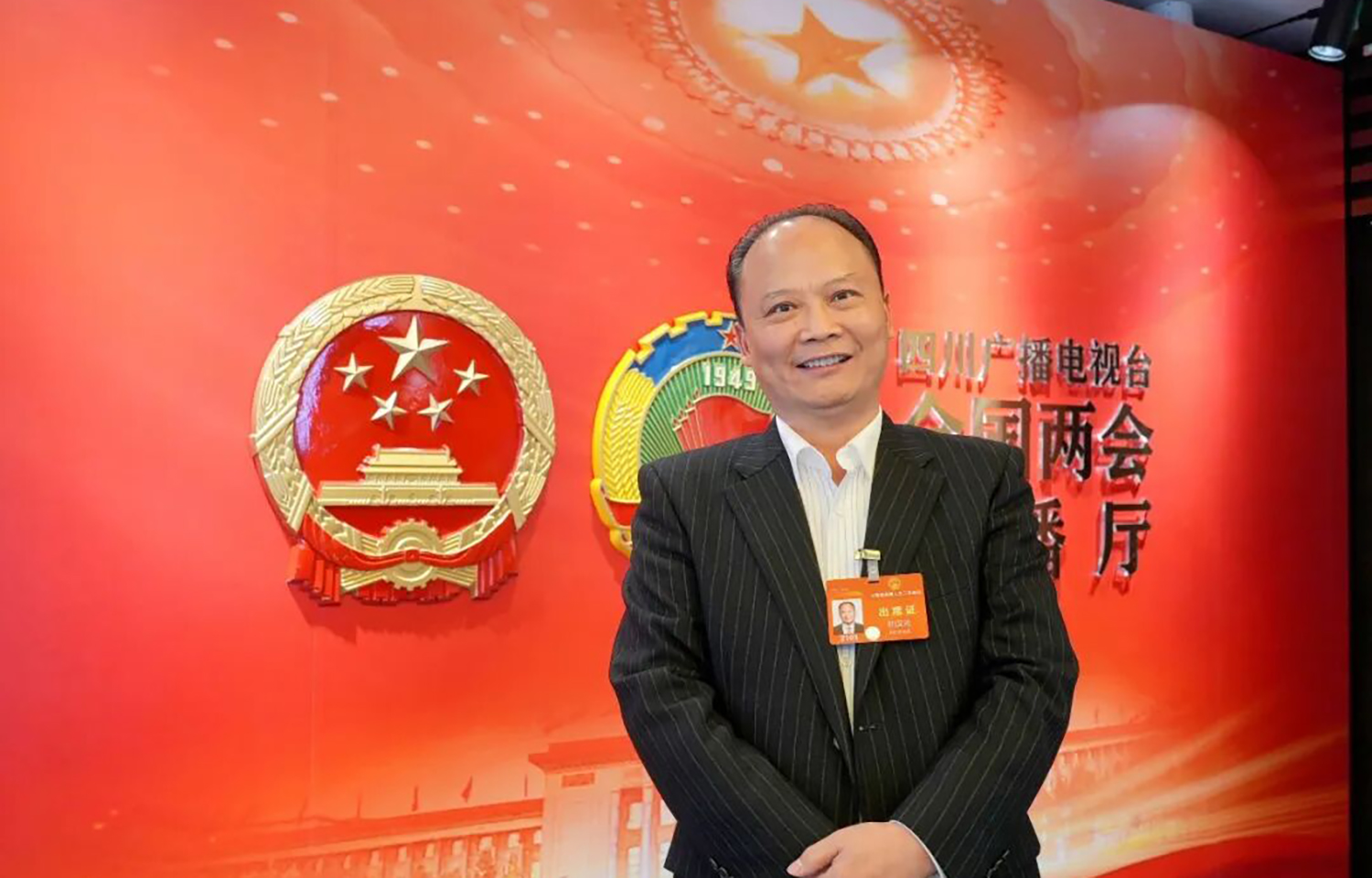
During this year’s meeting of the National People’s Congress (NPC) in Beijing, China, Liu Hanyuan, the chairman of aquafeed firm Tongwei Group, appealed to officials for national tax reform, saying that the country’s current system promotes fragmentation and limits growth in China’s fish-farming sector.
Liu said China’s fish farmers stand at a disadvantage compared to agricultural operations like pork and poultry because aquaculture companies face higher corporate and value-added tax (VAT) rates.
He said that current VAT rates of 9 percent apply to firms like Tongwei that buy fish from other farmers – a business model more common in the Chinese seafood industry for processing or onward sales.
Similar to aquaculture firms, many of the country’s large pork and poultry firms don’t face the tax if they slaughter their own animals and birds; however, they are also not charged VAT if they source from other farmers, Liu said, which differs from aquaculture operations.
Additionally, China’s tax collectors charge small companies with annual sales of less than CNY 5 million (USD 727,000, EUR 628,000) a special VAT rate of 3 percent. That system, according to Liu, has resulted in aquaculture remaining small-scale and fragmented as companies prefer to remain small to take advantage of lower taxes.
“The lack of scale prohibits the modernization and professionalization of aquaculture,” Liu told the People’s Congress in remarks reported by the China Business Journal.
Seafood products subject to deep processing, such as cooking and canning, are hit even harder as they are subject to output VAT at 13 percent, which was even cut from 16 percent in 2019.
Liu also explained that Chinese aquaculture and seafood processing firms pay a corporate tax of 25 percent, though this is reduced to 15 percent if they have operations located in such western regions as Xinjiang.
Liu’s request to the People’s Congress also emphasized a desire to see the tax system changed so that aquaculture and seafood firms can claim business expenses from across provincial boundaries against their taxes. Currently, only expenses incurred within a firm’s own province can be claimed.
The request for tax reform comes as the Chinese government is set to implement a new fisheries law on 1 May. Under the new law, the aquaculture sector is set to receive heavier governmental scrutiny, as the updated legislation includes several provisions aimed at mitigating environmental risk within the sector.
“The core orientation of the new law is to promote the transformation of aquaculture from extensive and resource-intensive to intensive and environmentally friendly,” a recent report in the Fengkou financial news outlet said of the new law.
