



Projected aquaculture growth may soon lead to shortages of fishmeal without alternative ingredients, such as insect-based feed, to fill the gaps.
As a result, insect-based feed production is scaling up, and while most insect-based feed uses black soldier flies (BSF) as a main ingredient, one startup in India is focusing on an exciting new ingredient: silkworms.
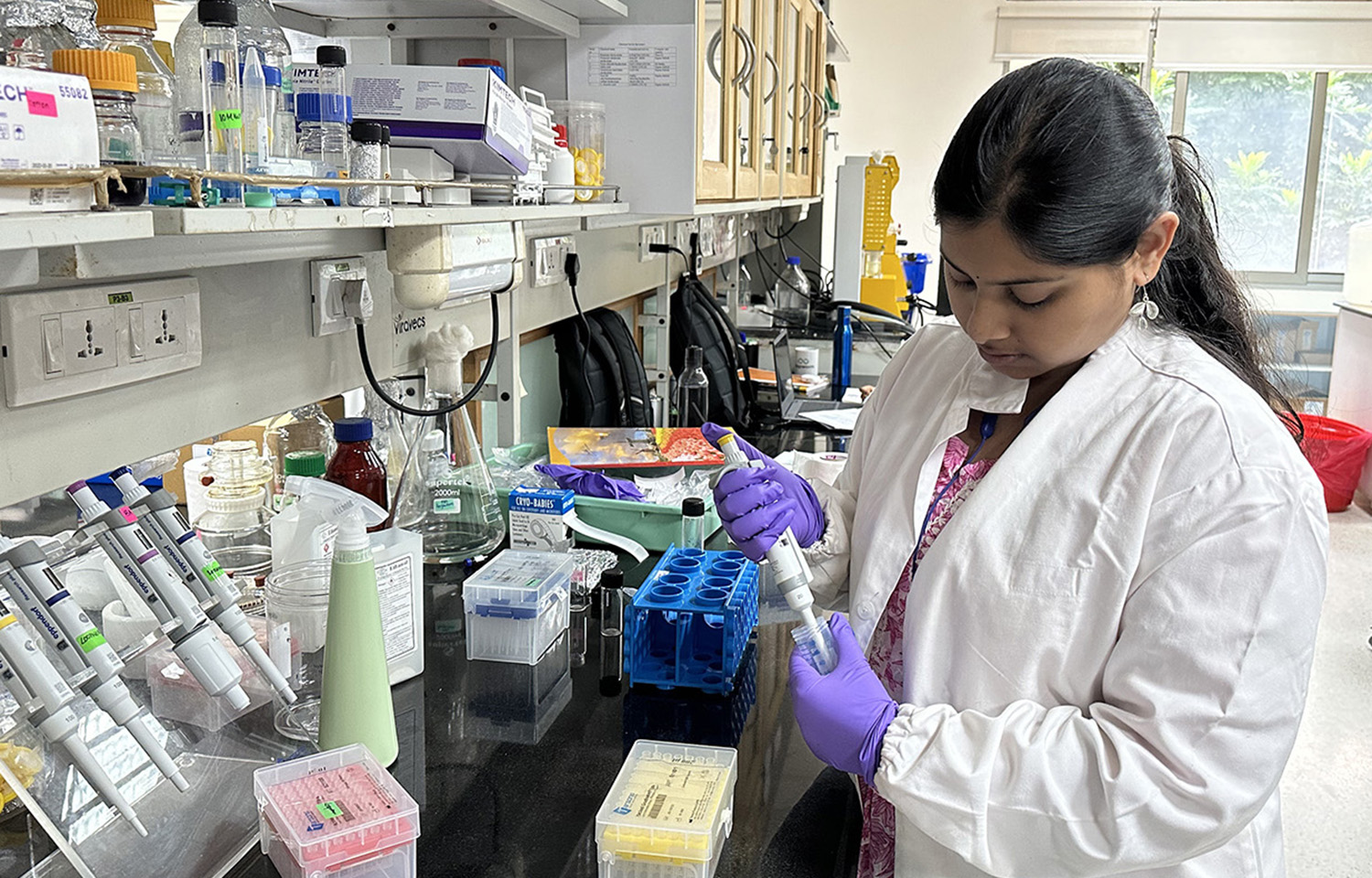
Founded in 2019 by Ankit Alok Bagaria and Abhi Gawri, Bangalore-based biotechnology firm Loopworm focuses on utilizing silkworms in feed production but also aims to more broadly analyze how silkworms can play a role in solving sustainability issues across several industries.
“Loopworm was founded with a vision extending beyond just replacing feed ingredients,” Bagaria said. “Insects are powerful protein alternatives; however, their potential is truly limitless. Insects acting as biological factories can produce high-value proteins for applications across multiple industries including diagnostics, pharmaceuticals, and bio-industrial applications.”
What sets Loopworm apart from other firms producing insect-based feed is the usage of silkworms coupled with its location in India, which Bagaria said already boasts a robust sericulture infrastructure, which is the practice of rearing silkworms. This infrastructure dates back “thousands of years of domestication, making silkworms exceptionally suited for industrial production.”
As for its use in aquaculture, Bagaria said the amino acid composition of silkworms closely aligns with the type of diet fish reared on traditional fishmeal eat.
Bagaria said Loopworm’s production began with using BSF larvae from other production sites to produce food byproducts in India. Loopworm quickly shifted course when the co-founders recognized how India’s sericulture could be utilized for insect feed production. Five years later, the insect-feed company sources silkworms from the nation’s sericulture industry instead of in-house insect cultivation. The insect population is also not harvested in the wild, making it controlled, scalable, and not dependent on environmental populations.
“We decided to work with silkworm only and have established ourselves as a silkworm platform, in which we have a suite of products and technologies for multiple industries,” Bagaria said. “Silkworm only consumes mulberry leaves, which makes it cleaner than other insect species. At the same time, since it is a monophagous [diet only comprising one type of food] species, it remains nutritionally consistent unlike other popular insects which are polyphagous [diet comprising a wide variety of plants/food types].”
India is the world’s second-largest aquaculture producer behind China, with shrimp being the largest agricultural export. Bagaria said the industry is dominated by small- and medium-scale farmers, who are “highly price sensitive and intensely focused on feed conversion ratios, making them ideal early adopters of cost-effective, high-performance alternatives.” Sericulture is a common practice in other labor systems in the country, so the adaptation to utilize silkworms in aquafeed is a natural transition, Bagaria said, adding that the lower operational costs, strong biotechnology talent, and supportive government policies for insect-generated feed offer incentives for agri-biotech ventures to exist in the country.
“The smaller margins [in aquaculture] actually drive innovation,” Bagaria said. “When farmers operate on thin margins, a 5 to 10 percent improvement in feed conversion ratios or cost savings can be transformational. This creates a strong market pull for alternatives that deliver measurable performance improvements.”
Loopworm owns and operates its primary production facility in Bangalore, with a current capacity of 6,000 tons annually. Bagaria said the startup serves aquaculture operations across India, Japan, Southeast Asia, and Latin America, feeding species such as shrimp, salmon, other farmed fish, and ornamental aquaculture species.
The goal is to continue growing into countries with pre-existing sericulture industries and progressive aquaculture sectors, a process already underway in several countries.
With prime geographical location and an existing sericulture infrastructure, Bagaria said Loopworm will continue to combat protein supply shortages and help ease the strain on wild-caught species used in traditional fishmeal.
“According to a peer-reviewed study, approximately half of all the wild fish caught are used in fishmeal and oil, specifically fed to farmed animals,” Bagaria said. “It takes approximately 4 kilograms of wild fish to produce 1 kilogram of fishmeal, and about 440 wild-caught fish are required to rear a single farmed salmon.”
He said these metrics prove it’s “increasingly unsustainable” to rely solely on wild-caught fish for aquafeed, which faces supply shortages and market price volatility.
“This is where insect protein offers a new paradigm, one which is protein-dense without the environmental or economic bottlenecks,” Bagaria said. “While globally, BSF larvae is the preferred ingredient for insect-generated fishmeal, we at Loopworm prefer silkworms.”
To date, the startup has raised USD 6.65 million (EUR 5.6 million). Roughly half was raised through seed funding, while the other half was funded through Pre-Series A startup funding.
Some time in 2026, Bagaria said the next stage of capital investment will look to fund international expansion, scale the recombinant protein platform commercialization, and expand production capacities.
