





Recent reports have warned that shortages of fishmeal are projected to arise as early as 2028.
Therefore, stakeholders in the global aquaculture and feed sectors are urging markets like the E.U. to remove regulatory barriers for alternative feed options and take an approach akin to markets in Asia, where products like insect feed are growing exponentially.
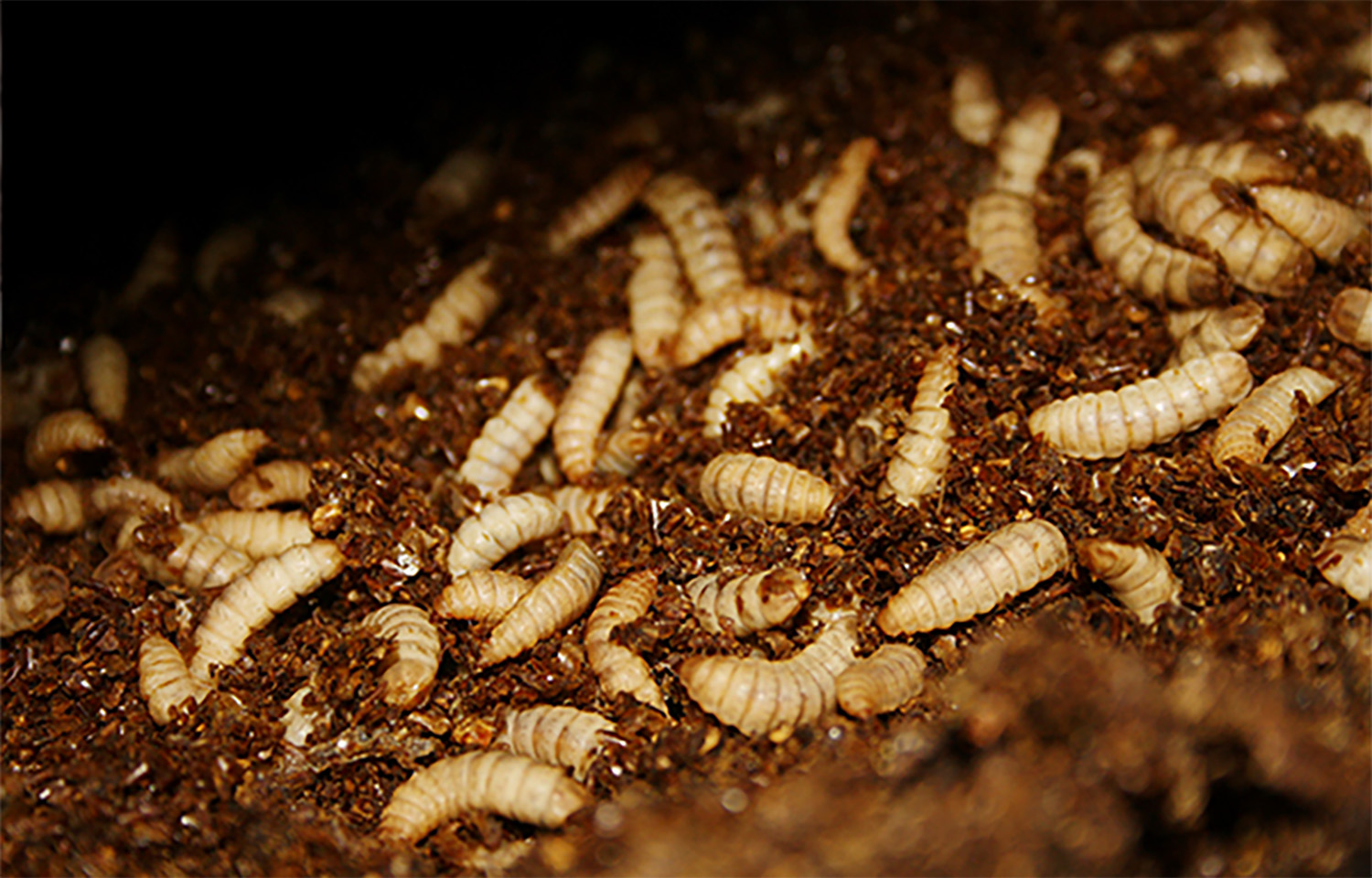
Leo Wein, the CEO of Singapore-based biotechnology firm Protenga, which uses black soldier flies as the main ingredient to produce animal feed and fertilizer, is benefiting from the latter environment and said the main constraint his firm has encountered “has been our ability to build new production capacity quickly enough.”
“[We have] managed to double our insect protein sales from 2024 to 2025 – mostly into aquaculture – and are looking to do the same in 2026,” he said.
Protenga, which has research and production facilities in both Singapore and Malaysia and uses a waste byproduct from palm oil plantations as a feedstock, is seeking partners and customers to help it scale up production, Wein told SeafoodSource.
“The challenge remains to find the right partners and customers to bridge the scaling-up journey from niche to mainstream – our current stage,” Wein said.
Elsewhere in Asia, China has long used soybeans as an alternative feed ingredient, but with ongoing trade disruptions this year, it has introduced initiatives to reduce its dependence on the legume, which it largely imports.
This move, according to Steven Barbosa, the secretary general of the International Platform of Insects for Food and Feed (IPIFF), opens the door for production of insect feed to widely expand in the country, which boasts annual aquaculture output of nearly 60 million metric tons.
“China’s strategic mandate to reduce soybean meal in animal feed to just 10 percent by 2030 … creates a multi-million-ton protein gap that must be filled,” Barbosa said. “Insect meal, with its efficient, circular, and locally producible model, is perfectly positioned to capture a significant share of this new market.”
Barbosa said that the “colossal market power” of China is accelerating the innovation and expansion of insect production at a “breathtaking pace” and said he sees Chinese policy to encourage insect production as a “generational opportunity” for investors.
A very different story is playing out in Europe, where authorities have yet to authorize certain forms of insect feed.
According to Barbosa, the IPIFF has lobbied the E.U. to authorize the use of organic waste as insect feedstock, which is both cost-effective for companies producing the alternative feed and a sustainable means of getting rid of waste.
However, most organic waste – including household waste and any materials that may contain animal products – remains unauthorized for use as insect feedstock in the E.U.
“This prevents companies from utilizing low-value substrates that could improve economic viability,” said Corentin Biteau, the co-founder and president of France’s National Observatory on Insect Farming. “Regulatory change appears unlikely in the near term due to sanitary concerns.”
If operations are unable to use cheaper inputs, the cost gap between insect feed and other forms of feed is likely to remain large.
“Cost remains the fundamental constraint for insect-based feed across all geographies,” Biteau told SeafoodSource. “Aquaculture producers also require high volumes with consistent quality, both areas where insect companies struggle.”
Wein pushed back on the latter issue, saying he believes the price of insect feed doesn’t take into account the subsidies enjoyed by producers of more traditional ingredients like soy or fishmeal.
"The cost structure of insect protein production still requires premium prices to be able to scale up profitably as we, so far, are not getting any subsidies or regulatory support compared to other legacy or incumbent ingredients - like soy with subsidized land and fertilizers and financing access or fish meal with diesel subsidies for fisheries,” he said.
Nevertheless, while lower-cost inputs for feedstock or subsidies could theoretically reduce costs, Biteau said insect feed still suffers from “significant variability challenges.”
“It's hard for aquaculture companies to accept ingredients whose nutritional content varies month to month,” Biteau said.
Looking forward, Barbosa said there’s room for both the E.U. and Chinese approaches toward regulating the insect feed sector. He described the E.U.’s regulatory approach as “rigorous” and said it “de-risks investment in high-quality, safe production.”
“It’s a mature, stable environment built for sustainable growth,” he said.
Conversely, he said China's approach is more pragmatic and fluid, offering “flexibility” which “allows for rapid experimentation with novel feedstocks and production models.”
While Barbosa said he doesn’t anticipate any imminent move by the European Commission to allow waste as an input in insect feed production, he said it has still taken steps to spur the wider uptake of “sustainable aquafeed ingredients” due to the demand on behalf of aquafeed producers and aquaculture producers.
“This may result in concrete support measures such as policy-backed support, including minimum incorporation rates of sustainable aquafeed ingredients or financial support to upscale sustainable aquafeed ingredients,” he said. “[Insect feed production] is a controlled-environment industry that can be established locally, turning regional organic waste into valuable protein. This is not just about being green; it's about being secure.”
