




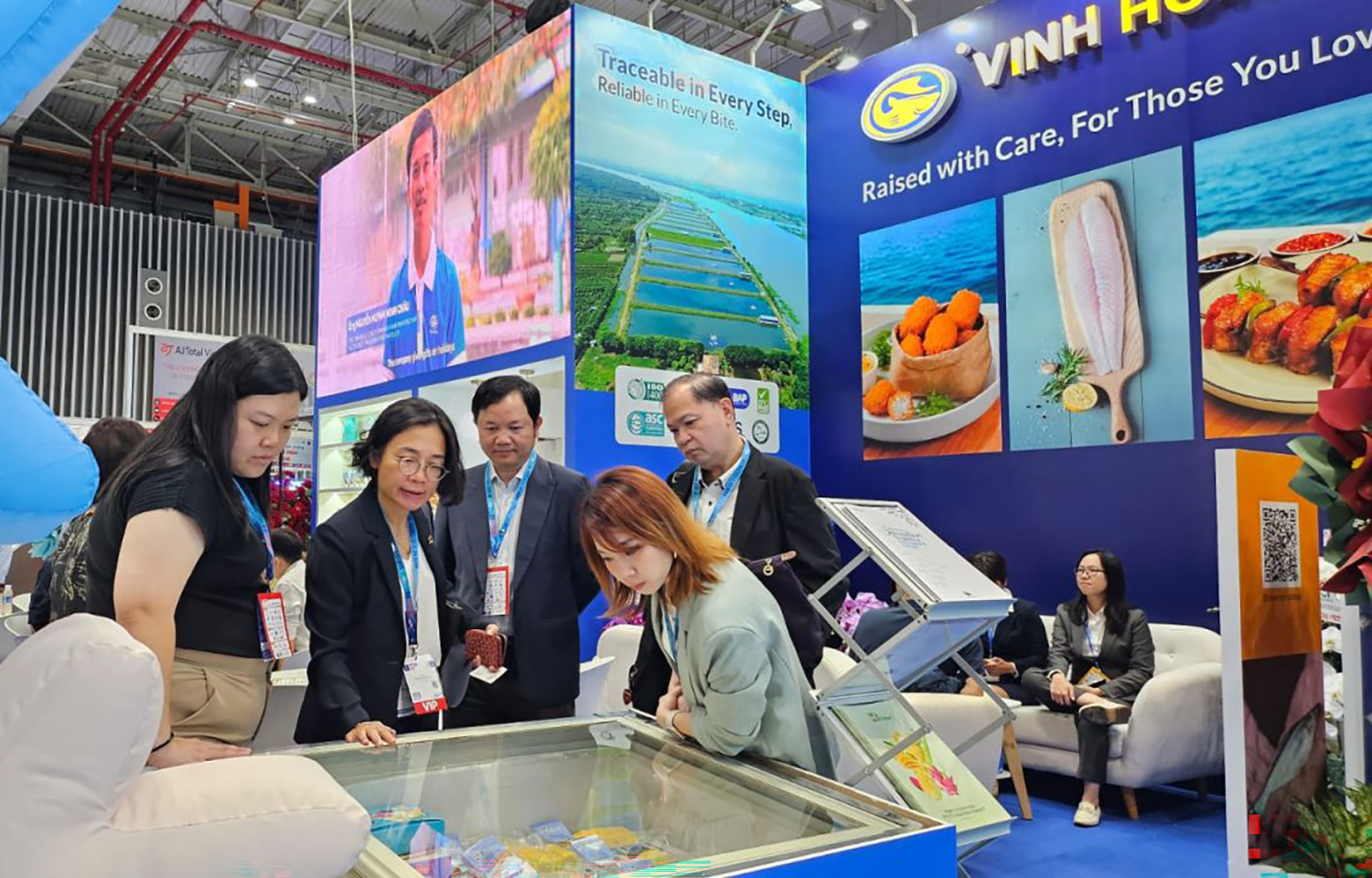
Vietnamese pangasius firm Vinh Hoan is eyeing opportunities to expand sales in Europe as tighter supplies and higher prices for other species of whitefish are making pangasius increasingly competitive, CEO Nguyen Ngo Vi Tam told SeafoodSource during the 2026 Vietfish International Fisheries Exhibition.
Tam said the company has seen growth in markets including Spain and the U.K., where Vinh Hoan already holds significant market share, while Germany could offer further growth through the remainder of the year.
This comes as some wild-caught whitefish species consumed in Europe like cod have become scarcer and more expensive, creating opportunities for pangasius to gain additional market share, she said.
While Europe presents opportunity, the U.S. market continues to face uncertainty thanks to a new set of tariffs announced in June.
Vinh Hoan has maintained a zero U.S. antidumping duty rate for years, Tam noted, but she added the firm is not the only Vietnamese pangasius exporter enjoying the same rate, with several others also facing zero or relatively low rates depending on the applicable U.S. administrative review.
Though the U.S. has some barriers, stronger demand in markets outside the U.S. could provide diversification opportunities for Vietnamese pangasius exporters, with Brazil and Japan showing strong demand for Vietnamese pangasius.
The improving demand outlook comes against continued pressure on Vinh Hoan's production costs. Raw material supplies remain tight after a shortage of fingerlings last year drove up stocking costs, resulting in high production costs for fish now reaching harvest.
Feed costs have also increased, with higher freight costs among the contributing factors, Tam said.
Vinh Hoan currently supplies about 70 percent of its raw fish requirements from its own farming operations. The remainder comes largely from farmers with longstanding relationships with the company, including farmers to which Vinh Hoan supplies feed and later purchases harvested fish.
External farmers have also faced higher costs and some are waiting for fingerling prices to stabilize before stocking new crops, adding to general industrial uncertainty over future raw material availability.
Vinh Hoan has raised selling prices, but the increases have yet to fully catch up with higher production costs, Tam said.
Labor shortages, meanwhile, are limiting the company's ability to expand processing. Vinh Hoan is currently short around 15 percent to 20 percent of the workers it needs, according to Tam, reflecting an industry-wide shortage of seafood-processing workers in Vietnam.
The company, therefore, has no immediate plan to expand processing capacity and expects to increase automation to reduce its reliance on labor. It has yet to set specific investment or automation targets, though.
Although pangasius production and raw material costs have also risen, prices remain relatively competitive compared to other whitefish alternatives, according to Tam.
