




The Southeast Asian nation of Indonesia has drawn investor interest in its seaweed industry, which the government has identified as a strategic priority for development.
During an investment and business-matching event to mark National Fish Day on 20 November, Acting Director General for Marine and Fishery Product Competitiveness Machmud said that seaweed has attracted high levels of interest, particularly from the Netherlands, because of its wide applications in both food and non-food industries, including such downstream applications as seaweed-based straws that can serve as plastic alternatives, Antara reported.
Making the sector even more attractive for investors is the fact that the global seaweed market was valued at USD 7.5 billion (EUR 6.5 billion) in 2024 and is projected to reach USD 18.1 billion (EUR 15.7 billion) by 2034, which would mark a compound annual growth rate of 9.5 percent from 2025 to 2034, according to Allied Market Research.
Considering the opportunity Indonesia has to capitalize on the burgeoning industry, in June 2025, Indonesian Minister of Investment and Downstreaming Rosan Perkasa Roeslani said the seaweed industry would be a strategic priority for the nation as the government seeks to enhance downstream processing and improve the welfare of coastal communities.
The Ministry of Investment and Downstreaming is responsible for promoting investment and leading the national downstreaming program aimed at creating broader economic benefits from commodities such as nickel, coconut, and seaweed. Roeslani said the ministry had identified 23 priority commodities with value-adding potential but would focus on four to five main commodities in the near term.
Even prior to that plan, the Indonesian Ministry of Maritime Affairs and Fisheries had called for downstreaming of non-hydrocolloid seaweed by diversifying processed products to add value, competitiveness, and domestic processing capacity. The ministry’s director general responsible for strengthening the competitiveness of marine and fishery products, Tornanda Syaifullah, said innovation was needed in products such as nutritional supplements, feed, biostimulants, bioplastics, cosmetics, and environmentally friendly packaging.
"Thus, this downstreaming will open up promising business opportunities," Syaifullah said.
Syaifullah added that his ministry would provide input for the roadmap and national action plan for developing an integrated seaweed industry for the period between 2025 and 2029.
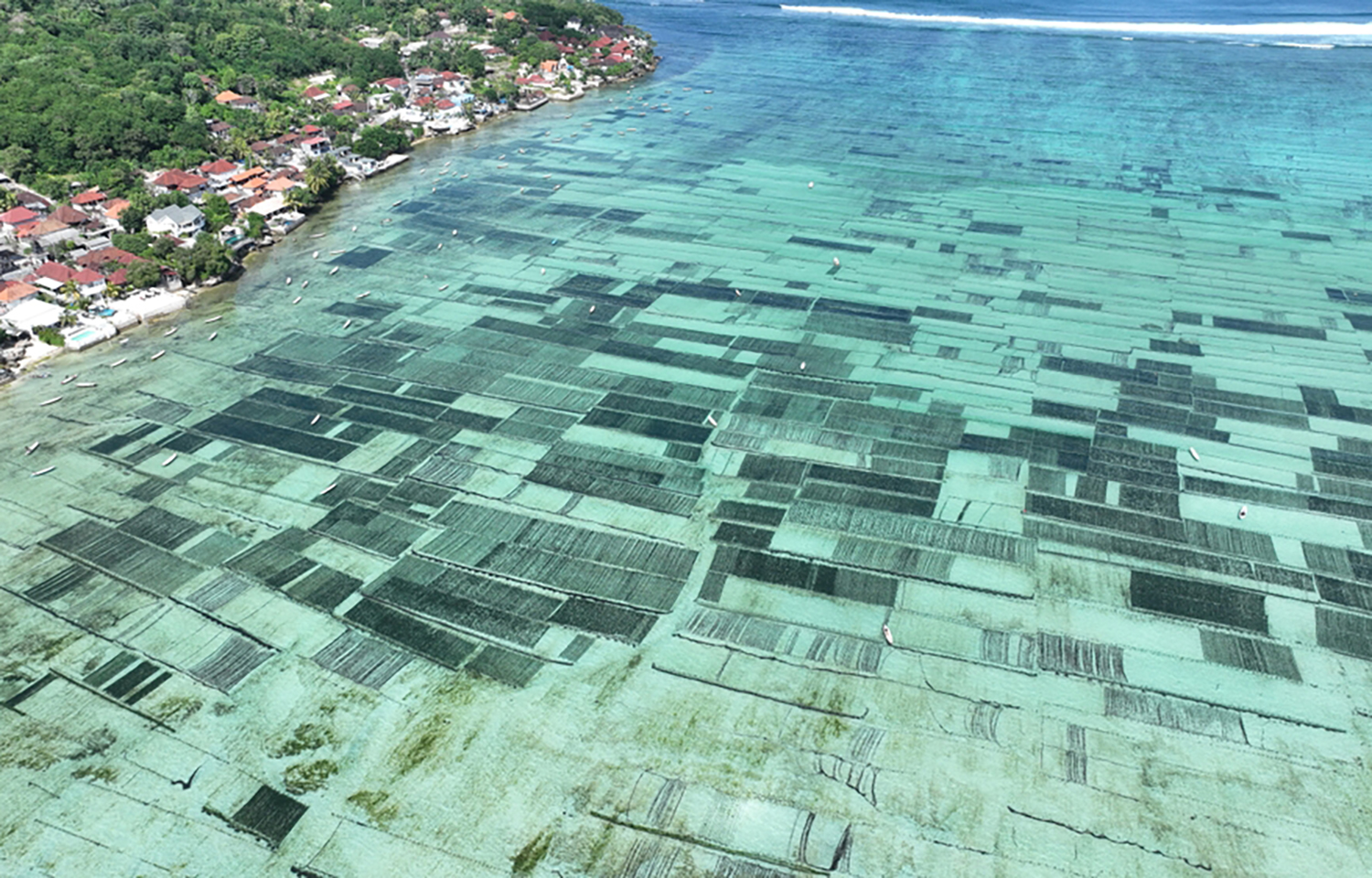
Indonesia benefits naturally from the growth in global demand for seaweed, with its equatorial position providing consistent sunlight that enables year-round cultivation.
The country’s waters are also generally calm, and the absence of typhoons or tornadoes reduces risks to seaweed farming.
More than 70 percent of Indonesia’s territory consists of marine areas, with 12 million hectares set aside for seaweed cultivation.
Despite these strengths, however, production has still not neared its potential. Only 102,000 hectares, or 0.8 percent of available area, are currently being cultivated. Meanwhile, more than 60 percent of seaweed exports are still shipped as raw or dried products, with limited downstream processing, according to the United Nations in Indonesia.
