



Singapore-based Japfa Group has announced what it is calling a breakthrough in eel aquaculture.
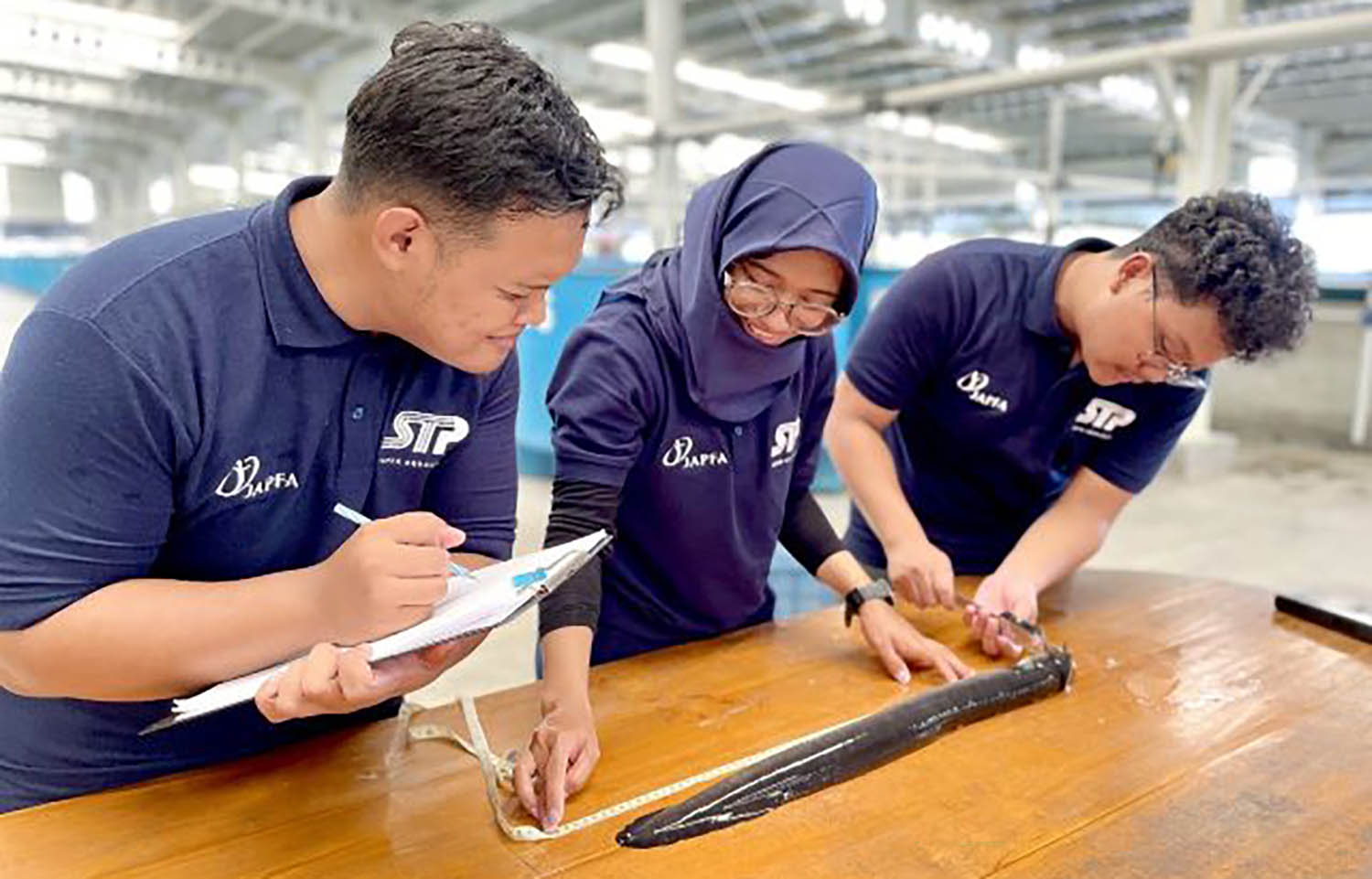
The group’s PT Suri Tani Pemuka (STP), which operates the Aquaculture Research Center (ARC) in Banyuwangi, East Java, Indonesia, has successfully bred tropical eel (Anguilla bicolor) in captivity.
The eel is in high demand in Asian markets for its “rich flavor and high nutritional content, making it a popular choice for premium dishes,” Japfa said in a press release.
“Sustainable aquaculture of tropical eel addresses the growing demand, while reducing pressure on wild populations, thus contributing to biodiversity conservation and ecological balance,” it said. “As eel populations continue to decline globally, finding a way to breed them in captivity has become crucial for conservation efforts and commercial purposes.”
Under the leadership of Senoo Shigeharu, ARC researchers successfully hatched 70,000 tropical eel larvae, achieving larval rearing for 11 days, demonstrating the potential for large-scale commercial production of the species.
Tropical eels have a complex life cycle, traveling thousands of kilometers from freshwater rivers to deep oceans, making eel farming a complicated endeavor, as conditions conducive to reproduction are difficult to replicate outside of the eels’ natural habitat, according to STP President Director Ardi Budiono. Currently, all farmed eels are caught as juvenile elders, or glass eels, and then raised to market size in farms. Budiono said this approach is not sustainable, as it reduces wild eel populations already at risk due to overfishing and habitat loss.
“We believe that the ability to reproduce eel in captivity will have a substantial impact on the aquaculture industry in Asia and globally,” Budiono said in a press release. “To ensure the sustainability of tropical eel populations, STP will continue to implement sustainable eel farming practices, conducting eel research and supporting our efforts to restock eels in their natural habitat, as part of our commitment to sustainable aquaculture.”
Indonesia has ideal conditions to host tropical eel farms, according to Japfa Group Executive Director and Japfa Comfeed Indonesia President Director Renaldo Santosa. The publicly listed, vertically integrated company, which produces poultry, pork, and seafood for markets in South and Southeast Asia, plans on pursuing avenues toward commercialization, according to Santosa.
“We have seen the opportunity to apply the principles of livestock production to aquaculture and eel farming, with the goal to increase efficiency and reduce dependency on wild-caught glass eels,” he said. “By breeding tropical eels in captivity, we reduce the pressure on wild populations and contribute to biodiversity and ecosystem health. Today’s success is a testament to the power of vision, perseverance, and innovation, as well as the importance of collaboration between industry and academia in addressing the challenges of sustainable food production.”
With a laboratory and hatchery, ARC is dedicated to research and development of sustainable aquaculture practices, production of high-quality broodstock and larvae, training and education on aquaculture and fisheries production, and improving production of marine and freshwater species. The center collaborates regularly with Indonesian universities including the Borneo Marine Research Institute of Universiti Malaysia Sabah (UMS), as well as Japan’s Kindai University.
Santosa said the advancement of tropical eel aquaculture aligns with the company’s mission of achieving more efficient and sustainable protein production out of its base in Indonesia.
“The successful first step of reproduction of tropical eels in captivity is not only a significant advancement in aquaculture technology but also provides hope for the conservation of the tropical eel, which is classified as ‘near threatened’ on the International Union for Conservation of Nature (IUCN) Red List,” Santosa said. “By reducing the reliance on wild catch, this research can contribute to the conservation of tropical eel populations while responsibly and sustainably meeting the growing consumer demand. This breakthrough in breeding supports sustainable aquaculture practices that could protect natural eel populations from overfishing.”
