




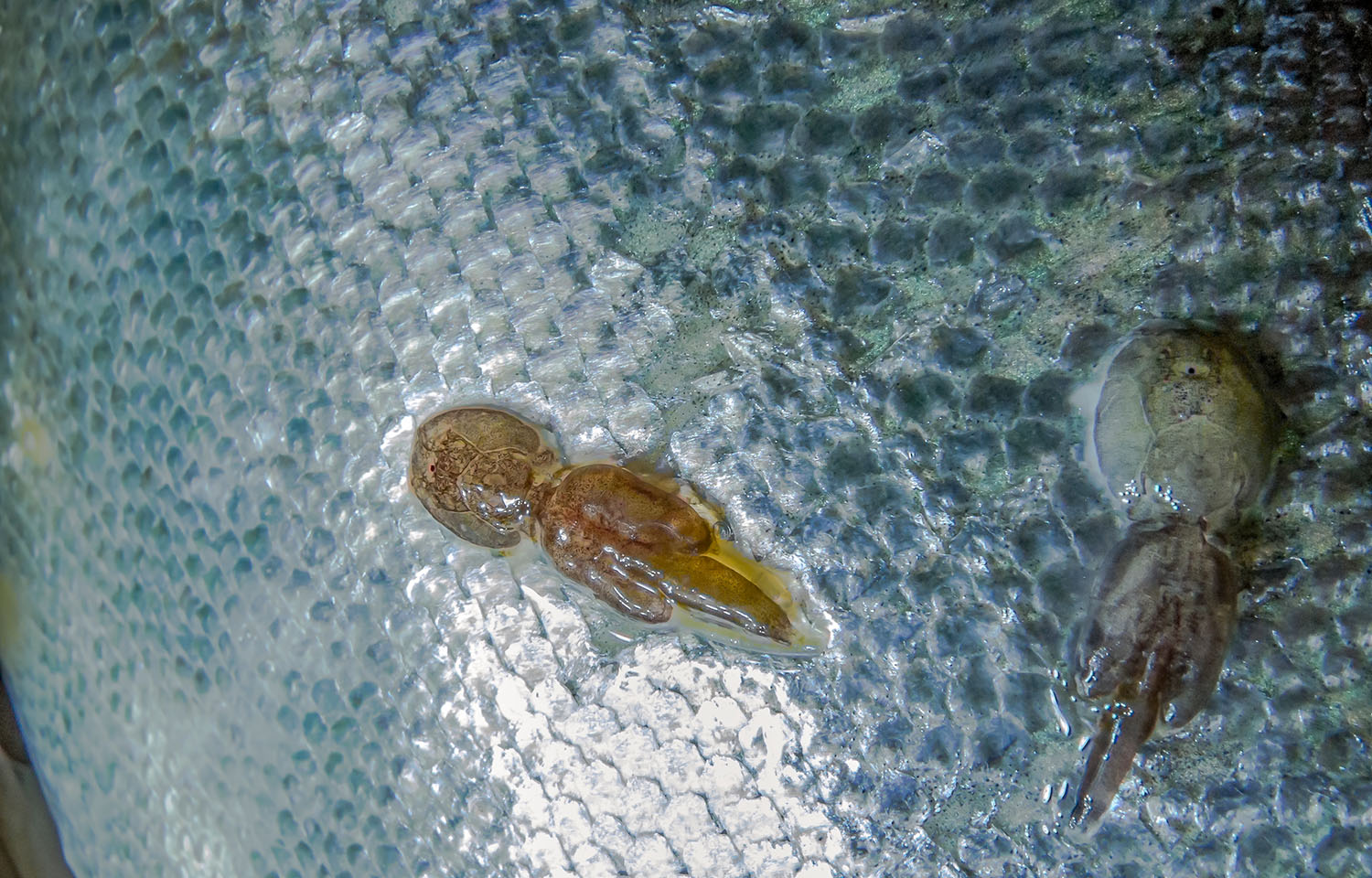
The Norwegian Food Safety Authority (Mattilsynet) is intensifying its efforts to prevent sea lice after a warm summer has created favorable conditions for the parasite.
The regulator issued an alert to the industry in late August, explaining that higher-than-average sea lice levels were expected this fall thanks to warm water conditions over the summer and reminding salmon farmers that they should not deviate from standard animal welfare best practices in attempts to control outbreaks.
“It is important that rapid escalation of lice problems is not treated as a deviation that allows animal welfare to be deprioritized,” Matillsynet Aquaculture Supervision Director Bård Skjelstad said, noting that the agency had received reports of veterinarians being pressured to start delousing treatments in defiance of fish welfare standards.
The Norwegian Institute of Marine Research, which tracks the presence of sea lice and shares its data through a real time map of sea lice rates, said that sea lice infection pressure, which is produced by a combination of high water temperatures, the density of louse parasites in a given area, the density of fish in that area, the salinity of water, and the presence or absence of high ocean currents, has been high this year.
The recent warning to the industry also noted that, in cooperation with the Norwegian Coast Guard, the regulator is currently running unannounced inspections at salmon farms to prevent mistreatment in response to the high lice levels.
“We expect farming companies to act professionally and respect the decisions of animal health personnel in order to safeguard fish welfare – even if that entails financial losses,” Skjelstad said.
Mattilsynet is likely seeking to avoid a repeat of fall 2024, which saw what agency researcher Anne Dagrun Sandvik called an “explosive increase and doubling of the number of louse larvae” in Northern Norway.
