





Noray Seafood sees itself as producing a different kind of shrimp than most Europeans are used to.
The Medina del Campo, Spain-headquartered land-based shrimp farmer, known as Gamba Natural until 2020, operates a fully vertically integrated production facility, including the first commercial shrimp hatchery in Europe. The company received a EUR 16 million (USD 19.2 million) investment led by Creadev, SWEN Blue Ocean, and Stellar Impact in 2022, which was essentially a bet on whether Europeans can be convinced to pay premium prices for superior shrimp.
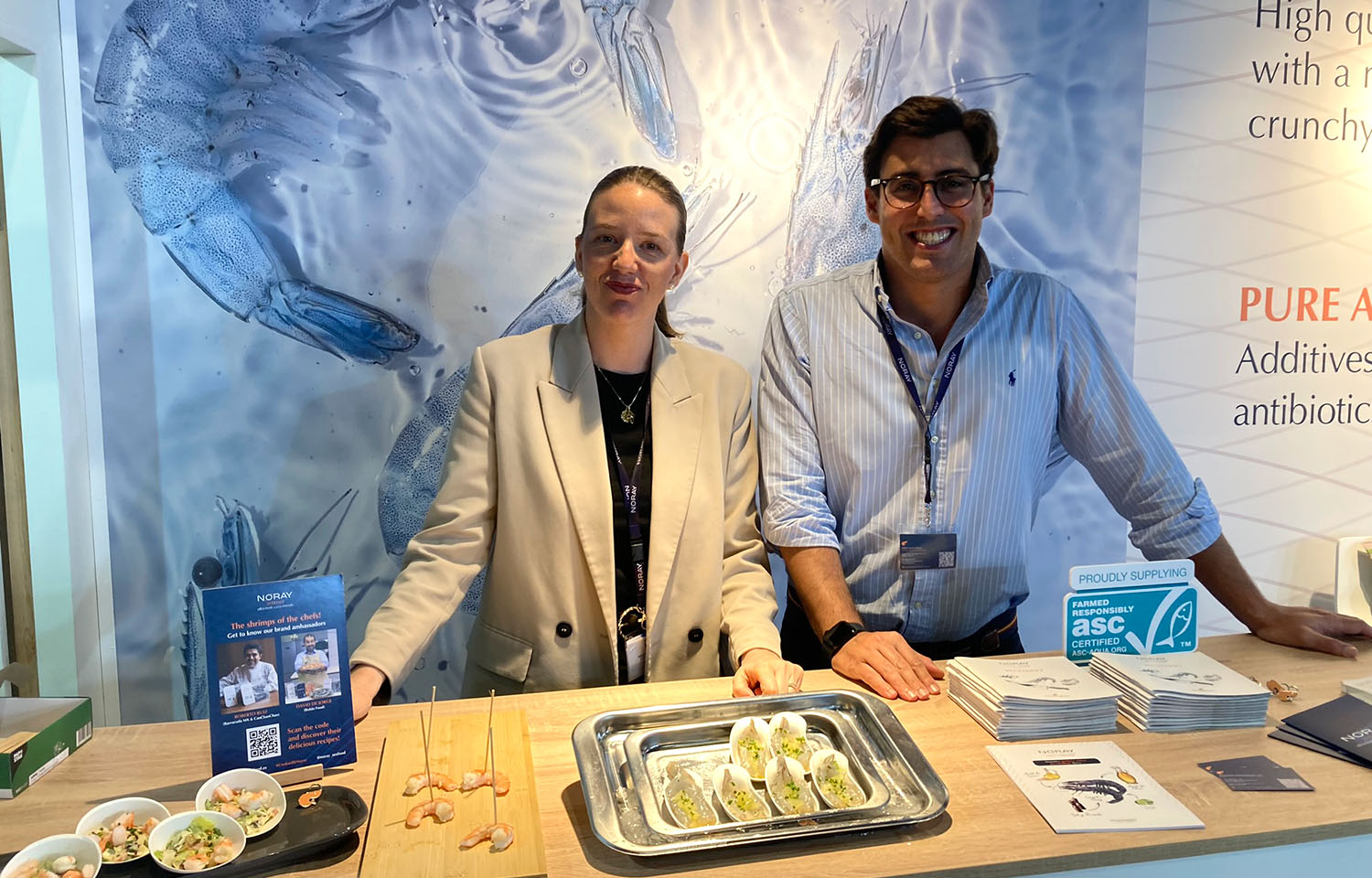
“We produce a very special shrimp because we don't have any additives or add sulfites to the swim, so it's very pure and natural. It's also special because of its cleanliness and tastes very clean,” Noray Seafood Marketing and Branding Head Yolanda Patiño Iglesias told SeafoodSource at the 2024 Seafood Expo Global in Barcelona, Spain.
Noray produced 40 metric tons (MT) of shrimp in 2023 via its proprietary “microbiome” technique and is aiming for 120 MT in 2024, which would nearly max out its pilot farm’s capacity. The farm can probably produce up to 150 MT of shrimp, but if the company can sell through 120 MT, it will likely look to build another facility or enlarge its current campus, according to Patiño Iglesias.
“It is a big goal,” she said. “We don't want to push the limits to the edge, and it’s not only about volumes; it’s about maintaining the same quality of production and the social aspects of the team.”
Noray’s planned trebling of production this year is predicated upon growing existing markets and building new ones. One such avenue the company is exploring is the market for raw shrimp, which Patiño Iglesias said is most often used in Japanese sashimi. It has also begun B2C sales via its website, and it is looking to broaden sales beyond its home market in Spain, Northern Europe, and Austria.
“Our unique selling point is that we're selling a local product, and we can become local anywhere because we're based in Spain but we can expand to other markets easily due to our land-based, sustainable production model,” Patiño Iglesias said.
Noray’s primary buyers are restaurant groups, premium seafood distributors, and a few retailers. Patiño Iglesias said chefs who give Noray’s shrimp a shot generally get hooked.
“They really value our shrimp. They're fantastic for any cuisine that really needs the shrimp to shine, and we harvest upon demand, meaning that we harvest accordingly to our clients’ orders to maintain the freshness and the high quality of the shrimp at all times,” she said. “People are willing to pay for that.”
Even though Noray grows the common whiteleg shrimp (Litopenaeus vannamei), the company doesn’t consider itself to be competing with mass produced farms found in Asia and Ecuador.
“We always say that we don't really want to compete with that product because what we’re doing is completely different,” Patiño Iglesias said. “In terms of quality and in terms of sustainability with our 100 percent circular system, where we reuse all our water, we are unique within the industry.”
Noray also touts the fact that it was the first indoor shrimp farming firm to attain Aquaculture Stewardship Council certification.
“We want to make a difference when it comes to saving the Earth,” Patiño Iglesias said. “Nowadays, Spain imports around 90 percent of the shrimp it consumes. We want that to stop and have people switch over to our very high-quality, natural, local shrimp.”
