




Twenty-one Norwegian salmon farmers, including Mowi, Lerøy and Austevoll, have filed a class action suit against the Norwegian Ministry of Trade, Industry, and Fisheries demanding an end to the “traffic light” system which Norway uses to monitor sea lice in aquaculture.
That system, which was put in place in 2017, divides Norway’s coastal waters into 13 production areas which can be classified by green, yellow, or red “lights” based on the risk of sea lice to wild salmon in the area.
In April 2025 Norwegian Minister of Fisheries and Oceans Marianne Siversten Næss published a whitepaper with proposals to revise the system in a way that would tie a farm’s allowable biomass to the prevalence of sea lice at its site – and thus to the potential risk its farming operation pose to wild salmon.
“We want the release of sea lice to have a direct cost for the farmers. In this way, it will become more profitable to operate with a low environmental impact. This will provide more accurate regulation of the industry,” Næss said at the time.
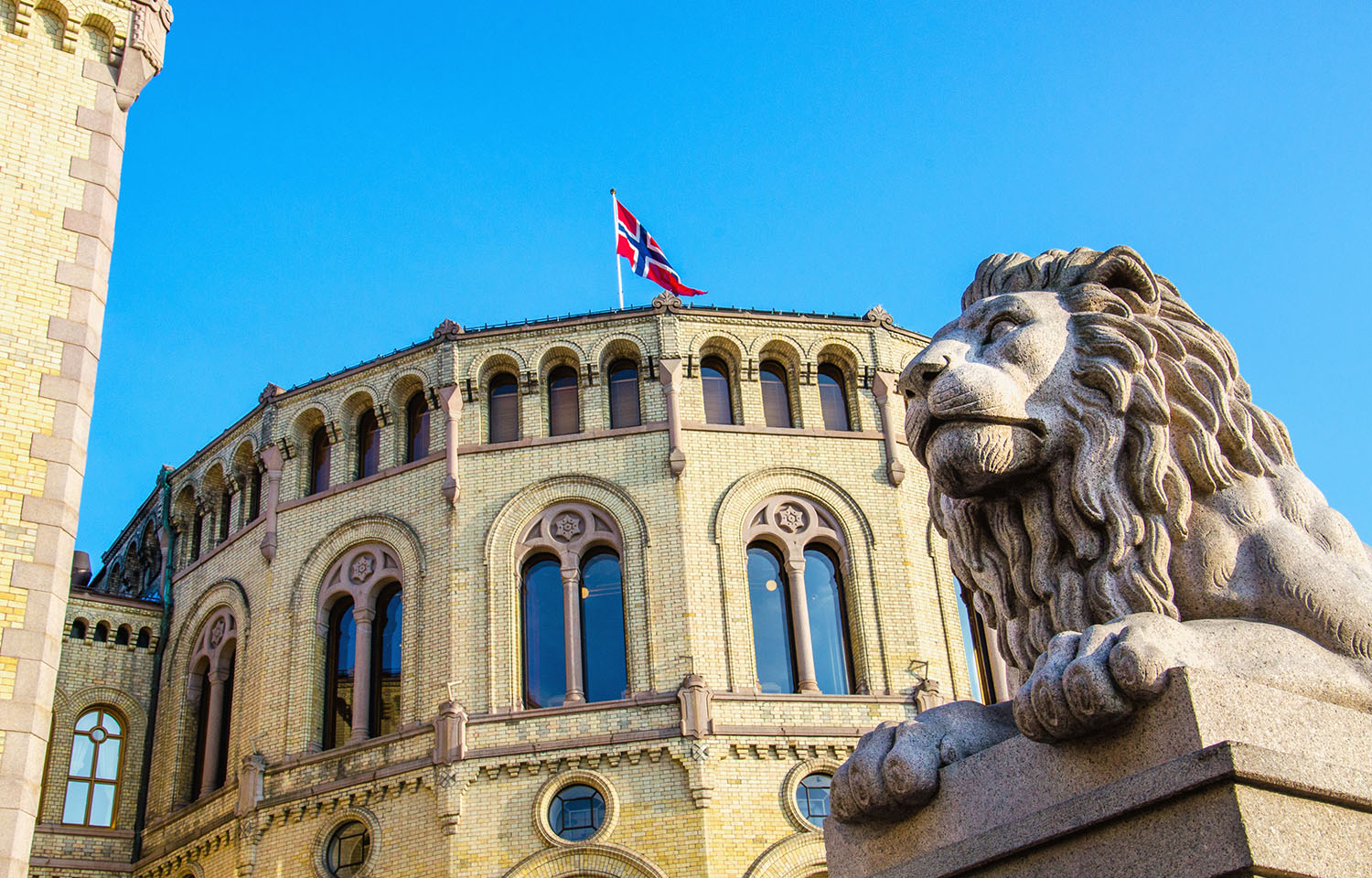
In June, however, the Norwegian Parliament, which is called the Storting, put the plan on hold, suggesting a number of recommendations including that the plan required more “technical and biological basis for assessing environmental impact, including monitoring of sea lice, wild fish and fish welfare, using new technology and automated data collection.”
Now, according to Norwegian publication Bergensavisen, western Norway’s salmon farmers have entered a new legal challenge to the traffic light system, and in particular to the red lights that were set for their region in 2022 and 2024.
According to Bergensavisen, the lawyer representing the companies, Trond Hatland, said the system had cost the region’s farmer’s “extensive [financial] loss” by requiring a 12-18 percent drop in production capacity.
He also said that companies could not act strategically or competitively if they did not know what their future production capacity would be, noting that sometimes governmental decisions about biomass maximum changes have happened within six months of being implemented, meaning that farmers had to slaughter fish prematurely due to the time it takes salmon to reach harvest size.
In 2021 a group of 25 salmon farming operations lost their suit against the government for NOK 250 million (then USD 29 million, EUR 24 million) in compensation for lost production volumes.
The farmers claimed that an area which had been labelled “red,” requiring them to lower production volumes, was incorrectly identified.
The Court of Appeals which heard the case disagreed, ordering the salmon farmers to pay the state’s legal costs of NOK 1.8 million (then USD 2213,462, EUR 178,816).
Fisheries Ministry lawyer Kaija Bjelland told Bergensavisen that “nothing has come to light” which would suggest that the current legal test will end differently.
“The central question in the traffic light cases is whether it is likely that more than 30 percent of the wild salmon population in an area will die as a result of lice infection. This has been carefully assessed by a group of researchers with special expertise in salmon and salmon lice,” Bjelland said.
Hatland, by contrast, said new research has called the state’s conclusions about sea lice and wild salmon mortality into question.
The lawsuit will be heard at the Hordaland District Court in fall 2026.
