



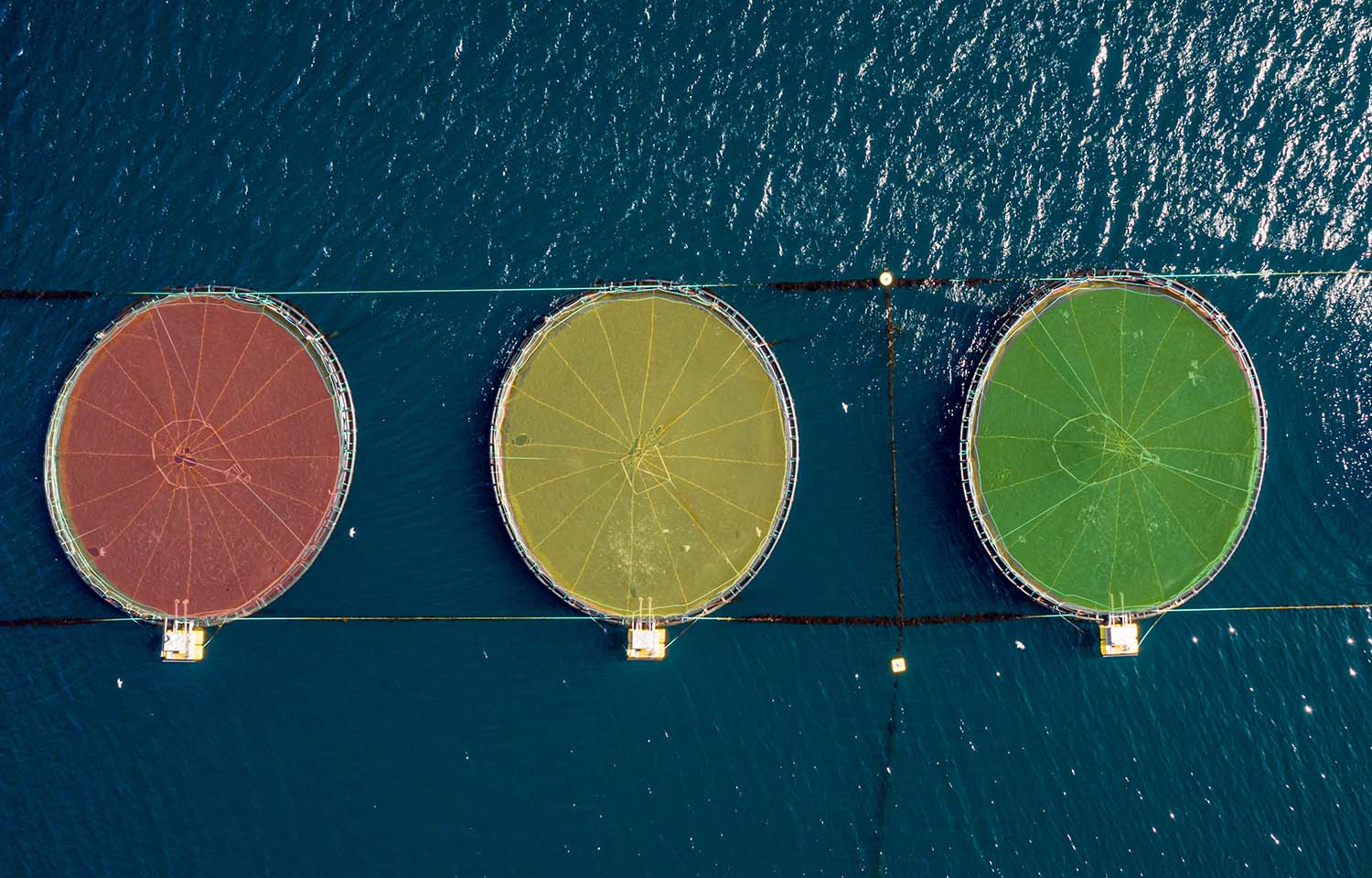
Norway has released the latest edition of its “traffic light” report on potential sea lice impact on wild salmonids in 2025, showing little change from its findings in 2024.
Norway’s Ministry of Trade, Industry, and Fisheries utilizes the traffic light system as a means of managing salmon production based on the risk of sea lice to wild salmon. It divides the country’s coastline into 13 different production areas, which each are given a green, yellow, or red light based on the assessed risk posed by sea lice.
The production capacity of each area is regulated according to that light, with a green light allowing more production and a red light restricting production. That assessment will take place on 13 December, based on the impact assessment published on 1 December.
The Ministry of Trade, Industry, and Fisheries makes that assessment every two years, and any potential changes to that assessment could influence salmon production as areas gain or lose potential biomass.
Based on the latest assessment, the likelihood of any shifts in the traffic light system is low. Research found each area’s potential impact on wild salmon is essentially unchanged. Three areas, P1, P12, and P13, were seen as having low impact; nine areas, P2, P4, P5, P6, P7, P8, P9, P10, and P11, had moderate impact; and one area, P3, had high impact.
The one small change was to P9, which according to the assessment was on the borderline between moderate and low impact, but information was “not sufficient” to determine which of the categories had the higher probability.
The Ministry of Trade, Industry, and Fisheries said it will likely make a decision on the future traffic light rating of the 13 salmon farming areas in the first quarter of 2026.
Norwegian salmon farmers have been pushing back against the “traffic light” system, which has governed salmon farming in Norway since 2017. Multiple salmon farmers, including Mowi, Lerøy and Austevoll, filed a class action lawsuit against the ministry in October against the red lights that were set for certain regions in 2022 and 2024. Those farmers claim the decision caused substantial financial losses for the companies and that the time between biomass restrictions and enforcement is too short for farmers to react due to the life cycle of salmon.
The impact of sea lice in salmon farms on wild salmon populations has been a heavily debated topic in the salmon industry across the globe. Salmon farmers in British Columbia, Canada, for instance, have faced complete production bans by authorities citing the potential impact of salmon farms on wild salmon, while new research on the issue in areas where salmon farms were completely removed indicated the bans had no impact on sea lice concentrations on wild salmon populations.
