

Three years after releasing a series of explosive reports documenting the prevalence of alleged forced labor in China’s commercial fishing and seafood sector, the Outlaw Ocean Project is back and preparing to drop a new report highlighting issues with the global aquaculture industry.
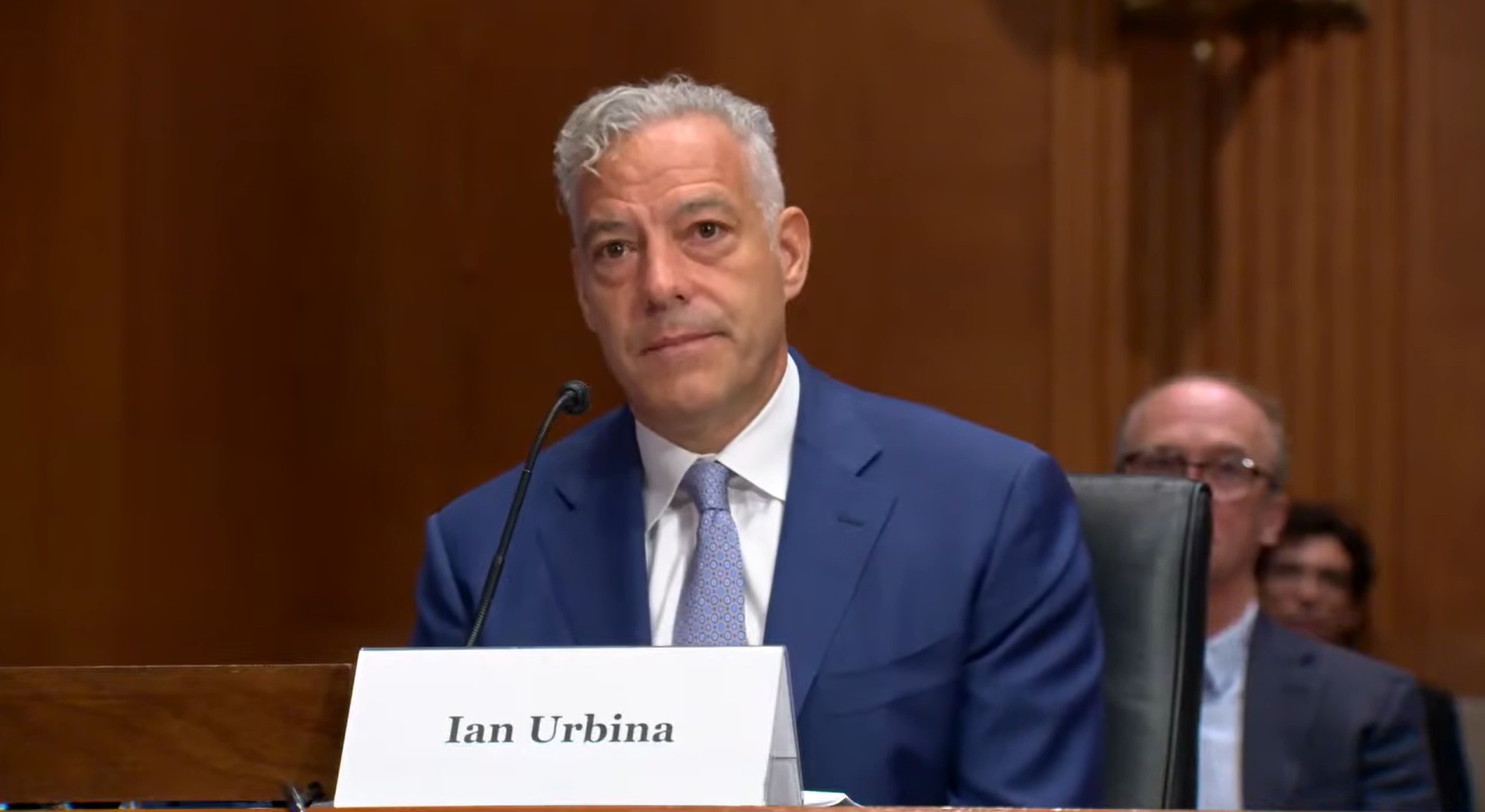
“The last time I was here was in 2023, when the Commission asked me to testify about an investigation by my news team, The Outlaw Ocean Project, into China’s role in global seafood. That reporting focused on China’s more than 6,500 industrial fishing vessels and its hundreds of processing plants. It documented debt bondage, passport confiscation, avoidable deaths, fatal beatings, trafficked workers, illegal fishing, and a state-coordinated program forcing thousands of workers from Xinjiang and North Korea into seafood-processing factories,” Outlaw Ocean Project Director Ian Urbina testified during a 16 April Congressional-Executive Commission on China (CECC) hearing. “I’m here today to discuss our current investigation, which will be published in the coming weeks and examines the global aquaculture industry, including China’s role in it.”
The last round of reporting released by the Outlaw Ocean Project caused waves in the global seafood sector, with several companies cutting or investigating their relationships with Chinese processors and commercial fishing enterprises named in the group’s reporting.
The reporting also sparked several Congressional hearings into China’s ties to forced labor and illegal, unreported, and unregulated (IUU) fishing, and U.S. lawmakers have renewed their push to crack down on foreign IUU fishing. In December, the CECC called on Congress to strengthen enforcement of the Uyghur Forced Labor Prevention Act – legislation meant to prevent importation of goods tainted by Uyghur forced labor in China – and do more to prevent seafood touched by forced labor in China from reaching U.S. markets.
“Where commitments are repeatedly set aside – on labor, religion, due process, or maritime norms – U.S. policy must be calibrated to address behavior that harms U.S. interests,” CECC Chair Senator Dan Sullivan (R-Alaska) and Co-Chair Representative Christopher Smith (R-New Jersey) said in the annual report. “That means sustained enforcement against forced labor, real traceability in high-risk sectors like seafood and lithium, and alignment of federal procurement with human rights standards so that American consumers and workers are not made to subsidize coercion.”
Urbina said his project’s latest report, titled “Food for Feed,” documents the hidden costs in the global aquaculture sector, from the fishmeal and fish oil products used to feed farmed fish to the forced labor used in aquaculture production in repressive countries like China.
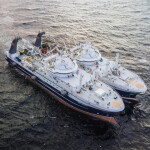
“Over the past two years, we mapped and reported on roughly 1,400 fishmeal plants worldwide, boarded and inspected ships supplying them, traced the farms to which the feed goes, and tracked the resulting seafood to document the hidden costs,” Urbina testified. “In Russia’s Far East, we documented forced labor on ships, farms, and in factories. In Western Sahara, we found the industry helping prop up Morocco’s military occupation. In Gambia and Mauritania, we found fish that once fed local communities increasingly diverted into fishmeal factories for export, worsening food insecurity. In countries including India and Peru, the industry was tied to at least 80 incidents of civil unrest, some violent, often labor strikes and community protests over polluted water or the stench from factories cooking thousands of tons of decomposing fish. In Senegal, fishmeal has pushed local fishers out of work, so that many are selling or repurposing their boats to flee to Europe, usually by making the roughly 930-mile journey to Spain’s Canary Islands, a route that claimed more than 3,000 lives in 2025.”
As the largest producer, consumer, and exporter of seafood worldwide, China is a major part of the problem, Urbina added. The journalist pointed to China’s expansion of aquaculture operations in landlocked areas like Tibet and Xinjiang, which he called “among the most repressive regions in China,” as a cause for concern. Forced relocations, ethnic cleansing, and other coercive tactics have been documented in those regions, Urbina noted, making it all the more concerning that seafood from those areas can still be exported to the U.S.
“Let’s be clear: Repression in these regions is one of China’s hidden costs. It is the externality that helps produce cheap seafood. It is part of China’s competitive advantage and helps explain the trade surplus in this commodity,” Urbina said.
Sullivan, who has pushed for federal bans on Chinese and Russian seafood imports, was quick to tie the issue to a potential ban on aquaculture products from China.
“You are going to publish something here very soon that shows there are enormous amounts of aquaculture going on in this part of China – which your testimony reveals kind of makes no sense; you’re not near an ocean. They’re doing it probably because of the labor costs of using slave labor. So, do you think that that’s going to highlight, again, the potential to ban any aquaculture from China?” Sullivan asked during the hearing.
“There’s also law that clearly says products tied to forced labor in general should not be coming into the U.S., and yet we have a place that produces a lot of products where that law is unenforceable because it’s so opaque and impenetrable,” Urbina replied. “If we have a law but we can’t enforce it vis-à-vis any products coming from once certain place because it’s a black box, we can’t do real audits.”
Urbina said the full report would be released in the coming weeks.
