






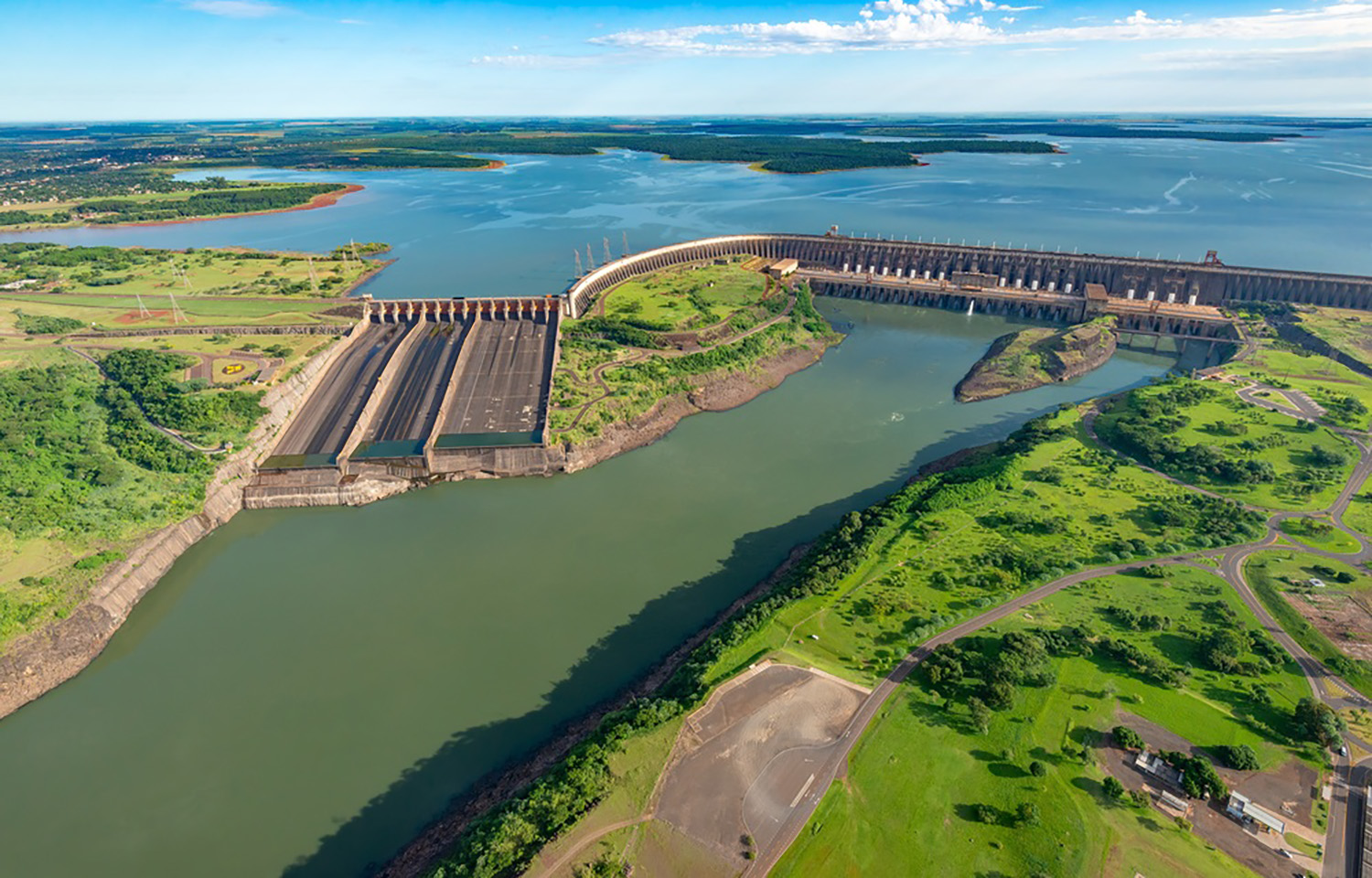
Paraguay has enacted new legislation that may soon lead to the authorization of tilapia farming in the reservoir created by one of the world’s largest hydroelectric dams, Itaipu.
Signed by President Santiago Peña, the new law removes key legal barriers that, until now, prevented tilapia production on the Paraguayan side of the dam’s reservoir.
With neighboring Paraguay taking action on the matter, Brazilian authorities and the nation’s aquaculture industry are hopeful that similar barriers will soon be removed on its side of the reservoir, too.
Tilapia farming has been prohibited in the Itaipu Reservoir since 2002 under a bilateral agreement between Brazil and Paraguay that prohibits the introduction of non-native species into shared waters.
The new legislation now allows the two countries to formally revise the agreement, which both countries’ congresses must approve.
“This is great news,” said Altemir Gregolin, the president of the International Fish Congress and the former Brazilian Minister of Fisheries and Aquaculture. “We have been waiting for this news from Paraguay for years. With this decision, Itaipu will become one of the largest tilapia production centers in Brazil.”
Following Paraguay’s passing of the law in February, the Brazilian director of Itaipu, Enio Verri, delivered a document outlining the creation of a binational working group to evaluate tilapia farming in the reservoir to Brazil’s federal government, as well as an official request to the Brazilian Foreign Ministry, to start negotiations with Paraguayan authorities to amend the agreement. The Paraguayan environmental agency is also in contact with Itaipu representatives to review environmental impact studies.
“Tilapia farming will benefit cooperatives and fishermen's associations on both sides of the border," Verri said.
The Itaipu Reservoir covers about 1,350 square kilometers and has the capacity to house 400,000 tons of tilapia production per year, according to the Brazilian National Water Agency (ANA). If farming were allowed in the reservoir, it would nearly double the national Brazilian production of tilapia in federally controlled waters, with the potential to generate around 12,500 direct and indirect jobs, according to local authorities. Paraguay, meanwhile, could become the fifth-largest tilapia-producing nation in the world by volume if the agreement is amended.
The Brazilian Ministry of Fisheries and Aquaculture and technical teams at the Itaipu hydroelectric power plant have worked together for decades to develop a framework for aquaculture in the dam’s reservoir. Studies conducted under this partnership suggest that tilapia farming in net cages can be carried out safely within the reservoir, provided that adequate control and monitoring are in place.
“Our environmental study projects focus on creating monitoring protocols related to tilapia farming,” said André Watanabe, an agricultural engineer who is the manager of the reservoir division at the Itaipu hydroelectric plant. “We envision studies that will further clarify how the farming will take place and which areas of the reservoir have the best productive potential for net pens and also greater environmental resilience – that is, locations where production will be more sustainable in the medium and long term.”
Researchers and environmentalists, however, are wary of the risks of aquaculture in the reservoir, arguing that environmental and economic considerations must be addressed before expanding this activity. They worry especially about fish escapes that could damage ecosystems, biodiversity, and water quality.
“Tilapia is among the worst invasive species in the world, causing numerous environmental impacts,” said ecologist Jean Vitule, a fish expert at the Federal University of Paraná at Curitiba. “Decisions like this compromise the right of future generations to know the unique biodiversity of our country.”
In October 2025, the Brazilian Ministry of the Environment added tilapia, a species native to Africa, to its national List of Invasive Alien Species – a document that warns about species of concern but lacks the authority to ban their commercialization. The inclusion of tilapia evoked a heated reaction from the aquaculture industry and government authorities linked to fisheries in Brazil, leading to the temporary suspension of the list in December.
Vitule said that over the last decades, the Brazilian aquaculture industry and its representatives within the Brazilian government have made several attempts to expand tilapia farming and to try to “naturalize” this and other non-native fish species through various bills and legislative proposals, some of them specifically trying to prioritize tilapia farming rather than native species in hydroelectric dams like Itaipu.
“There is a very strong aquaculture lobbying group in favor of tilapia in Brazil and South America,” he said. “The excuse is that farming brings economic growth, but in reality, it only benefits a few businesses at the detriment of the environment and local populations. Why are we investing in a few exotic species when we have the greatest diversity of freshwater fish on the planet?”
Brazil farms some of the highest percentages of exotic freshwater fish species in the world, according to a 2006 study published in the journal Biological Invasions. Tilapia escapes have occurred regularly in the country, and in 2023, the first instances were recorded of the fish invading and becoming established in seawater along the Brazilian coast.
Watanabe, however, argues that tilapia are already present in the rivers near the dam, both swimming freely and in net cages installed in streams that feed into the reservoir as part of a scientific experiment to measure their environmental impact. To him, allowing commercial farming would not cause a greater impact.
“In reality, this would not be an introduction because this species has been in the reservoir for a long time, coexisting with native species,” Watanabe said. “Aquaculture is fundamental in guaranteeing food security, and the ones who would be most benefited would be the local communities, especially artisan fishermen who could enter the tilapia productive chain through local cooperatives.”
