






Scotland’s salmon-farming industry is facing a “deliberate, orchestrated, and coordinated campaign by anti-salmon farming extreme activists,” according to Salmon Scotland Chief Executive Tavish Scott.
Addressing the Rural Affairs and Islands Committee of the Scottish Parliament, which is conducting an inquiry into the industry’s practices, Scott said Scotland’s salmon-farming companies and supply chain businesses should not have to put up with the campaign, adding that government ministers, civil servants, and industry regulators are also regularly “assailed with abuse and intimidatory tactics from extreme activists.”
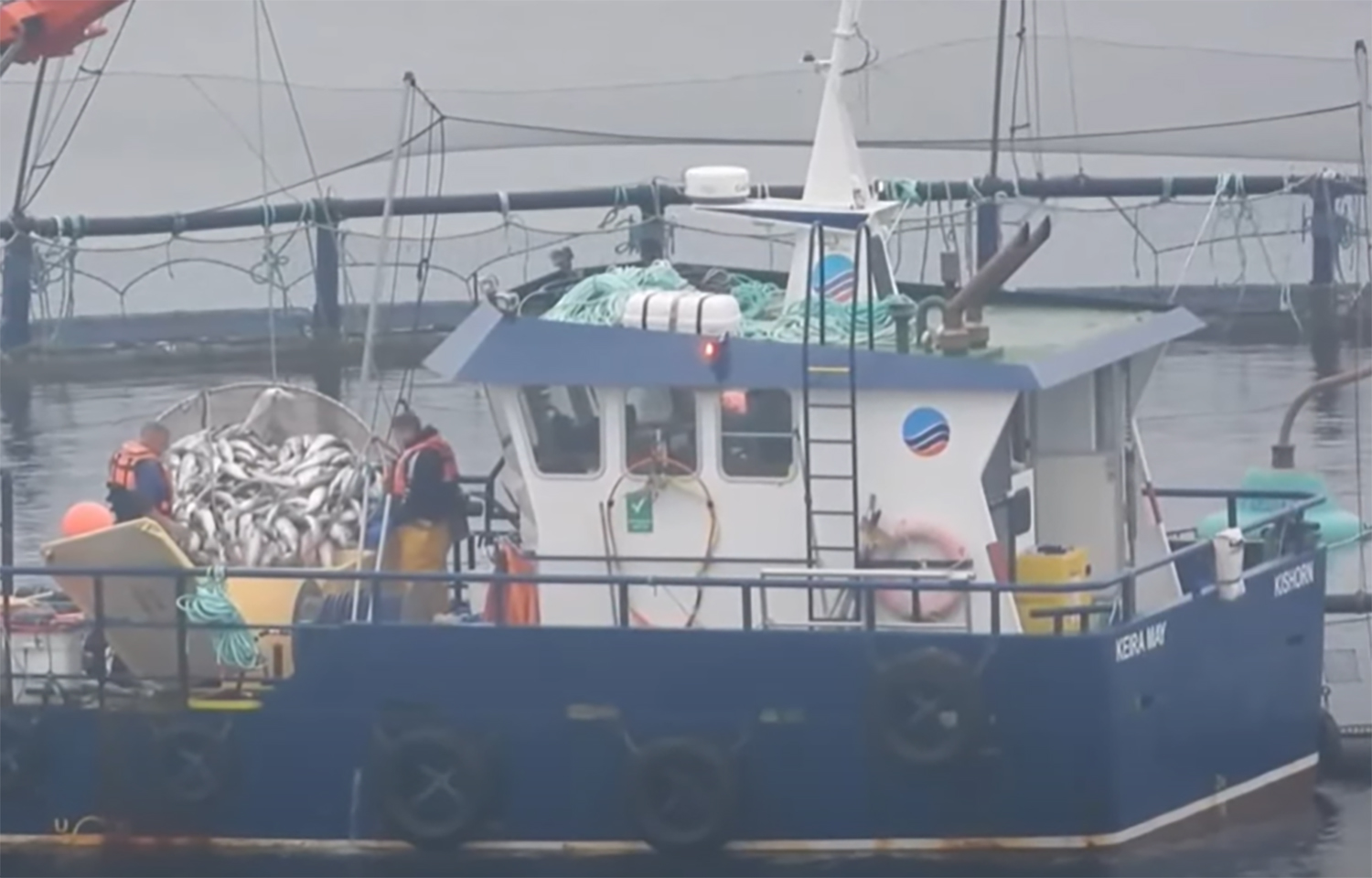
The meeting, held 2 October, began with the committee seeking industry clarification on recent media reports that claimed Scottish Sea Farms swiftly removed a large quantity of dead fish from one of its facilities prior to a 23 September visit by Members of the Scottish Parliament (MSPs).
Before the media reports, farmed animal rights nonprofit Animal Equality UK released video footage showing dead fish being removed from a Scottish Sea Farms pen ahead of the MSPs’ visit, with the organization claiming the salmon industry wants to hide the truth about farm mortalities.
“This is an obvious and deliberate attempt to derail this committee's focus on what has changed in Scotland's salmon-farming sector since 2018,” Scott said, referring to the last inquiry the committee took into the industry. “No member of this committee can be in any doubt as to the motives of these extreme activists. We deplore that, and we are very sorry that the committee members have been used in this way.”
Scott petitioned for the committee’s help, saying the sector needs parliament’s help to ensure its continued success.
“These [activists] would not just shut down the Scotland salmon-farming sector, but they would shut down farming as well. Read their website, and read their tweets. We would ask this committee to call out that behavior. If parliament wants a sector that employs 12,000 people in areas where well-paid work is not so easily found, where our average salary is GBP 36,000 [USD 47,200, EUR 42,810] a year, and where we produce a great fish that is sought after in 50 countries around the world, now would be a very helpful time to do that,” he said. “We need the committee’s support in recognizing this is a great industry, it does great things for Scotland, and it employs a lot of people all over our country. We need a bit of help pushing back on the utter nonsense that we are subjected to every single day.”
Scott also noted the Fish Health Inspectorate (FHI), a Scottish government regulatory body overseeing aquaculture and aquatic animal health regulations, informed the committee it had no concerns with the mortality removal undertaken in Animal Equality UK’s video footage and said it was consistent with routine procedures on Scottish aquaculture farm sites.
Highlighting that Scotland typically has 70 million fish in sea cages around the country’s coastline at any one time, he said it’s important to keep the reported losses – estimated at 250 salmon of around 2.6 kilograms each – in context.
Scottish Sea Farms Head of Fish Health Ralph Bickerdike confirmed the footage taken on 21 September showed routine procedure.
Where possible, Bickerdike said, this is done every day for each of the net enclosures on the company’s farms as part of its best practices for biosecurity and as a predator-control measure to protect the fish from seals.
“There was no intention ever to cover up. There was no special treatment for the visit. We do this as a routine every day. Any such claims which have been made by the anti-fish farming campaigners were incorrect and misleading for sensationalist reporting by media organizations,” he said at the meeting.
Bickerdike further advised that the number of dead fish found in each pen varies from day to day and between pens, based on a variety of factors such as differences in health status, predation pressures, and changes in tidal currents, which can prevent dead fish from moving to the collecting basket at the bottom of a net.
“For Pen1, which was in the video, there were 250 fish recovered that day, whereas fewer fish were removed from the other pens. The total mortality rate recovered that day was 0.1 percent of the farm’s population of 448,509 fish,” he said.
“Therefore, there was categorically no mass mortality event as published by some media organizations,” he said.
The fish in the pen in question had been treated for amoebic gill disease with freshwater on a wellboat three days previously, and Bickerdike said that any such handling event increases the risk of mortality.
“We, like any farmer, do everything we can to minimize this, but it is, regretfully, the reality of farming,” he said.
Ben Hadfield, Mowi’s COO for Farming Scotland, Ireland, Faroes, and Atlantic Canada, told the committee that Scotland’s salmon industry, which has been producing a steady volume of around 180,000 metric tons in recent years, has been rapidly evolving and innovating to improve fish welfare.
“No fish farmer wants growth that’s not good growth in terms of achieving better welfare, lower mortality, and higher average weight,” he said. “First and foremost, we're farmers. We care about the welfare of fish. We care about the livestock under our care. But, we're also businessmen and women, and the way you make money in salmon aquaculture is about growing great quality salmon and selling them for the highest price you can achieve.”
Nevertheless, the industry is actively focused on bringing the level of mortality down, Hadfield said.
“We are trying incredibly hard to farm fish in the best possible way with all the innovation we can. I think we are making progress … this is a very sustainable industry. We can make it better by reducing mortality, and that’s what we are focused on doing,” he said.
Bakkafrost Scotland’s Head of Health Kimberley McKinnell also underlined the fish welfare efforts taking place from farm to farm, insisting that Scottish farmers are “passionate about what they do, they care about what they do, and they want to see the salmon thrive.”
“It’s at the forefront of their mind. We put in daily practices to check the health and welfare of the fish,” she said. “[Farmers] are out in all kinds of weather; no matter what … we go out and we're checking those fish because it is so important and fundamental to how we farm salmon.”
