






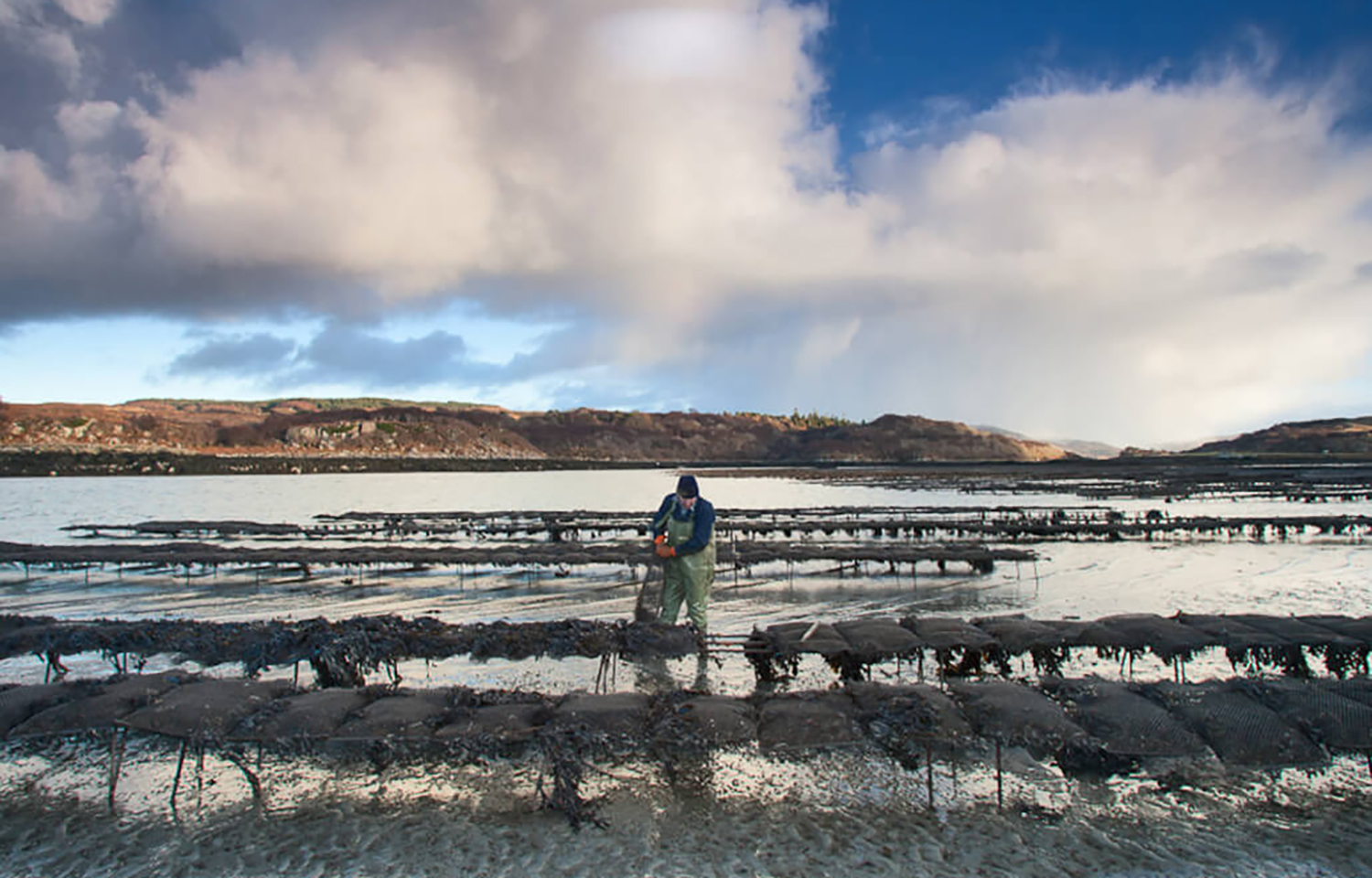
U.K. shellfish farmers facing a complex maze of regulations could greatly benefit from a nationwide aquaculture planning strategy, Shellfish Association of Great Britain (SAGB) CEO David Jarrad said.
Despite shellfish farmers producing around 30,000 metric tons (MT) of seafood worth approximately GBP 38 million (USD 50.8 million, EUR 44.7 million) in value annually, Jarrad said that the sector is often overlooked in policy decision-making.
This, coupled with a dizzying number of regulations from various sources, has the farmed shellfish sector calling for a unified aquaculture strategy that could help it unlock previously untapped potential, Jarrad said.
“The real problem is there are so many different agencies that are overlapping what they do and what they're regulating. There's never one agency that overlooks all of it,” he said. “We’ve always said a [strategy] is what we need and why we’ve been calling for a U.K.-wide aquaculture planning strategy – so we can plan for the future.”
SAGB assists and promotes the sustainable development of U.K. wild-caught shellfisheries and farming operations and also represents the views of the industry in discussions with the government, other users of U.K. waters, and environmental organizations.
What’s crucial for the farmers SAGB represents, Jarrad said, is that the implementation of such a strategy sits under the power of a single authority dedicated to the industry.
Currently, key issues such as water quality, which greatly impact the shellfish sector, are not covered by authorities related to seafood, such as the nation’s fisheries minister.
“There are too many departments dealing with the same thing, and because of the overlap, they can easily shoulder the blame,” he said. “Who's the loser in all that? It's the industry. The simple fact is we've had a 10 percent year-over-year decline in England, Wales, and Northern Ireland in farmed shellfish production since 2008, and that’s just extraordinary. Since 2008, other European countries have either increased or stayed stable, whereas we've reduced by 75 percent because of the red tape bureaucracy.”
A case in point of the government getting in the way of growth, according to Jarrad, is its policy to classify Pacific oysters as an“invasive, non-native species,” therefore banning the act of farming or harvesting the species.
The species was actually introduced by the government in the 1960s and wasn’t expected to breed, but climate change has actually accelerated the growth of the species.
Nevertheless, the current authoritative advice in the U.K. is there should be no new farms and no expansion of existing farms, according to Jarrad. So, while more Pacific oysters grow wild in U.K. waters, the commercial harvesting of these products will continue to be banned.
“It’s crazy. We're losing a great opportunity; our E.U. neighbors accept the species as an ‘ordinary resident or naturalized’, and they accept it as fully compatible within environmental legislation,” Jarrad said. “[In the United Kingdom], they're listening, but what they're not hearing is that this species is going to be here anyway – whether they shut the industry or not.”
However, the sector is realizing some gains, such as the recent announcement from the nation’s Department for Environment, Food, and Rural Affairs (Defra) that from 1 April of this year, Vietnam has granted market access to live U.K. seafood in a deal that’s estimated to boost trade by an estimated GBP 20 million (USD 26.7 million, EUR 23.5 million) over the next five years.
According to Defra, U.K. seafood exports to Vietnam have already shown strong growth, with sales of fresh, frozen, and processed products up 40 percent in the first nine months of 2024 compared to the corresponding period of the previous year.
The deal, Jarrad said, will predominantly benefit businesses specializing in live crustaceans, such as crab, lobster, and langoustine, but there could potentially be a market for oysters and possibly razor clams further down the line.
“There is particularly an opportunity for the U.K. to export its oysters to the E.U. and beyond. We do have some really good-quality shellfish grown in our waters,” he said. “What’s perhaps missing in the narrative is that 30 years ago, the best area for growing grapes for sparkling wine was the Champagne region [of France]. The best area now is southern England. Similarly, the sweet spot for growing shellfish has migrated north – from the likes of southern Italy and southern Spain – up to the south coast of England. We are sitting in these fertile waters which could do so much, but at the moment, we're not grasping the nettle.”
